A hundred dollars is a quarter of what the established carts cost, and for a light dog or a short recovery it can be genuinely enough. Here is what it buys, what it does not, and the dog for which this ceiling is a false economy.
We earn a commission when you buy through our Amazon links, at no extra cost to you. It never changes our rankings, and we say so when the cheaper product is the better buy. How this works.
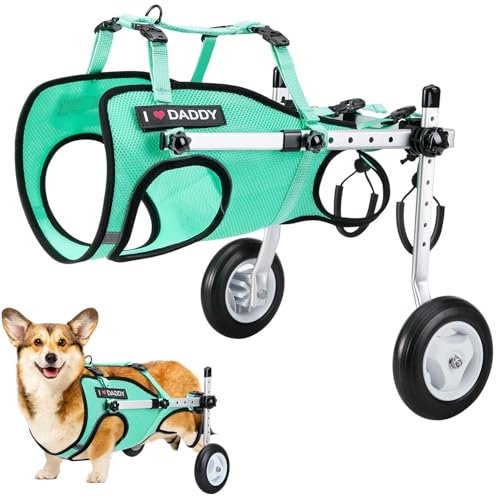
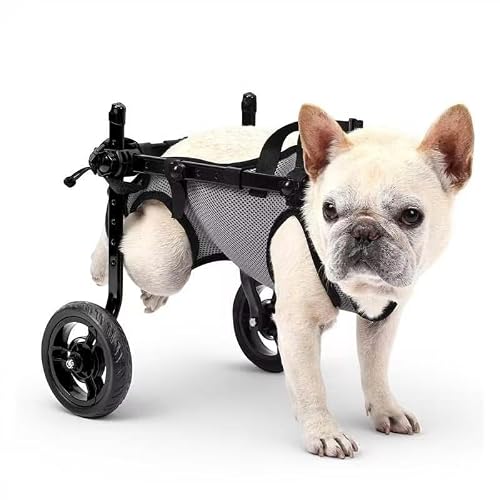
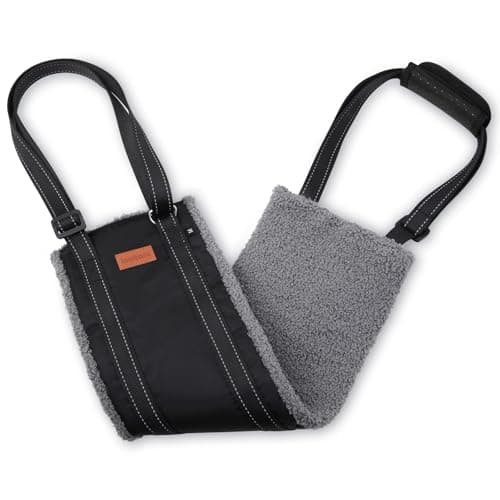
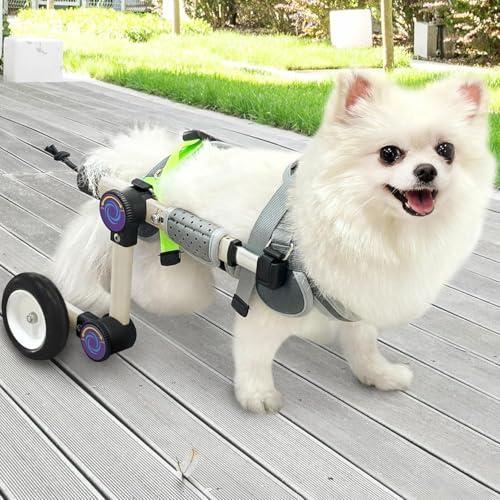
The verdict: of the carts that actually come in under $100, the LetPetRun Dog Wheelchair is the one to buy, because it is sold across the widest spread of sizes - and with a budget cart you cannot try against the dog first, size is the entire risk. It suits a small or medium dog on a first cart. The budget pick is the BECROWM Dog Wheelchair, the cheapest thing on this page that is still a real cart. The Nasjac is worth the few dollars more if your dog now does its walks after dark, because it is the only one here with reflective stripes on the frame. And the fourth pick is deliberately not a wheelchair: for a great many dogs whose owners search this phrase, a rear-support sling at a quarter of the price is the better buy, and we would rather say so than sell you a cart.
Start with the number, because it is the reason you are here. The established rear-support carts - the ones with three-way adjustment, published weight ceilings, replacement parts and a company that will help you fit them - run from roughly two hundred and fifty dollars to well over four hundred. We rank those on our main dog wheelchairs roundup, and if your dog is going to live in a cart for years, that is the page you want, not this one. Our what does a dog wheelchair cost? page sets out the three price tiers and what genuinely separates them.
This page exists because that price is out of reach for a lot of households, and the honest answer to "then what" is not "nothing". Under a hundred dollars there is a real tier of two-wheel rear-support carts. They are lighter, simpler, and sized per listing rather than adjusted across a wide range. For a ten-pound dog recovering from disc surgery, or an owner buying time while they save, they work.
The pick of the cheap carts. It is the one in this tier sold across the widest spread of sizes, which matters more than any single feature when you cannot try the frame against the dog first.
The one with reflective stripes, which sounds like a trim detail and is not: a dog in a cart moves slowly, low to the ground, and is hard to see on an evening walk down a driveway.
The cheapest cart here that is still a real cart rather than a frame with wheels. If the question is purely whether your dog will take to a cart at all, this is the least expensive honest way to find out.
#ad · Live prices from the Amazon Product API, as of November 22, 2026. Where we have no verified live price we show none — we would rather leave a gap than print a number that has rotted.
In detail
The picks, in full
01
A small or medium dog, first cart
LetPetRun Dog Wheelchair for Back Legs
Rear-support (two-wheel) cart for back legsListed as adjustable for fitListed as a lightweight frameSeveral size listings; this is small/medium
7.2/10
The pick of the cheap carts. It is the one in this tier sold across the widest spread of sizes, which matters more than any single feature when you cannot try the frame against the dog first.
Fit & adjust
7
Build quality
6.5
Rear support
7.5
Support & parts
5.5
Value
9.5
Pros
+The size range is the real advantage - the usual budget-cart failure is that only one size exists
+Light enough that an older owner can lift it into a car trunk
+Costs a fraction of the established brands, so a short-term need does not mean a long-term spend
Cons
−Fitting instructions are thin; expect to work it out from photographs
−No published weight ceiling on this listing, which matters for a heavier dog
Don't buy this if…
…your dog will live in the cart for years - the adjustability and the parts support of a Walkin' Wheels are worth paying for at that point.
Rear-support cart, listed in a Medium sizeReflective stripes on the frameListed as lightweight and portableListed for senior and disabled dogs
7.0/10
The one with reflective stripes, which sounds like a trim detail and is not: a dog in a cart moves slowly, low to the ground, and is hard to see on an evening walk down a driveway.
Fit & adjust
6.5
Build quality
6.5
Rear support
7.5
Support & parts
5.5
Value
9
Pros
+Reflective detailing is genuinely useful on a dog that now walks after dark
+Listed as portable, so it folds into a car for the vet trip
+Priced with the cheapest carts while listing more detail than most of them
Cons
−Sized per listing rather than adjusted across a wide range - measure before ordering
−Published specifications are still thinner than an established brand's
Don't buy this if…
…you need to adjust height, length and width independently as your dog changes - that is a feature of the carts above this price tier.
Rear-support cart for hind-leg mobilityListed as adjustable fitLightweight; listed for indoor and outdoorListed for assisted walking, not full-time
6.8/10
The cheapest cart here that is still a real cart rather than a frame with wheels. If the question is purely whether your dog will take to a cart at all, this is the least expensive honest way to find out.
Fit & adjust
6.5
Build quality
6
Rear support
7
Support & parts
5
Value
9.5
Pros
+The lowest price of the three carts on this page
+Listed for indoor as well as outdoor use, which not every budget cart is
+Simple enough that there is little to go wrong mechanically
Cons
−Least detailed listing of the three - fewer published numbers to size from
−Basic wheels; a rough garden or gravel path will tell
Don't buy this if…
…your dog is heavy or will spend hours a day in the cart - this tier is built for light use by a lighter dog.
The gap between a sixty-dollar cart and a four-hundred-dollar cart is not the wheels. It is four specific things, and knowing which of them you can live without is how you decide whether this page is for you.
1. Adjustment range - the big one
A premium cart adjusts in three directions: height, length and width, independently, with tools or quick releases. That is what lets one frame fit a dog correctly today and still fit it when the dog loses muscle over its hips in six months, which senior dogs reliably do. Budget carts are sized per listing with a narrow adjustment band around that size. You are buying a fit rather than a fitting system, so you have to measure properly and you have to accept that a changing dog may outgrow the fit rather than the frame.
2. A published weight ceiling
The established brands state a weight range per size and stand behind it. Several budget listings do not publish one at all. That is survivable for a light dog and it is not survivable for a seventy-pound one - a frame flexing under a heavy dog is how a cart goes from help to hazard. If your dog is big, the under-$100 tier is not where you should be shopping, and our mobility aids for a big dog page is more use.
3. Parts, and somebody to ask
Wheels, straps and harness pads are the parts that wear. A premium maker sells them individually and has fitting guides and a phone number. On a budget cart, a broken strap usually means a new cart. Build that into the price comparison: two cheap carts in a year is not cheaper than one good one.
4. Assembly and instructions
Expect thin instructions at this price, sometimes a single sheet of diagrams. The carts themselves are not complicated, but allow an evening and good light for the first build, and do the first fitting with somebody holding the dog.
The three carts side by side, from the live listings
Cart
Sizes on the listing
The reason to pick it
Its honest limit
LetPetRun
Several size listings, small through medium
Widest size spread in the tier
No published weight ceiling on the listing
Nasjac
Medium on this listing
Reflective stripes for after-dark walks
Sized per listing rather than broadly adjustable
BECROWM
Adjustable fit, single listing
Lowest price that is still a real cart
Thinnest published detail of the three
Those are the manufacturers' own published listing values, read off the live Amazon listings on the date at the top of this page, and every one of the three was confirmed in stock before we published. Prices come from the live feed with their own "as of" stamp. We have not assembled or loaded any of these carts, and we are not going to imply we did.
Measure before you order - with a budget cart it is the whole decision
With an adjustable premium cart, a measuring mistake is an afternoon of fiddling. With a cart sized per listing, it is a return. Take three measurements with the dog standing, supported if necessary: the height from the floor to the top of the hip, the length from the base of the neck to the base of the tail, and the width across the hips at the widest point. Then weigh the dog. Compare all four against the listing's chart, and if your dog falls between two sizes, size to the measurement that is hardest to change - height - rather than to weight. Our measuring guide for mobility aids has the full sequence and the mistakes that cost people a return.
The cheaper thing that is often the right answer
A large share of people searching for a cheap dog wheelchair do not actually need a wheelchair yet. They have a dog whose back end is weak and who needs help for three or four specific moments a day - getting up off the floor, the back step, the stairs, the car - and is otherwise walking. That dog does not need wheels. It needs a hand, and a rear-support sling gives it one for about a fifth of the price of the cheapest cart here.
That is why a sling is the fourth pick on this page rather than a footnote. A cart is for a dog that cannot bear weight on its back legs; a sling is for a dog that can, but not for long and not without help. Getting that distinction wrong in the direction of a cart costs money and, worse, puts a dog in a frame it does not need. Our page on when a dog actually needs a wheelchair walks the line between them, and the full sling field is ranked on the best lift harnesses for weak back legs and, at this price, on mobility aids under $50.
Introducing a cart, cheap or otherwise
Expect an adjustment period and do not judge the purchase on the first session. Build it, fit it with the dog standing and the straps loose, and let the dog wear it stationary for a minute or two before anything moves. Then short, positive sessions on a surface with grip - never on a slick floor, where the front feet will skate and frighten the dog out of the whole idea. Check the skin under every strap after each session for the first week, especially on an old dog with thin skin, and stop at the first rub rather than the first sore.
Two things that catch people out. A cart does not go up stairs, so the house still needs a plan for stairs - see helping an old dog up the stairs. And a dog in a cart still has to be got into the car, which is a lifting problem rather than a wheels problem.
When $100 is the wrong ceiling, said plainly
Three cases. If your dog is heavy, buy up - frame rigidity is not something to economize on under seventy pounds of dog. If your dog will be in the cart full-time and long-term, buy up, because fine adjustment and replacement parts are what make a cart survivable over years. And if your dog is still changing shape - losing condition over the hips, which an old dog with a failing back end is doing continuously - buy the adjustability, because a cart that fits in January and not in June is not cheap at any price. For all three, start at our main wheelchair roundup and the Walkin' Wheels review, which goes through exactly what the extra money buys.
How we chose
We haven't lab-tested these
We compiled the published specifications, manufacturer manuals and aggregated owner reviews, then scored each product against a published rubric. The scores are judgments from that research — they are not measurements we took in a lab, because we don't have one and we won't pretend we do. Prices are pulled live from Amazon; where we can't verify one, we say "check price" rather than print a stale number.
Questions
Frequently asked
Is a dog wheelchair under $100 any good?+
For a light dog, a short-term recovery, or an owner who cannot reach the established brands, yes - the under-$100 tier contains real two-wheel rear-support carts and they do the job. What you give up is adjustment range, a published weight ceiling, replacement parts and fitting support. For a heavy dog or years of daily use, those four are worth paying for.
What is the cheapest dog wheelchair that actually works?+
The cheapest cart on this page that is still a proper rear-support frame rather than wheels on a strap is our budget pick. Below that tier you are mostly buying harnesses with casters, which do not hold a dog's hips at a usable height. Prices move, so the live figures in the table above are the ones to go by.
Does my dog need a wheelchair or just a lift harness?+
A cart is for a dog that cannot bear weight on its back legs. A sling or lift harness is for a dog that can bear weight but not for long - the one that walks fine and then cannot get up off the kitchen floor, or manage the back step. If your dog is still walking most of the day, start with the sling: it is a fraction of the price and far less for the dog to get used to.
How do I measure my dog for a wheelchair?+
With the dog standing, supported if needed, take the floor-to-hip height, the neck-base-to-tail-base length, and the width across the hips at the widest point, then weigh the dog. Check all four against the listing's chart. With a budget cart sized per listing rather than broadly adjustable, size to height first if your dog falls between two options.
Can a big dog use a cheap wheelchair?+
We would not. Several budget listings publish no weight ceiling at all, and frame flex under a heavy dog turns a mobility aid into a hazard. Above roughly seventy pounds, buy a cart with a stated weight range from a maker that sells replacement parts.
How long does it take a dog to get used to a wheelchair?+
Most dogs need several short sessions over days rather than one long one. Fit it stationary first, then walk on a surface with grip - never a slick floor, where skating front feet will put the dog off the whole idea. Check the skin under every strap daily for the first week and stop at the first rub.
We don't run a testing lab, and we don't pretend to. Product facts are compiled from manufacturer listings and manuals; health facts are cited to reputable veterinary sources. Where we couldn't verify something, we say so on the page rather than quietly leaving it out. Read our full method.