Glucosamine for dogs — read the evidence, then the label
It is the most-sold joint ingredient in the world and the honest summary of the science is 'largely unanswered'. Here is what is actually known, and how to buy sensibly anyway.
We earn a commission when you buy through our Amazon links, at no extra cost to you. It never changes our rankings, and we say so when the cheaper product is the better buy. How this works.
Glucosamine is in almost every joint supplement sold for dogs, and it is the ingredient most likely to be described to you in language the evidence does not support. We sell these products. We are still going to tell you what the research says, because the alternative is the marketing copy you can already read on the box.
What it is
The AKC describes glucosamine as a naturally occurring compound and one of the more popular over-the-counter arthritis remedies — one of a group of substances known as chondroprotective agents, used in arthritis in humans, dogs and horses. It is an amino sugar, and it appears to improve the synthesis of glycosaminoglycans, one of the building blocks of cartilage. The AKC is candid that no one knows exactly what the mechanism of action is.
It comes in three forms, and the distinction turns out to matter: glucosamine sulfate, glucosamine hydrochloride, and N-acetylglucosamine. It is usually paired with chondroitin sulfate, which is made from cow or pig cartilage, from the shells of crabs, oysters and shrimp, or synthesized from plant sources.
Does it work? The honest version
Scientists began investigating glucosamine and chondroitin in the 1980s. According to the AKC's summary, there is still no common consensus, and studies in humans have been inconclusive. A 2012 examination of human studies found that one form — glucosamine hydrochloride — had little effect, while glucosamine sulfate offered pain relief the reviewers described as superior or equal to the commonly used analgesic or non-steroidal anti-inflammatory drugs. Their overall conclusion was that the question of the benefit of glucosamine treatment remains largely unanswered.
Three things follow from that, and they are the reason this page exists:
The form on the label is not a detail. The one review that separated them found a difference between sulfate and hydrochloride. Plenty of dog products use hydrochloride and do not say so prominently.
Anyone promising you a result is going beyond the evidence. Including, frequently, the packaging.
"Largely unanswered" is not the same as "does not work". The AKC notes joint supplements are often used as an early intervention and throughout the progression of arthritis, since they are safe for long-term use in most patients. That safety profile is the actual case for trying one.
The regulatory point nobody mentions
This is the single most useful thing to understand before you spend money. The FDA regulates these products as dietary supplements, not drugs. As the AKC notes, that means they are not subjected to the same stringent review and approval process as pharmaceuticals, and are evaluated for safety after they are on the market, largely through adverse event monitoring.
The practical consequence: nobody has verified that the tub contains what the label claims. That is why our scoring for this whole category weights ingredient transparency — a named form, a stated milligram amount, and a weight band — far above any claim about outcomes. A product that tells you exactly what is in each chew is not necessarily more effective. It is simply the only kind you can evaluate at all.
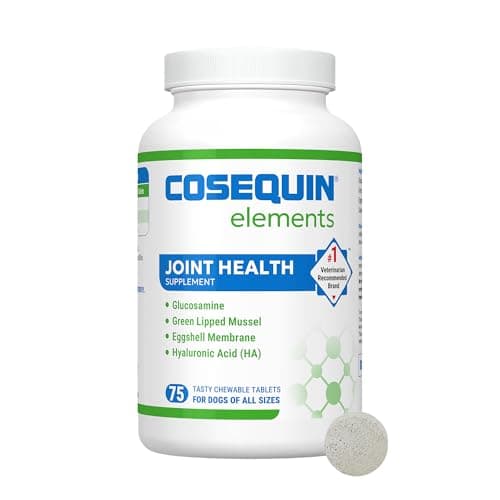
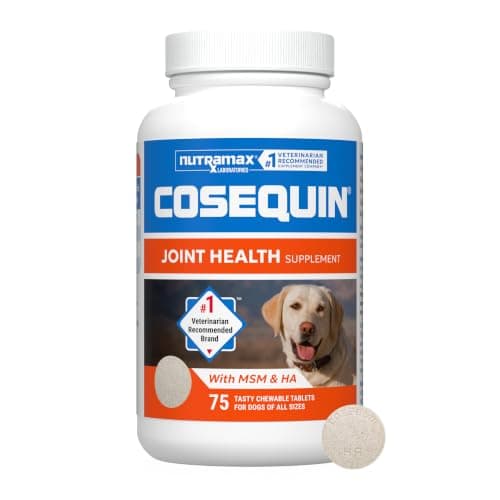
The joint supplement most vets recognize by name. Glucosamine and chondroitin from an established maker — the default many owners start with after a vet conversation.
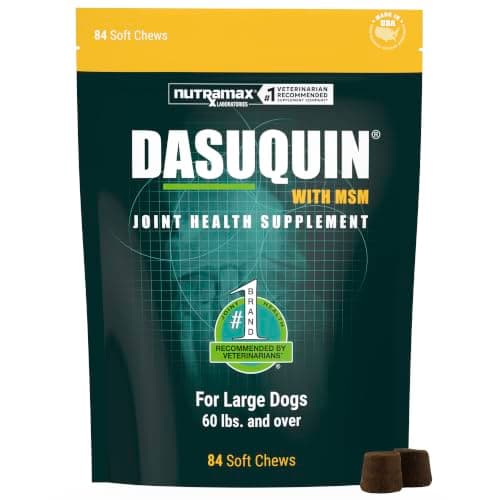
Cosequin's bigger sibling from the same maker, adding ASU to the glucosamine/chondroitin base. Often the step-up owners are pointed to for a large dog — again, a vet conversation.
#ad · Live prices from the Amazon Product API, as of October 20, 2026. Where we have no verified live price we show none — we would rather leave a gap than print a number that has rotted.
In detail
The picks, in full
01
A widely recognized starting point
Nutramax Cosequin Maximum Strength
Glucosamine + chondroitinChewable tabletsMade by NutramaxSized by dog weight
8.5/10
The joint supplement most vets recognize by name. Glucosamine and chondroitin from an established maker — the default many owners start with after a vet conversation.
Ingredient clarity
9
Easy to give
8.5
Size match
8.5
Value
8
Pros
+From Nutramax, a name vets know
+Chewable form most dogs take as a treat
+Clear ingredient labeling and dosing by weight
Cons
−As with all joint supplements, results vary and aren't guaranteed
−Ongoing cost adds up over months
Don't buy this if…
…you're expecting a cure — this is comfort support to discuss with your vet, not a treatment for a diagnosed condition.
Glucosamine + chondroitin + ASUChewableLarge-dog formulationMade by Nutramax
8.3/10
Cosequin's bigger sibling from the same maker, adding ASU to the glucosamine/chondroitin base. Often the step-up owners are pointed to for a large dog — again, a vet conversation.
Ingredient clarity
9
Easy to give
8.5
Size match
8
Value
7.5
Pros
+Adds ASU to the familiar Nutramax base
+Dosed and sized for large dogs
+Same trusted manufacturer
Cons
−Pricier than Cosequin
−Effect varies dog to dog, like any supplement
Don't buy this if…
…your dog is small — buy the size formulated for their weight rather than the large-dog version.
Find the form. Does it say sulfate, hydrochloride, or just "glucosamine"? A label that will not name the form is a label withholding the one variable the research distinguished.
Find the milligrams, per chew. Not per serving, not per day — per chew, so you can do the arithmetic for your dog's weight yourself.
Check the weight bands. A formula sold for all sizes is either under-dosing large dogs or over-dosing small ones.
Note the chondroitin. If your dog has a shellfish sensitivity, chondroitin source matters — it is often derived from crab, oyster or shrimp shells.
How long before you know?
Not days. If you are going to try one, commit to a proper trial and keep a note of what you see, because the change — if it comes — is gradual enough to miss. Our page on how long joint supplements take to work sets out a realistic timeline and how to actually tell whether anything changed.
Where glucosamine sits among the options
It is one ingredient among several, not the whole category. Omega-3 fatty acids have their own separate literature and are covered on our omega-3 page; green-lipped mussel is on its own page, and turmeric and curcumin are covered with the three canine trials that exist. If you are choosing between the two best-known glucosamine brands, our Cosequin vs Dasuquin comparison is the more specific read.
And it is worth saying the unglamorous thing once more: of everything on this site, the intervention with the strongest evidence behind it is keeping your dog lean, and it costs nothing.
How we chose
We haven't lab-tested these
We compiled the published specifications, manufacturer manuals and aggregated owner reviews, then scored each product against a published rubric. The scores are judgments from that research — they are not measurements we took in a lab, because we don't have one and we won't pretend we do. Prices are pulled live from Amazon; where we can't verify one, we say "check price" rather than print a stale number.
Questions
Frequently asked
Does glucosamine actually work for dogs?+
The honest answer is that it is unproven rather than disproven. The AKC summarizes decades of research as having produced no common consensus, with human studies inconclusive; a 2012 review found glucosamine hydrochloride had little effect while glucosamine sulfate offered relief comparable to common analgesics, and concluded the benefit question "remains largely unanswered". The practical case for trying one rests on its safety for long-term use, not on a promised result.
What is the difference between glucosamine sulfate and hydrochloride?+
They are two of the three forms glucosamine is supplied in, alongside N-acetylglucosamine. The distinction matters because the one major review that separated them found little effect from the hydrochloride form and meaningful pain relief from the sulfate form. Many dog products use hydrochloride without saying so prominently, which is why we treat "does the label name the form" as a scoring criterion.
Are dog joint supplements regulated?+
Not as medicines. The FDA regulates them as dietary supplements rather than drugs, so they do not go through the review and approval process pharmaceuticals do, and are assessed for safety after reaching the market largely through adverse event monitoring. Nobody has independently verified that a given tub contains what its label claims — which is exactly why we rank on ingredient transparency.
Can I give my dog human glucosamine?+
That is a question for your vet, not for us. Human formulations can contain sweeteners and additives that are not appropriate for dogs, and dosing is weight-dependent. Ask your vet before giving your dog anything formulated for people.
We don't run a testing lab, and we don't pretend to. Product facts are compiled from manufacturer listings and manuals; health facts are cited to reputable veterinary sources. Where we couldn't verify something, we say so on the page rather than quietly leaving it out. Read our full method.