The best full-body lift harnesses for a senior dog
When a dog is unsteady front and back, swapping between a chest harness and a rear sling mid-walk isn't practical. A full-body harness puts both handles on one garment.
We earn a commission when you buy through our Amazon links, at no extra cost to you. It never changes our rankings, and we say so when the cheaper product is the better buy. How this works.
Most owners start with a rear sling, because most dogs lose the back end first. A full-body harness is what you buy at the next stage — when the front legs have started to buckle too, when a dog that could steady itself on its forelegs can't any more, or when the dog needs both ends supported at the same moment to get up a step.
The practical argument for one garment is that a dog which needs help twice on the same walk will not tolerate being re-strapped twice. A full-body harness stays on. You clip a lead to it, walk with your hands free, and take hold of a handle when the moment comes. That convenience is the product.
When a full-body harness is the right buy
Weakness at both ends. Front paws splaying as well as back legs collapsing — common in later-stage arthritis and in some neurological conditions.
Stairs. Going up, you support the back; coming down, you support the front. On one staircase you need both, which is exactly where two separate pieces of kit fall apart.
Getting into a car. A controlled lift of the whole dog, rather than heaving one end and hoping.
Post-operative or recovery periods, where your vet has asked you to support the dog for a defined time.
And when it isn't
If your dog's front end is genuinely strong and it's only the hips giving way, a full-body harness is more garment, more heat, more straps and more money than you need. A rear sling goes on in seconds and does the job. Buy the tool that matches where the weakness actually is — that's the whole organizing idea of this hub.
It also isn't the answer for a dog that has lost the use of its back legs entirely and isn't regaining it. At that point you are carrying the dog, several times a day, forever — and that's the conversation about a wheelchair instead.
The short version: the Lafoty is our pick for most dogs — handles at both ends, six adjustable straps that spread the load rather than concentrating it, and a cut that stays clear underneath a male dog. The PetSafe CareLift is the established name, and the one to buy if structure matters to you more than price. The Coodeo is the lighter, cheaper option for a dog that mainly needs a hand at the back.
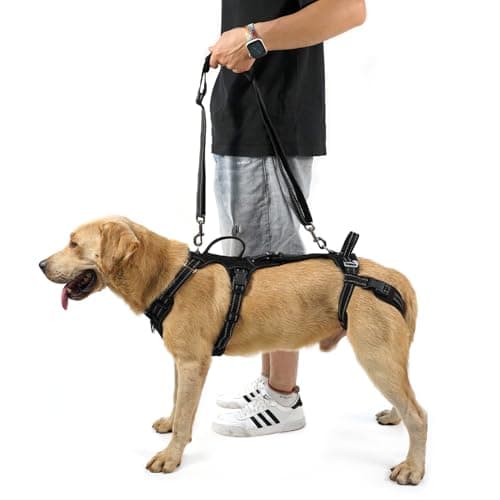
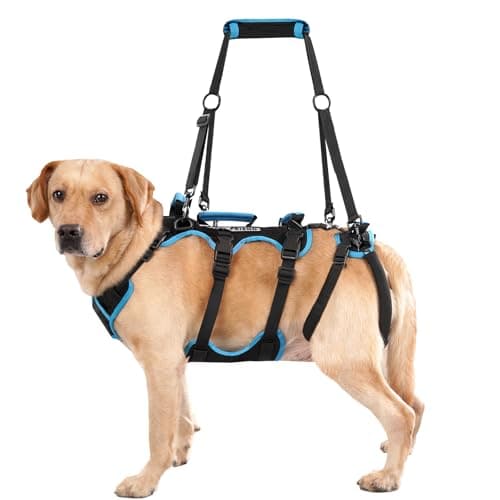
Built around the two moments that break a routine — stairs and a hind end that gives out — with a cut that keeps clear of a male dog's underside, which is a genuine problem with cheap slings.
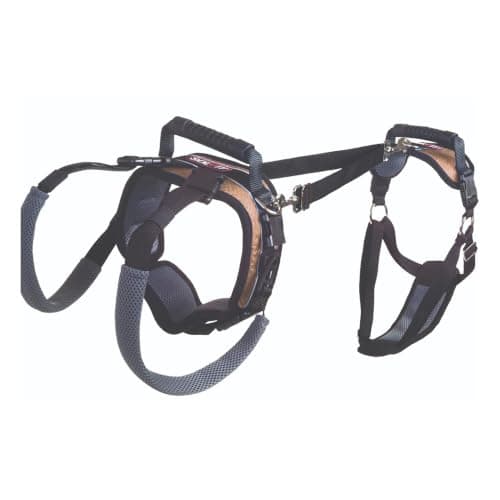
The premium option: a structured full-body harness with front and rear handles, so you can support either end or the whole dog. Built for the long haul, priced like it.
A quick-on rear sling with a handle — grab it for the few hard moments (up the porch step, into the car) rather than a full walk. Cheap, simple, kept by the door.
#ad · Live prices from the Amazon Product API, as of October 20, 2026. Where we have no verified live price we show none — we would rather leave a gap than print a number that has rotted.
In detail
The picks, in full
01
Stair assists on a large dog
Lafoty 2-in-1 Full-Body Dog Lift Harness
Listed 4 handles, front and rearMale-friendly cutDetachable rear support6 straps, sizes M to XXL
8.3/10
Built around the two moments that break a routine — stairs and a hind end that gives out — with a cut that keeps clear of a male dog's underside, which is a genuine problem with cheap slings.
Support match
9
Padding
9
Owner ergonomics
8.5
Adjustability
8
Value
7
Pros
+Cut deliberately to stay clear underneath a male dog
+Handles at both ends, listed for stairs and car lifts rather than just standing still
+Six adjustable straps spread the load instead of concentrating it on one band
+The rear section detaches, so it doubles as an ordinary harness between lifts
Cons
−Premium price for a harness
−Sizing runs specific — measure rather than guess
−The listing admits it is heavier than a regular harness, which you feel on a long walk
Don't buy this if…
…you only need an occasional hand up off the floor. That's a job for a simple rear sling at a third of the price.
Full-body harnessFront + rear lift handlesPadded and structuredAdjustable fit
8.5/10
The premium option: a structured full-body harness with front and rear handles, so you can support either end or the whole dog. Built for the long haul, priced like it.
Support match
9.5
Padding
9
Owner ergonomics
8.5
Adjustability
8.5
Value
7
Pros
+Supports the whole dog — front, rear, or both
+Structured build distributes the lift and stays put
+Handles are placed for an upright, back-friendly lift
Cons
−The most expensive harness here
−More straps to fit and put on than a simple sling
Don't buy this if…
…your dog is only weak in the back legs — a rear sling is simpler, cheaper, and enough.
Rear support slingGrab handleAdjustable strapsBreathable fabric
8.0/10
A quick-on rear sling with a handle — grab it for the few hard moments (up the porch step, into the car) rather than a full walk. Cheap, simple, kept by the door.
Support match
8
Padding
7.5
Owner ergonomics
7.5
Adjustability
8
Value
9
Pros
+Goes on fast for a one-off lift up a step or into the car
+Handle sits right over the hips
+Inexpensive enough to keep one by every door
Cons
−Short handle means more bending than a long-lead sling for full walks
−Best for brief assists, not hours of support
Don't buy this if…
…you need to support your dog for whole walks — a long-handled GingerLead is kinder to your back.
Five metrics: how well the support matches the weakness it's sold for, padding where weight actually lands, owner ergonomics (whether you can lift without stooping), adjustability, and value. Scores are judgments compiled from published specifications and aggregated owner reviews — we don't lab-test, and our methodology says so.
Measure, and measure the right things
Harness sizing is where most of these purchases go wrong. You need chest girth just behind the front legs, waist girth just in front of the back legs, and back length from withers to tail base. Weight alone is not enough — two 60-pound dogs can be completely different shapes, and a harness that fits the deep-chested one will hang off the barrel-shaped one.
Check the cut if you have a male dog
A rear support panel that runs straight across the belly will press exactly where a male dog does not want pressure, and you will find out about it on the first walk. Several manufacturers cut around this deliberately; the ones that do say so in the listing. It's worth a minute of checking.
Handle position decides whether your back survives
A handle sitting low on the dog's side means you lift bent over. A handle that rises above the spine, or a long strap you can take in a raised hand, lets you stand closer to upright. If you are lifting a large dog several times a day, this is not a minor comfort detail — it is the difference between a routine you can sustain and an injured back. The technique matters just as much: see how to lift a large senior dog safely.
Can it stay on all day?
Some full-body harnesses are designed to be worn continuously; others are lift-only rigs you fit and remove. Continuous wear is far more practical, but check for chafing points at the armpits and groin, take it off overnight, and look at the skin underneath every day — especially on a dog that can't easily shift position on its own.
How we chose
We haven't lab-tested these
We compiled the published specifications, manufacturer manuals and aggregated owner reviews, then scored each product against a published rubric. The scores are judgments from that research — they are not measurements we took in a lab, because we don't have one and we won't pretend we do. Prices are pulled live from Amazon; where we can't verify one, we say "check price" rather than print a stale number.
Questions
Frequently asked
What is a full-body dog lift harness for?+
It supports a dog at the chest and the hips at once, using handles at both ends, so you can steady or lift a dog that is unsteady front and back. It's the step up from a rear sling, and it's most useful on stairs, getting into cars, and during recovery periods where a vet has asked you to support the dog.
Rear sling or full-body harness — which do I need?+
Match the aid to where the weakness is. If your dog's front legs are strong and only the back end gives way, a rear sling is quicker, cooler and cheaper. If the front end is buckling too, or you need to support both ends on the same staircase, buy the full-body harness.
Can a dog wear a lift harness all day?+
Many are designed for continuous daytime wear, which is far more practical than fitting one each time. Take it off overnight, check the skin at the armpits and groin daily for rubbing, and loosen it if you see any redness — particularly with a dog that can't reposition itself easily.
We don't run a testing lab, and we don't pretend to. Product facts are compiled from manufacturer listings and manuals; health facts are cited to reputable veterinary sources. Where we couldn't verify something, we say so on the page rather than quietly leaving it out. Read our full method.