For a long-backed dog the ramp-or-steps question has a different answer than it does for everyone else - and the sofa, not the staircase, is where most of the damage gets done.
We earn a commission when you buy through our Amazon links, at no extra cost to you. It never changes our rankings, and we say so when the cheaper product is the better buy. How this works.
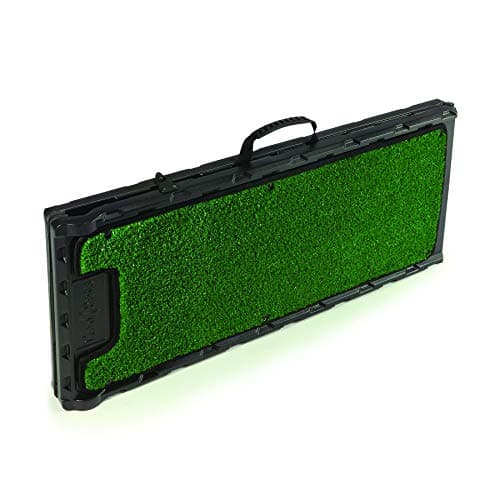
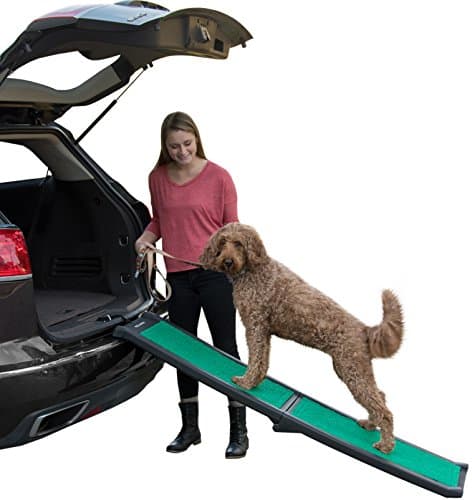
Buy a ramp, not steps. For a dachshund the right first purchase is the PetSafe CozyUp bed ramp at whichever piece of furniture your dog gets on and off most - usually the sofa, not the bed - because a ramp lets a long spine stay level while steps ask it to hop, flex and land, repeatedly, several times a day. If your dog balks at a smooth slope, the Gen7Pets Natural Step reads as stairs to the dog while still being a ramp; for the car the Pet Gear Travel Lite is the grippy bi-fold we would take; and for the two steps out to the yard, the Weathrix wooden wedges turn them into a slope.
This is the prevention half of a dachshund's life. The treatment half - carts, slings and the crate-rest weeks - is at mobility aids for a dachshund.
Why a ramp, specifically, for this shape of dog
Steps are fine for a lot of senior dogs and we rank plenty of them. The argument against them for a dachshund is mechanical rather than medical: climbing a step means lifting the front end, flexing the spine, and pushing off with the back legs, once per step. A ramp replaces that with a walk. Same height gained, no hop.
There is a trade, and it is honest to name it: a ramp long enough to be gentle takes up floor space, and a short ramp is just a steep one. Which is the whole of the next section. The general comparison for dogs of any shape is at ramp or stairs; this page is the version where the back decides.
The angle rule for a nine-inch-tall dog
A ramp's steepness is just height divided by length, and a dachshund's advantage is that the heights involved are small. A sofa seat at 18 inches with a 70-inch ramp is a gentle walk. The same ramp at a 30-inch bed is roughly twice the slope. So:
Measure the height from the floor to the surface the dog needs to reach - seat cushion, mattress top, tailgate.
Then pick length, not brand. More length for the same height is always a kinder slope, and length is the spec most owners ignore.
Check the width against the dog's stride. A long dog turning onto a narrow ramp is the moment it steps off the side. Side rails or a wide deck both help.
Check the surface. Carpet or a high-grip textured deck. A smooth ramp is a slide, and a dachshund's short legs give it no recovery room.
The most repeated jump in the house, up and down, all evening
A short indoor ramp, carpeted, left in place
The bed
Higher, so a short ramp here is a steep one
A longer ramp, or move the dog's bed to the floor
The car
The highest load, often with the dog excited and in a hurry
A grippy bi-fold ramp, dog on a lead, you alongside
The back-door step
Used a dozen times a day and nobody thinks about it
A wedge ramp over the steps, or a gate if it is a flight
Note the second row. For a lot of dachshunds the right answer at the bed is not a ramp at all - it is a bed on the floor, which removes the height instead of managing it. Our note on that is when a dog can no longer get on the bed.
The staircase is a gate problem, not a ramp problem
A full flight of indoor stairs cannot be ramped safely, and for this breed it should simply be closed. Going down is the worse direction - the dog is braking with its front end while its back end follows - and it is the one that ends in an emergency visit. Put a gate at the top, carry the dog, and keep the gate shut when you are not there. We rank them at stair gates for senior dogs, and the traction version of the same problem is non-slip stair treads.
Getting a sceptical dachshund to use the thing
Dachshunds are not naturally keen on ramps, and a ramp the dog walks around is money wasted. Three things work: put it flat on the floor for a day and feed on it, raise it to the sofa only once the dog walks its whole length, and treat at the top rather than at the bottom so the reward is in the direction of travel. A textured, stair-look deck helps a dog that distrusts a smooth slope - which is exactly why one of the picks above is shaped that way. The full training sequence is at how to train a dog to use a ramp, and the troubleshooting is my dog will not use the ramp.
Two free things that matter as much as the ramp
Weight. Extra pounds on a long spine is the one variable that makes everything else worse, and it is free to fix - healthy weight for a senior dog.
How you pick the dog up. Support the chest and the hindquarters together so the back stays level; never lift a long-backed dog by the chest alone and let the back end hang. The technique is at how to lift a dog properly.
A long, gentle ramp with a stair-textured surface that reads as steps to a dog unsure about a smooth slope — a good bridge for a dog that balks at ramps.
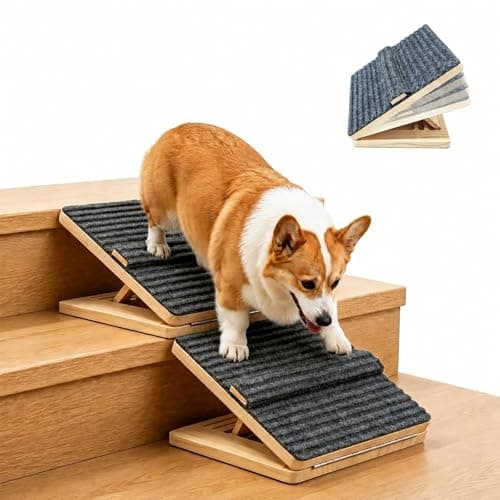
Two folding wooden wedges that turn a short flight — the porch steps, the two down into the yard — into a slope. The neatest answer to the step your dog has started refusing.
#ad · Live prices from the Amazon Product API, as of October 20, 2026. Where we have no verified live price we show none — we would rather leave a gap than print a number that has rotted.
In detail
The picks, in full
01
Getting onto a bed or couch
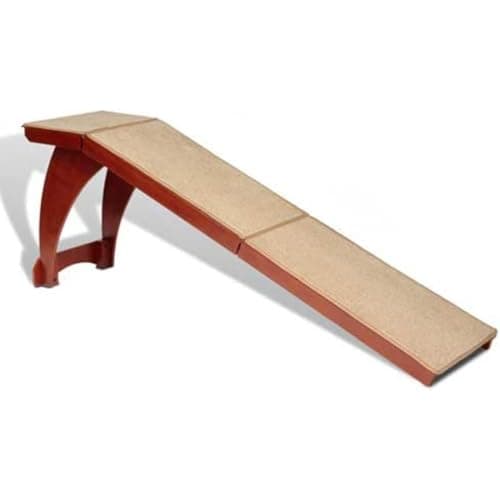
PetSafe CozyUp Bed Ramp
Short indoor rampCarpeted grip surfaceRated for large dogsFixed sturdy frame
8.0/10
A short, sturdy ramp made for the bed or couch. It's the right tool indoors where a full car ramp is overkill and steps are a scramble.
Gentle incline
8
Grip surface
8.5
Weight capacity
8.5
Portability
6
Stability
9
Pros
+Sized for bed/couch height, not a full climb
+Carpet-like surface is easy on paws and grippy
+Solid, doesn't wobble like folding ramps can
Cons
−Not foldable — it stays where you put it
−Only tall enough for furniture, not a vehicle
Don't buy this if…
…you need one ramp for both the car and the bed — a folding car ramp does double duty; this is bed-height only.
Long, low inclineStair-textured surfaceRated for large dogsFolds flat
8.2/10
A long, gentle ramp with a stair-textured surface that reads as steps to a dog unsure about a smooth slope — a good bridge for a dog that balks at ramps.
Gentle incline
9
Grip surface
8.5
Weight capacity
8.5
Portability
6.5
Stability
8.5
Pros
+Extra length keeps the slope shallow
+Textured 'steps' give a hesitant dog visual footing
+Supports large dogs
Cons
−Long footprint — needs room to deploy
−Bulkier to store than a compact bi-fold
Don't buy this if…
…you're tight on space — a telescoping or bi-fold ramp packs down smaller.
2-pack of foldable wooden rampsNon-slip walking surfaceMade for short indoor or porch flightsFolds flat for storage
8.3/10
Two folding wooden wedges that turn a short flight — the porch steps, the two down into the yard — into a slope. The neatest answer to the step your dog has started refusing.
Stability
8.5
Grip
8
Gentle angle
8
Storage
8.5
Value
8.5
Pros
+Two units cover the two- and three-step flights that cause most of the trouble
+Folds away when guests come, unlike a fixed ramp
+Wood feels solid underfoot — nothing flexes as the dog commits
Cons
−Spans a short flight only; a full staircase needs a different answer
−Wooden surfaces want drying off if they live outdoors year-round
Don't buy this if…
…you need to cover a full indoor staircase — no consumer ramp does that safely, and a gate plus carrying is the honest answer.
On the specifications that decide slope and footing: stated length and height range, deck width, surface type, side containment, and whether the thing stays put under a dog that arrives at speed. We have not tested a ramp under a dog in a lab - we do not have one - and the scores are judgments from published specifications and aggregated owner reviews against the rubric on our methodology page. No vehicle or furniture heights here are manufacturer data; measure your own. Every pick is a product we already rank, and nothing was added to the registry for this page.
Before you buy
Measure the height of the surface, not the dog.
Choose the longest ramp that fits the room, not the shortest that fits the box.
Check the deck width against a long dog turning onto it.
Decide where it lives permanently - a ramp in a cupboard helps nobody.
Close the staircase separately. That is a gate, not a ramp.
How we chose
We haven't lab-tested these
We compiled the published specifications, manufacturer manuals and aggregated owner reviews, then scored each product against a published rubric. The scores are judgments from that research — they are not measurements we took in a lab, because we don't have one and we won't pretend we do. Prices are pulled live from Amazon; where we can't verify one, we say "check price" rather than print a stale number.
Questions
Frequently asked
Are ramps or steps better for a dachshund?+
A ramp, for a mechanical reason: steps ask the dog to hop and flex its spine once per step, while a ramp lets it walk up with the back level. Steps are a reasonable choice for plenty of other senior dogs, but for a long-backed breed the repeated hop is the thing you are trying to remove.
What height ramp does a dachshund need?+
It is not the ramp's height that matters, it is the slope - the surface height divided by the ramp length. Measure the sofa seat or mattress top, then buy the longest ramp that will physically live there. The same ramp is gentle at an 18-inch sofa and roughly twice as steep at a 30-inch bed.
Should I let my dachshund use the stairs?+
Assume not, and gate them. Going down is the more dangerous direction, and a flight of indoor stairs cannot be safely ramped. Carry the dog, keep the gate closed when you are out, and spend the money on access to the furniture instead.
My dachshund refuses to use the ramp. What now?+
Lay it flat on the floor and feed the dog on it for a few days, then raise it only once the dog walks the whole length without hesitating, and put the treat at the top rather than the bottom. A textured, stair-look surface helps a dog that distrusts a smooth slope.
Does a ramp prevent IVDD?+
Nothing prevents it - it has a genetic component in the breeds it affects. What a ramp does is remove one repeated mechanical load from a spine that is already predisposed, which is worth doing on its own terms. The diagnosis and the treatment belong with your vet.
We don't run a testing lab, and we don't pretend to. Product facts are compiled from manufacturer listings and manuals; health facts are cited to reputable veterinary sources. Where we couldn't verify something, we say so on the page rather than quietly leaving it out. Read our full method.