Egg-crate or memory foam? The dog bed foam question, settled by weight
Both fills get called orthopedic and only one of them is right for your dog. The deciding number is not the price or the brand - it is how much dog is pressing down on the foam.
We earn a commission when you buy through our Amazon links, at no extra cost to you. It never changes our rankings, and we say so when the cheaper product is the better buy. How this works.
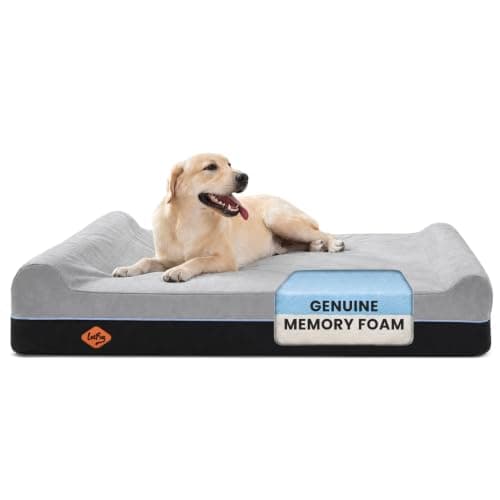
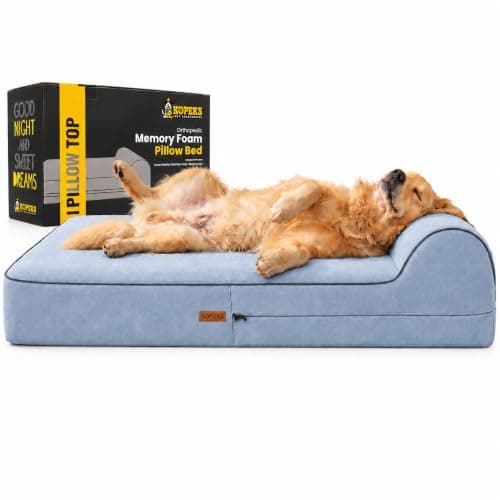
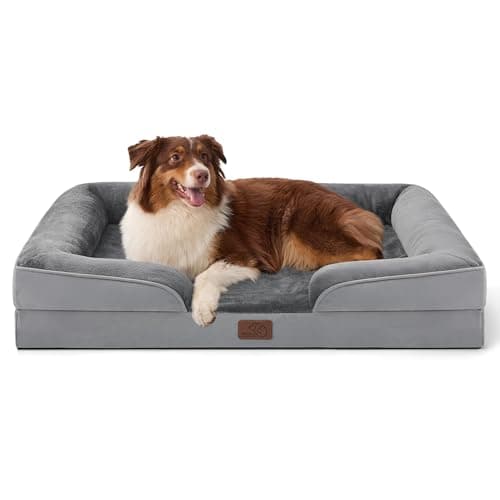
For most senior dogs under roughly 60 lb, egg-crate foam is enough, and the Bedsure Orthopedic is the one we would buy: a convoluted foam base, a low front edge a stiff dog can step over, and a cover that washes. Past roughly 70 lb - or for any dog whose elbow you can feel touching the floor through its current bed - switch to a single piece of solid memory foam, where the Laifug slab is the sane default and the KOPEKS is the giant-breed version. That is the whole decision. Everything below is how we got there and how to check it against your own dog.
The reason this question is confusing is that orthopedic is not a regulated word on a dog bed. It describes an intention, not a material. Two beds using it on the same listing page can be completely different objects inside - one a sculpted convoluted pad, one a dense slab, one a bag of shredded offcuts with a foam sheet laid on top. So the label tells you nothing and the fill tells you everything.
What each foam physically is
Egg-crate (convoluted) foam is a single sheet of polyurethane foam moulded into peaks and valleys. The peaks compress under the heavy parts of the dog and the valleys stay open, so the weight gets spread across more of the body than a flat sheet of the same density manages, and air moves through the troughs. It is cheaper to make, lighter to carry, and the standard base in the sub-100-dollar end of the category.
Solid memory foam is a single slab of viscoelastic foam. It softens where body heat hits it and firms up where it does not, so it takes the shape of a hip or a shoulder and holds it. There are no troughs, so there is less airflow, and there is more foam in the bed, so it costs more and weighs more. For a heavy dog, that mass is the entire point: depth is what stops the dog pressing through to the floor.
A third thing exists and is worth naming so you can avoid it: shredded foam fill, sold as a cheap orthopedic bed. It packs down into lumps within weeks and leaves gaps under the exact bony points you were trying to cushion. Neither side of this comparison includes one, and our page on what memory foam actually means on a listing explains how to spot the difference in the product copy.
The comparison, row by row
Egg-crate foam
Solid memory foam
Support under a light dog
Plenty - the peaks never fully compress
Plenty, with more than the dog needs
Support under a heavy dog
The limit of the category - peaks compress to the base
The reason this foam exists
Airflow
Good - the troughs move air
Poor - a slab holds body heat
Weight of the bed
Light; one person can carry it to the wash
Heavy; a bed you place once
Entry height
Lower overall profile
Taller - more foam means a bigger step up
Accident protection
Depends on the model; waterproof versions exist
Usually a liner under the cover
How long it lasts flat
Peaks soften first, often within a year or two under weight
Holds depth longer for the same dog
Typical price band
The cheapest honest orthopedic surface
Two to four times as much for the same footprint
Who it is for
Most senior dogs, and every dog that runs hot
Heavy dogs, bony dogs, and dogs that lie down all day
Note what is not in that table: a claim that one foam reduces pain more than the other. No published veterinary standard sets a foam type, density or thickness for dog beds, and we are not going to invent one. What both VCA and the AKC do say about managing canine osteoarthritis at home is softer, warmer, well-padded bedding and easier access - which is a description of fit, not of chemistry.
The bottoming-out test, which takes ten seconds
You do not have to guess which side of the weight rule your dog is on, because the bed it already owns will tell you. With the dog lying on it, slide a flat hand under the bed and press up beneath the hip or the elbow - the two places that take the load. If you can feel the bony point through the foam, the foam has run out and the dog has effectively been lying on the floor. Do the same on an empty corner for comparison.
A bed that fails that test does not need a different brand, it needs more foam. That is the single most useful thing on this page, and it is also how you know when an existing bed is finished - the detail version is at when to replace a dog bed, and the depth-by-weight argument is at how thick an orthopedic bed should be.
Heat is the real cost of a memory-foam slab
A slab keeps heat in. On a dog with a thick double coat, in a warm house, in July, that is the difference between a bed used and a bed abandoned for the tile floor by the back door. Egg crate breathes; the open troughs are a cooling feature nobody markets as one. If your dog already chooses hard cool floors over its bed, that is the signal - and either a gel-topped foam or a dedicated cooler surface is the answer, which we rank at cooling beds for a dog that runs hot.
Washing: the part that decides whether you keep the bed
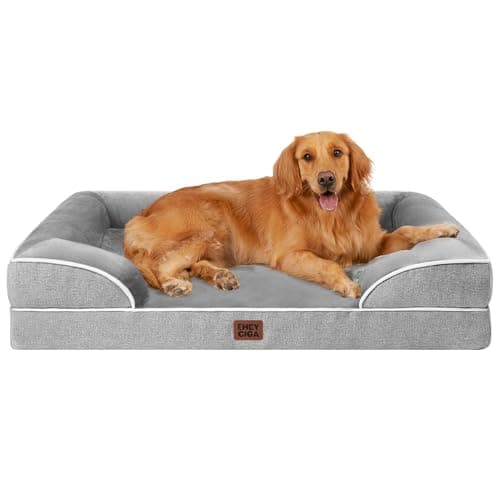
Neither foam goes in a washing machine. Ever. What goes in the machine is the cover, and both sides of this comparison ship with a removable one. The practical difference is weight and drying: an egg-crate pad can be carried to a tub, rinsed and stood up to dry in an afternoon, while a soaked memory-foam slab takes days and is heavy enough that most owners never attempt it. For a dog having accidents, that argues for a waterproof layer under the cover rather than a plan to wash the foam - the EHEYCIGA below is the egg-crate bed built that way, and the full method is at how to clean a memory-foam dog bed and the washable and waterproof beds.
Two cases where the question does not apply
Small dogs. A 14 lb terrier will not compress either foam. Buy on entry height, warmth and whether the dog likes to curl against something - see beds for small senior dogs.
Dogs with a bad back or a dog that cannot step over anything. Fill matters less than the absence of a wall. A flat mattress with no bolster is the right shape regardless of foam type - beds for a dog with IVDD covers why.
So which do you buy?
Weigh the dog, do the hand test on the current bed, and then: under about 60 lb with a bed that passes, buy egg crate and spend the difference on a second bed for the room the dog actually sleeps in. Over about 70 lb, or any weight with a bed that fails the test, buy the slab. Between the two numbers, let heat decide - a dog that pants in the house gets egg crate, a bony dog that lies still for sixteen hours gets foam depth.
The one to start with. A flat egg-crate foam base, a low front edge a stiff dog can step onto, and a cover that actually machine-washes — for a price that doesn't sting.
Built around the accident problem. A genuinely waterproof foam layer under a washable cover, with a low bolster — the sensible pick for an incontinent or leaky senior dog.
A thick single-piece memory-foam slab built for big dogs — the depth of foam is the point, and it's what a large arthritic dog needs so it isn't lying on the floor through the mattress.
A thick memory-foam slab with a pillow and a waterproof liner, sold in genuinely extra-large sizes. The nearest thing on Amazon to a brand-direct clinical foam bed, at a fraction of the price.
#ad · Live prices from the Amazon Product API, as of October 19, 2026. Where we have no verified live price we show none — we would rather leave a gap than print a number that has rotted.
In detail
The picks, in full
01
Most senior dogs, on a budget
Bedsure Orthopedic Dog Bed
Egg-crate support foamLow front entryRemovable washable coverBolster back + sides
8.7/10
The one to start with. A flat egg-crate foam base, a low front edge a stiff dog can step onto, and a cover that actually machine-washes — for a price that doesn't sting.
Support
7.5
Easy entry
9
Washability
9
Size range
8.5
Value
9.5
Pros
+Low, open front edge — no jump or high bolster to climb over
+Zippered cover comes off and machine-washes
+Widely available in sizes up to XL
Cons
−Egg-crate foam is supportive but not the deepest cushion for a very heavy dog
−Bolster is soft rather than structured
Don't buy this if…
…your dog is very large and heavy and tends to bottom-out foam — step up to a thicker solid-foam base like the PetFusion or Laifug.
Built around the accident problem. A genuinely waterproof foam layer under a washable cover, with a low bolster — the sensible pick for an incontinent or leaky senior dog.
Support
7.5
Easy entry
8.5
Washability
9.5
Size range
8
Value
8.5
Pros
+The foam itself is waterproof, not just the cover — accidents don't soak in
+Cover unzips and washes; bed dries out rather than staying damp
+Bolstered sides on a still-low profile
Cons
−The waterproof backing can feel less breathable in summer
−Support foam is mid-tier, fine for medium dogs
Don't buy this if…
…you want the deepest orthopedic support for a very heavy dog — this trades some foam depth for waterproofing.
A thick single-piece memory-foam slab built for big dogs — the depth of foam is the point, and it's what a large arthritic dog needs so it isn't lying on the floor through the mattress.
Support
9
Easy entry
8.5
Washability
8
Size range
7.5
Value
8
Pros
+Deep, dense foam that a heavy dog won't compress to the floor
+Waterproof liner protects the foam from accidents
+Non-slip base so the bed stays put on hard floors
Cons
−Heavy and large — not a bed you'll move room to room
−Flat design has no bolster for dogs that like to lean
Don't buy this if…
…your dog is small or likes to curl against a raised edge — a bolstered bed suits them better.
A thick memory-foam slab with a pillow and a waterproof liner, sold in genuinely extra-large sizes. The nearest thing on Amazon to a brand-direct clinical foam bed, at a fraction of the price.
Support
9.5
Easy entry
8
Washability
8
Size range
8.5
Value
7
Pros
+Real foam depth for a very heavy dog
+Waterproof liner protects the core from accidents
+The pillow gives a sore neck somewhere to rest without a full bolster wall
Cons
−Premium price for the category
−Heavy and awkward to move or wash
Don't buy this if…
…you're buying for a medium dog on a budget — the Bedsure or Laifug gets you most of the way for much less.
On what the manufacturer states and what an owner can check at home: the fill as described on the live listing, the stated depth, whether the cover comes off, whether there is a waterproof layer and where it sits, and the step-in height relative to the bed's total depth. We have not cut a bed open and we have no lab, so there are no density figures here that we measured - the published rubric behind the scores is on our methodology page. No product was added to our registry to write this page; all four picks are beds we already rank.
Four things to check on any listing
The fill, named. If the listing will not say whether the base is a slab, a convoluted sheet or shredded fill, assume shredded.
A stated thickness. A bed that gives no depth figure is hiding one.
Where the waterproofing is. A waterproof cover keeps urine on top of the bed; a waterproof liner keeps it out of the foam. Those are different products.
A foam certification, read correctly. A CertiPUR-US line tells you the maker knows what foam they bought - it is a content and emissions certification, not an orthopedic claim.
How we chose
We haven't lab-tested these
We compiled the published specifications, manufacturer manuals and aggregated owner reviews, then scored each product against a published rubric. The scores are judgments from that research — they are not measurements we took in a lab, because we don't have one and we won't pretend we do. Prices are pulled live from Amazon; where we can't verify one, we say "check price" rather than print a stale number.
Questions
Frequently asked
Is egg-crate foam as good as memory foam for an arthritic dog?+
For a dog light enough not to compress it, yes - and it breathes better, which matters more often than owners expect. The case for solid memory foam is weight: once a dog is heavy enough to press the peaks flat, the egg crate stops spreading load and the dog is lying on the base. Test your current bed by pressing a hand up under the hip while the dog lies on it.
Does memory foam make a dog too hot?+
A solid slab holds body heat, which is welcome in a cold room and a genuine problem in a warm one. If your dog abandons its bed for a tile floor in summer, that is the symptom. Gel-infused foam helps at the surface; an egg-crate base or a dedicated cooling mat helps more.
Can you wash either kind of foam?+
Not in a machine - the covers wash, the foam does not. An egg-crate pad can be rinsed and air-dried in a day; a memory-foam slab holds water for days and is usually too heavy to handle wet. If accidents are the issue, buy a bed with a waterproof liner under the cover rather than planning to wash the core.
Which lasts longer?+
Under the same dog, the solid slab. Egg-crate peaks soften before a slab loses depth, and a heavy dog gets there faster. Both end the same way: they flatten quietly, the dog keeps using the bed, and nobody notices until the dog is stiffer in the mornings.
What about gel memory foam - is that a third option?+
It is memory foam with a cooling gel through it, so it belongs on the slab side of this comparison. The gel is a modifier, not a substitute for depth: check the thickness first and the gel second.
We don't run a testing lab, and we don't pretend to. Product facts are compiled from manufacturer listings and manuals; health facts are cited to reputable veterinary sources. Where we couldn't verify something, we say so on the page rather than quietly leaving it out. Read our full method.