Dog hip braces — what they do, and what they don't
A hip brace is compression and warmth around a joint, and for some dogs that's genuinely comforting. It is not a treatment, and it is not a substitute for a diagnosis. Here's the honest version, and the ones worth buying.
We earn a commission when you buy through our Amazon links, at no extra cost to you. It never changes our rankings, and we say so when the cheaper product is the better buy. How this works.
Let's start with what we can honestly say. A hip brace applies compression and warmth around the hip and lower back, and some owners of dysplastic or arthritic dogs report their dog moves more comfortably in one. Compression and warmth are recognized comfort measures. That's a reasonable thing to try.
What we won't claim is that a fabric wrap stabilizes a malformed hip joint, corrects gait, or treats hip dysplasia. It doesn't. Hip dysplasia is a structural problem in the joint itself; the AKC describes it as a developmental condition managed through weight control, exercise management, veterinary pain relief and, in some cases, surgery. A brace sits outside all of that, offering comfort at the margins.
We're being blunt about this because the marketing in this category is not. Listings routinely promise joint stabilization and pain relief in language that would need clinical evidence to support, and none is offered. If you buy a brace, buy it as a comfort item you are trying, with a clear idea of what would count as it working.
Where a brace genuinely earns its place
Warmth on a cold morning. Cold stiffens an arthritic joint, and warmth is part of standard home comfort advice. A padded wrap over the hips does that job.
A dog that likes the pressure. Some dogs visibly settle in a snug wrap. You'll know within a few days.
A built-in handle. The braces with a lift strap double as an always-on handle, which is a real practical gain if your dog needs an occasional hand up.
And where it doesn't
If your dog needs help bearing weight — if the back end is actually collapsing rather than just sore — a brace is the wrong category. That's a rear-support sling or a full-body harness, which are built to take load. And if the hips have gone entirely, the conversation is about a wheelchair.
A brace also does nothing about the two changes that reliably help a dysplastic dog: taking the jumps out of the day with a ramp or steps, and putting the dog on a bed with enough foam that the bad hip isn't pressed against the floor for fourteen hours. If you only have money for one thing, spend it there rather than here.
The short version: the Yinchogee is the sensible first try — cheap enough that it isn't a disaster if your dog hates it. The HAPPYHAO adds a lift strap, which is the most genuinely useful feature in the category. The LISPOO is the structured, expensive option and we'd only buy it on veterinary advice.
Before you buy any of them, it is worth being clear about what a hip brace can and cannot do - the honest answer is narrower than the category is sold with, and there are four dogs it will not help at all. We have written that out plainly at do dog hip braces work?
It is also worth checking that the hips are the right target at all. A wrap only does anything if it is on the joint that is failing, and the signs for hip, knee, front wrist and elbow are distinguishable from the sofa - which leg brace does my dog need?
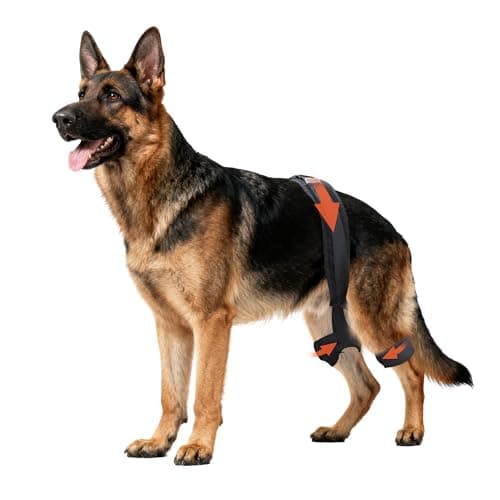
The sensible first brace. Adjustable compression wrap around the hips at a price that doesn't punish you if your dog turns out to hate wearing it — which plenty do.
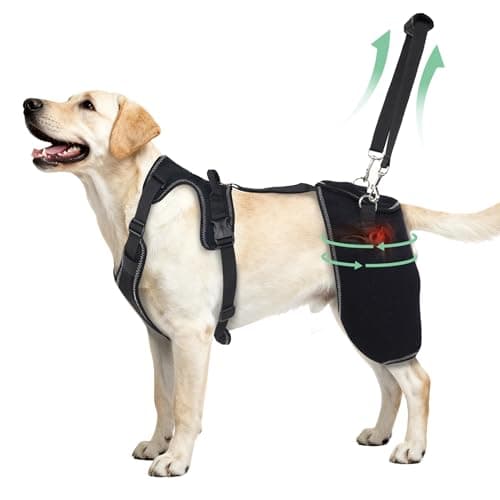
A hip brace with a lift strap built in, which turns it into two things at once — daytime support your dog wears, and a handle you grab when the back end drops on a step.
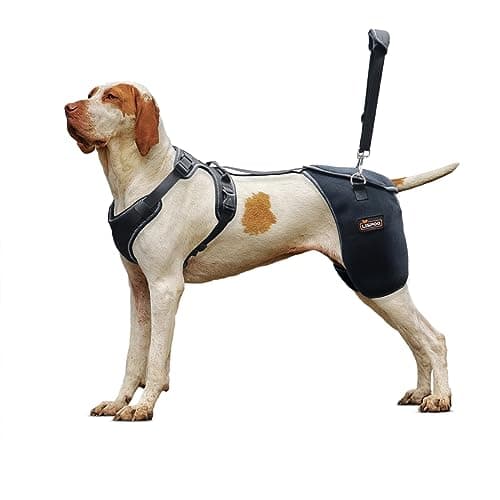
The structured end of the market — a fitted brace built around the hip and hind leg rather than a wrap thrown over it. Expensive, and only worth it on veterinary advice.
#ad · Live prices from the Amazon Product API, as of October 20, 2026. Where we have no verified live price we show none — we would rather leave a gap than print a number that has rotted.
In detail
The picks, in full
01
A first try at hip compression
Yinchogee Dog Hip Brace
Adjustable compression wrapHip and lower-back coverageMultiple sizesFabric-and-strap build
8.1/10
The sensible first brace. Adjustable compression wrap around the hips at a price that doesn't punish you if your dog turns out to hate wearing it — which plenty do.
Support match
7
Padding
7.5
Ease of fitting
8
Adjustability
8.5
Value
9.5
Pros
+Low cost for a category where prices climb fast
+Adjusts in several places, so an odd-shaped dog can still get a fit
+Light enough that many dogs settle into it
Cons
−Compression wrap, not a structured orthotic — no rigid support
−Straps loosen over a long wear and need checking
Don't buy this if…
…your vet has recommended a fitted orthotic for a specific joint problem. Buy the one they specify, not this.
Hip wrap with warmth panelIntegrated lift strapAdjustable fitMedium–large sizing
7.8/10
A hip brace with a lift strap built in, which turns it into two things at once — daytime support your dog wears, and a handle you grab when the back end drops on a step.
Support match
8
Padding
8
Ease of fitting
7.5
Adjustability
8
Value
7.5
Pros
+The lift strap means no separate sling to fetch
+Warmth panel over the hips, which stiff old dogs often settle into
+Covers a wide medium-to-large size range
Cons
−More expensive than a plain compression wrap
−Warm layer is a lot in a hot house
Don't buy this if…
…you're lifting a heavy dog repeatedly — a proper rear sling or full-body harness spreads that load far better than a strap on a brace.
Structured hip and leg braceMultiple adjustment pointsSized by measurementFirmer build than a wrap
7.5/10
The structured end of the market — a fitted brace built around the hip and hind leg rather than a wrap thrown over it. Expensive, and only worth it on veterinary advice.
Support match
8.5
Padding
8
Ease of fitting
6.5
Adjustability
8.5
Value
6
Pros
+Holds its shape rather than shifting as the dog moves
+Targets the hind leg as well as the hip
+Sized properly rather than one-size-stretched
Cons
−Costs several times what a compression wrap does
−Fitting takes patience, and a poor fit is worse than no brace
Don't buy this if…
…nobody has actually examined your dog. At this price, buy the vet visit first and the brace second.
Scored on support match, padding, ease of fitting, adjustability and value — deliberately not on any claim of clinical effect, because we have no basis to assess one. These are judgments from published product specifications and aggregated owner reviews; see the methodology.
Give it two weeks, and decide honestly
Set yourself a test before you start. Is your dog rising more easily? Walking further before it wants to stop? Settling more quickly at night? Write down what you see now, then look again after two weeks of consistent use. If nothing has changed, the brace isn't working for your dog, and continuing to use it costs your dog comfort for no return.
Check the skin underneath every day
Anything strapped tightly around a dog can rub, and an old dog with thin skin marks easily. Look under the brace daily, especially at the groin and where straps cross bone. Take it off overnight. If you see redness, loosen it or stop.
Fit is everything, and one-size-fits-most rarely does
Measure waist girth in front of the back legs and the distance from the hip to the base of the tail, and buy to the manufacturer's chart rather than to your dog's weight. A loose brace slides down and becomes a trip hazard; a tight one restricts. If your dog is an unusual shape, the adjustable wraps forgive far more than the structured braces do.
Don't let the brace replace the vet visit
This is the failure mode we care most about. A dog whose hips hurt enough that you're shopping for a brace is a dog with a treatable pain problem, and modern veterinary pain management for dogs is genuinely good. Buy the brace if you like. Book the appointment first.
If the diagnosis is hip dysplasia, the brace is one small item on a longer home plan. Our guide to helping a dog with hip dysplasia at home puts it in order with weight, exercise, floors and stairs.
How we chose
We haven't lab-tested these
We compiled the published specifications, manufacturer manuals and aggregated owner reviews, then scored each product against a published rubric. The scores are judgments from that research — they are not measurements we took in a lab, because we don't have one and we won't pretend we do. Prices are pulled live from Amazon; where we can't verify one, we say "check price" rather than print a stale number.
Questions
Frequently asked
Do dog hip braces actually work?+
A hip brace provides compression and warmth, which some owners find helps their dog move more comfortably. There is no good evidence that a fabric brace stabilizes a dysplastic joint or treats the underlying condition, and we don't claim it does. Treat it as a comfort item worth a two-week trial, alongside — never instead of — veterinary care.
Is a hip brace or a support harness better for a weak back end?+
If your dog needs help bearing weight, buy a harness or sling — those are built to take load, and a brace is not. A brace is for a dog that can still walk but is stiff and sore, where compression and warmth may make it more comfortable. The two solve different problems.
How long can a dog wear a hip brace?+
Follow the manufacturer's guidance and your vet's advice. In practice most owners use one for periods during the day and remove it overnight. Check the skin underneath daily for rubbing or redness, particularly on an old dog with thin skin, and stop if you find any.
We don't run a testing lab, and we don't pretend to. Product facts are compiled from manufacturer listings and manuals; health facts are cited to reputable veterinary sources. Where we couldn't verify something, we say so on the page rather than quietly leaving it out. Read our full method.