Gifts for a dog with arthritis, chosen from what the vets recommend
If you know the diagnosis, you can buy for it. Veterinary guidance for arthritic dogs comes down to four practical things — and each one has a gift that delivers it.
We earn a commission when you buy through our Amazon links, at no extra cost to you. It never changes our rankings, and we say so when the cheaper product is the better buy. How this works.
Arthritis is the most common reason an old dog slows down — AKC puts it at roughly one dog in five — and the practical advice for living with it is remarkably consistent across veterinary sources. Keep the dog warm and dry. Give it a supportive bed. Stop it slipping. Stop it jumping. That is not a shopping list we made up; it is, almost word for word, what VCA's osteoarthritis guidance says, and every gift on this page maps to one of those four lines.
That makes this the easiest gift page on the site to get right, with one caveat we will repeat: the medicine is not yours to buy. Pain relief, joint supplements and anything that goes in the dog are the owner's and the vet's decision. Comfort is what a gift can do, and comfort is what these are.
1. Warmth — "keep your dog warm and dry"
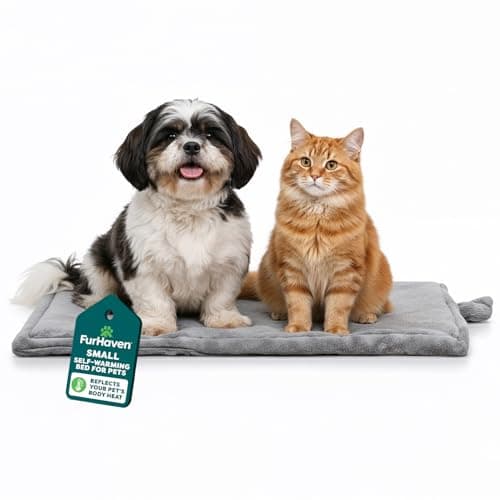
VCA's line is that cold, damp conditions "may worsen stiffness and discomfort," and anyone who has watched an arthritic dog on a January morning knows what that looks like. Warmth is the first thing to give, and there are two ways to do it. A heated bed is the bigger, better gift: gentle, low-wattage warmth exactly where the dog spends the night, so it gets up easier in the morning. A self-warming mat is the smaller, cord-free version that goes on top of any bed and suits a household that does not want another plug.
What to check: the dog's rough size, and for the heated bed, whether there is an outlet by its sleeping spot.
2. A supportive bed — "to reduce pressure on sore joints"
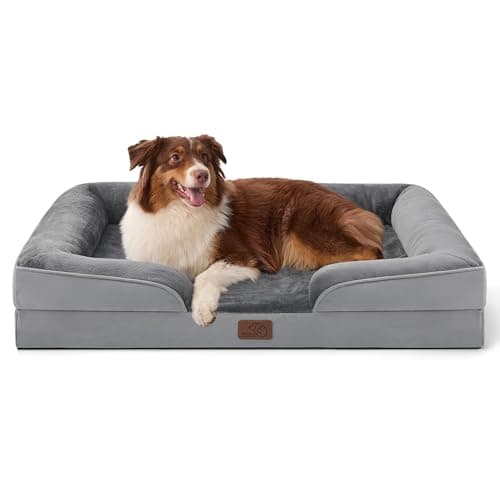
The bed is where an arthritic dog spends most of its day, and VCA suggests an orthopedic or memory foam bed specifically to take pressure off the joints. What matters is foam that holds the dog up rather than letting it sink to the floor, a low front edge so a stiff dog can step on instead of climbing, and a cover that washes. Our pick is the bed we rank first for arthritic dogs overall — the one we would start with for most dogs.
What to check: weight and lying-down length, plus about six inches. A bed is the one gift on this page that needs a measurement. If you cannot get it, give warmth or grip instead.
3. Grip — the floors are half the problem
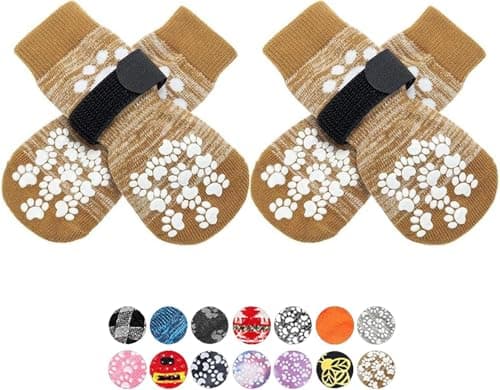
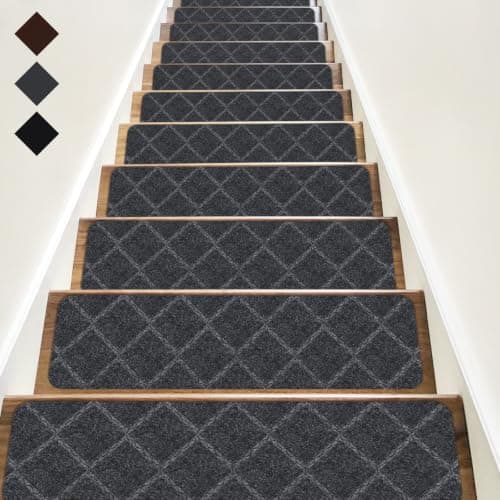
VCA is blunt that slippery floors make it hard for an arthritic dog to "walk, turn, rise, and move comfortably," and recommends rugs and mats for traction. The gift version comes in two parts. Non-slip socks give the dog grip everywhere it walks, for very little money. Carpet stair treads fix the one place a slip is a fall — a bare wooden staircase — and they are the pick for any household with stairs the dog still uses.
What to check: whether the floors are hard (if the house is carpeted, skip the socks), the dog's paw width for socks, and whether the stairs are bare.
4. No more jumping — the landing is what hurts
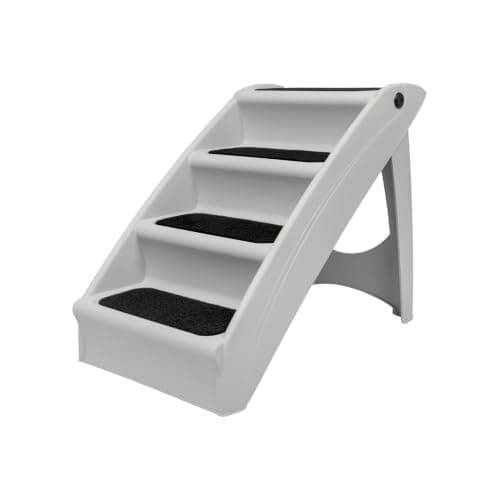
AKC lists difficulty with stairs and jumping onto furniture as a hallmark sign of arthritis, and the reason is the landing: a dog dropping off a couch puts its whole weight through sore joints. Folding dog stairs remove the jump in both directions. This is the gift with the biggest single effect for a dog that still insists on the couch, and a completely wasted one for a dog that has given it up.
What to check: does the dog still get on the furniture, and is there floor space beside it?
What we left off, and why
Joint supplements, pain relief, braces and anything that touches the diagnosis itself. These can all be right for an arthritic dog — but which ones, and whether, is a conversation between the owner and their vet, and a dog may already be on something. A gift should never put the owner in the position of explaining why they will not use it.
The short version: heated bed if you can give one big thing; socks if you can give one small thing; the orthopedic bed if you have the measurements; the stairs if the dog still jumps; the treads if the house has bare stairs; the self-warming mat if there is no outlet.
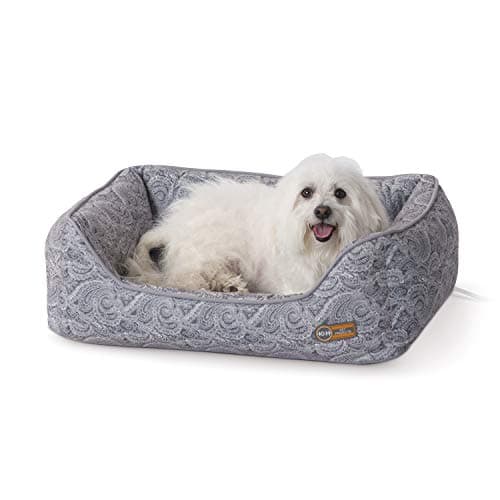
A gently, thermostatically heated bolster bed — it warms only to the dog and only when the dog is on it, which is the safe way to give a stiff old dog warmth overnight.
The one to start with. A flat egg-crate foam base, a low front edge a stiff dog can step onto, and a cover that actually machine-washes — for a price that doesn't sting.
The whole-paw fix. Socks cover the pad with a grippy sole, which is the fastest way to give a scrambling dog traction on the whole foot — if your dog tolerates wearing them.
The steps we'd buy for a medium or large senior. A rigid frame that doesn't flex under a real dog, a high-traction tread, and it folds flat when the guest room needs its floor back.
#ad · Live prices from the Amazon Product API, as of Sep 22, 2026. Where we have no verified live price we show none — we would rather leave a gap than print a number that has rotted.
A gently, thermostatically heated bolster bed — it warms only to the dog and only when the dog is on it, which is the safe way to give a stiff old dog warmth overnight.
Warmth control
9
Safety
9
Washability
8.5
Comfort
8.5
Value
7.5
Pros
+Warms to the dog's body temperature, not hot
+Bolster plus a warm base for a cold, achy dog
+Safety-listed heating element and washable cover
Cons
−Needs a nearby outlet
−Heated beds cost more than an unheated equivalent
Don't buy this if…
…your dog runs warm or the room is already heated — a self-warming mat gives gentle warmth with no electricity.
Egg-crate support foamLow front entryRemovable washable coverBolster back + sides
8.7/10
The one to start with. A flat egg-crate foam base, a low front edge a stiff dog can step onto, and a cover that actually machine-washes — for a price that doesn't sting.
Support
7.5
Easy entry
9
Washability
9
Size range
8.5
Value
9.5
Pros
+Low, open front edge — no jump or high bolster to climb over
+Zippered cover comes off and machine-washes
+Widely available in sizes up to XL
Cons
−Egg-crate foam is supportive but not the deepest cushion for a very heavy dog
−Bolster is soft rather than structured
Don't buy this if…
…your dog is very large and heavy and tends to bottom-out foam — step up to a thicker solid-foam base like the PetFusion or Laifug.
The whole-paw fix. Socks cover the pad with a grippy sole, which is the fastest way to give a scrambling dog traction on the whole foot — if your dog tolerates wearing them.
Grip
8.5
Stays on
7
Comfort
8
Value
9
Pros
+Covers the entire pad — grip everywhere the foot lands
+Straps help them stay on better than plain socks
+Cheap enough to keep spare pairs
Cons
−Some dogs dislike socks and shake them off
−Need the right size and periodic re-fitting
Don't buy this if…
…your dog won't keep anything on its feet — toe grips or paw wax leave the pad bare.
Rigid folding frameHigh-traction treads25 in heightFolds flat for storage
8.4/10
The steps we'd buy for a medium or large senior. A rigid frame that doesn't flex under a real dog, a high-traction tread, and it folds flat when the guest room needs its floor back.
Gentle incline
7
Grip surface
9
Weight capacity
9
Portability
8
Stability
9
Pros
+Doesn't squash or sway the way foam steps do under weight
+Grippy tread surface a nervous dog will commit to
+Folds flat, so it isn't furniture you're stuck with
Cons
−Heavier and pricier than foam steps
−Hard edges — a missed step is less forgiving than on foam
Don't buy this if…
…your dog is wobbly on its feet. A dog that sways needs the continuous surface of a ramp, not discrete steps.
The classic arthritic pattern. Warmth helps most here — a heated bed overnight is the direct answer, and it is a gift the owner may not have thought to buy for themselves.
Scrabbling, splaying, or refusing to walk on the kitchen floor
A grip problem before it is a joint problem. Socks or treads first; they are cheap and the effect is immediate.
Hesitating at the couch, then jumping anyway
Stairs. The dog has decided the couch is worth the pain; take the pain out of the decision.
Restless at night, changing position often
Often the bed. A dog that cannot get comfortable on thin fill is lying on the floor through a cover. This is where a genuine support-foam bed earns its price — with the measurement.
A sudden change
Not a gift situation. A dog that was fine last week and cannot rise this week needs a vet, and the best thing a friend can do is say so gently.
How we chose
We haven't lab-tested these
We compiled the published specifications, manufacturer manuals and aggregated owner reviews, then scored each product against a published rubric. The scores are judgments from that research — they are not measurements we took in a lab, because we don't have one and we won't pretend we do. Prices are pulled live from Amazon; where we can't verify one, we say "check price" rather than print a stale number.
Questions
Frequently asked
What helps a dog with arthritis at home?+
The consistent veterinary advice is warmth and dryness, an orthopedic bed, traction on slippery floors, and avoiding jumps and unsupervised stairs — alongside whatever pain management the vet prescribes. Each of those has a gift that delivers it; the medicine does not.
Is a heated bed good for a dog with arthritis?+
Veterinary guidance says to keep an arthritic dog warm and that cold, damp conditions may worsen stiffness. A heated bed is the most direct way to do that overnight. Choose a purpose-made pet bed from an established brand, which warms gently rather than running hot.
Should I give a dog with arthritis a joint supplement as a present?+
No. Which supplement, whether it is appropriate and at what dose are veterinary decisions, and the dog may already be on one. Give comfort — warmth, a bed, grip — and leave the supplements to the owner and the vet.
What's the cheapest useful gift for an arthritic dog?+
Non-slip socks if the house has hard floors; a self-warming mat if it does not. Both are well under $20 at the time of writing and both address something the veterinary guidance names directly.
We don't run a testing lab, and we don't pretend to. Product facts are compiled from manufacturer listings and manuals; health facts are cited to reputable veterinary sources. Where we couldn't verify something, we say so on the page rather than quietly leaving it out. Read our full method.