A Frenchie's bed has to solve two problems most bed advice never mentions: a spine the AKC has a DNA test for, and a dog that physically cannot pant itself cool. Support is only half the decision.
We earn a commission when you buy through our Amazon links, at no extra cost to you. It never changes our rankings, and we say so when the cheaper product is the better buy. How this works.
Most "best bed for a French bulldog" advice is a small-dog bed list with the breed name pasted on top. That misses what actually makes the decision different, and it is two specific things: the shape of the breed's back, and the fact that a Frenchie is worse than almost any other dog at getting rid of heat.
Both are documented, and both change what you should buy. Neither is about how the bed looks.
The back: why a flat bed matters more for this breed
The AKC's own recommended DNA health panel for the French bulldog includes a test named "Intervertebral Disc Disease Risk Factor and Chondrodystrophy (CDDY with IVDD)". That is about as clear a statement of breed risk as you will get: the national breed registry considers disc disease enough of a concern in Frenchies to recommend screening breeding stock for it. (The same panel also lists degenerative myelopathy, which we cover in a separate stage-by-stage guide.)
VCA's disc-disease page does not name the French bulldog — it names dachshunds, beagles and poodles for the young-onset type — but it does describe the mechanism that applies: dogs with long backs and shortened, bowed legs see their discs deteriorate faster. It also notes that after a disc protrusion or rupture, strict rest is required for the first three to six weeks, with or without surgery. We are saying plainly what each source does and does not cover, because a breed page is exactly where that line usually gets blurred.
What this means for a bed is unglamorous and specific:
Flat beats bolstered. A raised rim asks the dog to arch over it to get in and out, several times a day, for years. A flat mattress asks for nothing.
Low beats plush. A Frenchie has short legs. Every inch of bed height is an inch it has to climb, and climbing is the movement you are trying to remove.
Big enough to lie flat out. Frenchies sprawl — the frog-leg position — and a bed that forces a curl is a bed that keeps the spine flexed all night.
Firm enough not to sag in the middle. A dog that sinks into a soft center is a dog lying in a hammock. Support foam, not fiber fill.
This is the part that makes a Frenchie bed different from any other small-dog bed, and it is the reason two of the picks below are cooling products rather than mattresses.
VCA's page on brachycephalic airway syndrome names the French bulldog explicitly among the affected breeds, and states the consequence directly: affected dogs are more prone to overheating, as their ability to pant and cool themselves is compromised. Panting is how a dog sheds heat. A breed whose airway makes panting hard is a breed with the main cooling system throttled.
VCA's conservative management advice for these dogs is environmental: controlling exercise levels, avoiding hot or humid conditions, keeping the dog in an air-conditioned area during the summer, and avoiding stress. It also notes that signs are often worse in hot or humid weather. A bed is part of that environment — the surface a dog spends most of the day lying on either traps heat against it or lets it go.
The practical upshot: for an older Frenchie, a deep plush bed in a warm room is not a neutral choice. Thick memory foam is an insulator. If your dog seeks out the kitchen tile in summer, that is data, and our guide to getting a senior dog through summer covers the rest of the room.
One caution in the other direction, because it is easy to overcorrect: a cold hard floor stiffens an arthritic joint. The aim is a cooler supportive surface, not sending the dog to lie on tile. Our heat or cold for a stiff dog page reconciles the two.
What we scored these on
Back-friendly shape. Flat rather than walled, and a step-in height a short-legged dog clears without arching.
Heat behavior. Does the surface trap heat against the dog or move it away? Deep foam insulates; mesh and gel do not.
Size for a sprawler. Room for the frog-leg position on a dog that is typically in the high teens to high twenties in pounds.
Cleanability. Frenchie skin folds, drool and the occasional accident. A cover that machine-washes is not optional.
Value. Most of these are inexpensive, and the honest answer for this breed is often two cheap surfaces rather than one expensive one.
Scores are judgments from published manufacturer specifications and veterinary sources, in line with our methodology — we have no lab and we have not measured a surface temperature. Every pick here is already in our verified registry and carries a live price from our own feed rather than a number typed into this article.
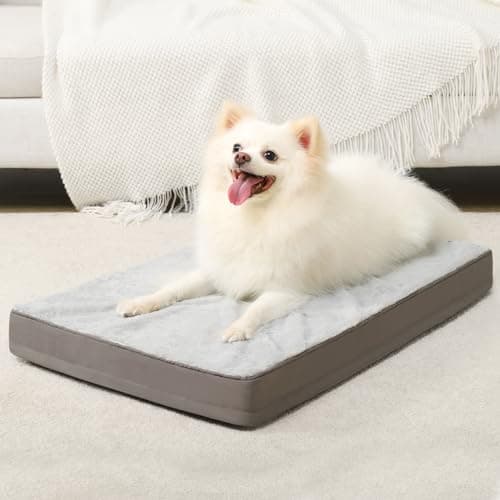
The cheap one that still has a waterproof lining. It's a flat little mattress rather than a plush nest — which is exactly right for a stiff small dog that would rather not climb.
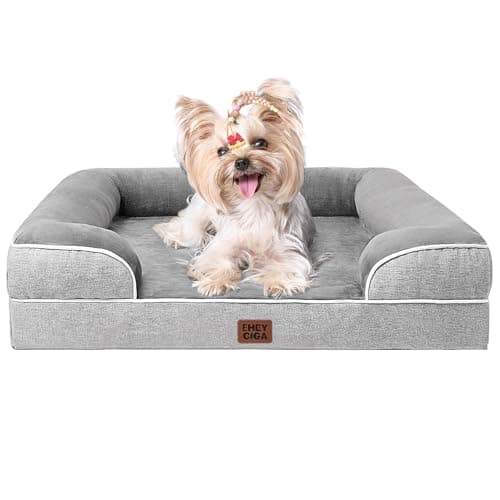
The small-dog version of our overall favorite. Same egg-crate support base and washable cover, scaled down so a little senior isn't lost on a bed built for a labrador.
A small memory-foam bed with the waterproof layer built in — the sensible choice if your little senior has started having accidents, which is when most small-dog beds get binned.
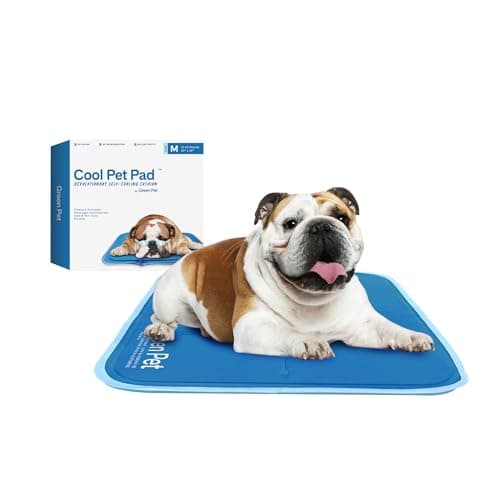
Pressure-activated gel that needs no water, no power and no freezer. Lay it on the bed your dog already loves and you have added cooling without replacing anything.
#ad · Live prices from the Amazon Product API, as of October 20, 2026. Where we have no verified live price we show none — we would rather leave a gap than print a number that has rotted.
In detail
The picks, in full
01
The budget flat-mat option
KSIIA Orthopedic Dog Bed for Small Dogs
Waterproof liningFlat mattress shapeRemovable washable cover23 x 17 in size
8.1/10
The cheap one that still has a waterproof lining. It's a flat little mattress rather than a plush nest — which is exactly right for a stiff small dog that would rather not climb.
Support
6.5
Easy entry
9.5
Washability
9
Size range
6
Value
9.5
Pros
+Almost zero entry height — a stiff dog walks straight on
+Waterproof lining under a washable cover at a low price
+Fits inside most small crates
Cons
−Thin compared with a proper foam slab
−No bolster for a dog that likes to rest its chin on something
Don't buy this if…
…your dog is a leaner or curler — it will look for an edge to press against and this bed doesn't have one.
Egg-crate support foamRemovable washable coverLow bolster sidesSmall-dog sizing
8.4/10
The small-dog version of our overall favorite. Same egg-crate support base and washable cover, scaled down so a little senior isn't lost on a bed built for a labrador.
Support
7.5
Easy entry
9
Washability
9
Size range
7
Value
9.5
Pros
+Genuine support foam at a small-dog price
+Cover unzips and machine-washes
+Low sides a stiff little dog can step over
Cons
−Foam depth is modest — it's a small-dog bed, not a scaled-down slab
−Bolster is soft rather than structured
Don't buy this if…
…your small dog likes to burrow under something — a covered or hooded bed suits that habit better than an open mattress.
A small memory-foam bed with the waterproof layer built in — the sensible choice if your little senior has started having accidents, which is when most small-dog beds get binned.
Support
8
Easy entry
8.5
Washability
9.5
Size range
6.5
Value
9
Pros
+Waterproofing is in the bed, not just the cover
+Memory foam rather than loose fill at this size
+Non-slip base so it doesn't skate on hard floors
Cons
−Waterproof backing is less breathable in warm rooms
−Small sizes only — no option if your dog grows into a bigger bed
Don't buy this if…
…your dog is dry and you'd rather have breathability — a plain egg-crate bed is cooler to lie on.
Patented pressure-activated cooling gelNo water, electricity or refrigeration neededListed 30 x 20 in, for dogs 35-65 lbsListed to cool for up to 3 hours, then recharge in 15-20 minutes of non-use
6.8/10
Pressure-activated gel that needs no water, no power and no freezer. Lay it on the bed your dog already loves and you have added cooling without replacing anything.
Support
3
Cooling
8.5
Easy entry
9.5
Washability
6
Value
7
Pros
+Works the moment the dog lies on it — nothing to charge, fill or freeze
+Layers onto any existing orthopedic bed, so you keep the support you already paid for
+Folds flat and light, which makes it the one cooling item that travels
Cons
−Listed at up to 3 hours of cooling, then 15-20 minutes off the dog to recharge — it is not endlessly cold under a dog that never moves
−No support of its own; it is a topper, not a bed
−Costs more than two of the full cooling beds on this page, so it only makes sense over a bed you like
−Hand clean with a damp cloth — it does not go in a machine like a bed cover
Don't buy this if…
…you were hoping to solve support and cooling in one purchase — a gel mat on a bare floor gives your dog nothing to lie on.
The two-surface setup, which is what we would actually do
For most aging Frenchies the right answer is not one bed. It is a flat supportive mattress where the dog sleeps at night, plus a cooler surface it can move to during the day when it gets warm — and then letting the dog choose. Dogs thermoregulate by relocating, and a dog with only one option cannot.
That is cheaper than it sounds, because the cooling half does not need to be a bed. A gel pad laid on top of the mattress, or a raised cot in the coolest room, costs less than upgrading to a premium bed and does something a premium bed cannot. Our page on why one bed is rarely enough for an old dog makes the same argument for a different reason.
Sizing a bed for a French bulldog
Measure your dog nose to base of tail while it is lying stretched out — not curled — and add a few inches. For a typical Frenchie that lands you in the low-to-mid twenties of inches, which is the small end of most manufacturers' ranges rather than the middle. The mistake is buying by weight class alone: a Frenchie is heavy for its length, so a bed picked on weight will often be longer than needed and one picked on length can be underrated for the weight. Check both numbers against the listing. Our bed sizing guide has the full method.
What to skip
Donut and bolster beds with a high rim. They are the most-photographed shape and the worst fit for this back. If your dog genuinely likes to rest its chin on something, choose the lowest rim you can find rather than the plushest.
Very deep memory foam. Depth is the right answer for a heavy labrador that bottoms out cheap foam. A 20-something-pound dog does not bottom out much of anything, and the depth mostly buys insulation you do not want.
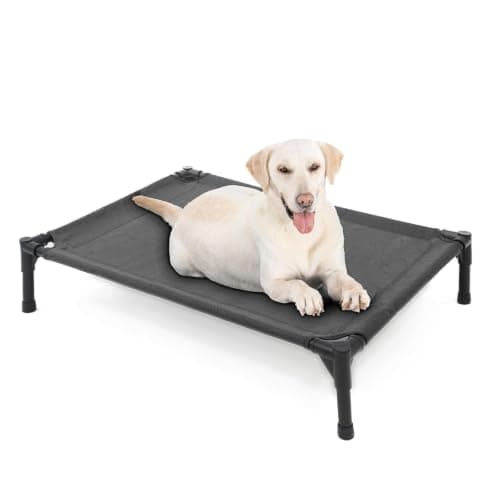
Raised bed frames with a step up. The airflow is genuinely useful; the climb is not. If you use a cot, keep it low and put it where the dog already chooses to lie.
Anything you cannot wash. This is a breed with skin folds. Assume the cover comes off monthly at minimum.
The collar-to-harness point, which both sources make
It is not a bed, but it belongs on any page about a Frenchie's neck and back, and both VCA pages we cite here happen to agree on it. The disc-disease page says all affected dogs should be fitted with a harness instead of a neck collar, and that dogs with cervical disc disease should always be walked on a harness rather than a leash attached to a collar. The brachycephalic page independently recommends a harness that does not tug at the neck area, because pressure there makes an already-restricted airway worse.
Two different problems, same fix. If your Frenchie still walks on a collar, that is a cheaper and more consequential change than any bed on this page. Our full-body harness picks cover the supportive end of that, for a dog that also needs a hand up.
How we chose
We haven't lab-tested these
We compiled the published specifications, manufacturer manuals and aggregated owner reviews, then scored each product against a published rubric. The scores are judgments from that research — they are not measurements we took in a lab, because we don't have one and we won't pretend we do. Prices are pulled live from Amazon; where we can't verify one, we say "check price" rather than print a stale number.
Questions
Frequently asked
What kind of bed is best for a French bulldog's back?+
A flat, firm mattress with no raised rim, low enough that a short-legged dog steps on rather than climbs in, and long enough that the dog can lie stretched out rather than curled. The AKC's recommended DNA panel for the breed includes a test for "Intervertebral Disc Disease Risk Factor and Chondrodystrophy", so the spine is worth designing around even in a dog with no diagnosis.
Do French bulldogs need a cooling bed?+
More than most breeds do. VCA names the French bulldog among the brachycephalic breeds and says affected dogs are more prone to overheating because their ability to pant and cool themselves is compromised. Its conservative management advice is environmental — avoid hot and humid conditions, keep the dog in an air-conditioned area in summer. A deep plush bed works against that, so a cooler surface the dog can move to is a reasonable addition rather than a gimmick.
Should I get a bolster bed for a Frenchie?+
Generally no, and it is the most common mistake in this category. A raised rim means the dog arches over it every time it gets in or out, which is the movement you would rather it did not repeat all day. If your dog clearly likes leaning on something, pick the lowest rim available rather than the deepest one.
What size bed does a French bulldog need?+
Measure nose to base of tail lying stretched out and add a few inches — for a typical Frenchie that is usually a bed in the low-to-mid twenties of inches. Check the listing's weight rating as well as its length, because a Frenchie is heavy for its body length and sizing on one number alone gets it wrong in both directions.
My French bulldog suddenly won't jump on the couch. Is that the bed?+
No — treat that as a veterinary question first. A sudden refusal to jump, a yelp on being lifted, a hunched stance or a dragging back foot can be signs of a disc injury, and VCA notes that strict rest is required for three to six weeks after a protrusion or rupture, with or without surgery. Buy the ramp and the flat bed afterwards, once you know what you are managing.
We don't run a testing lab, and we don't pretend to. Product facts are compiled from manufacturer listings and manuals; health facts are cited to reputable veterinary sources. Where we couldn't verify something, we say so on the page rather than quietly leaving it out. Read our full method.