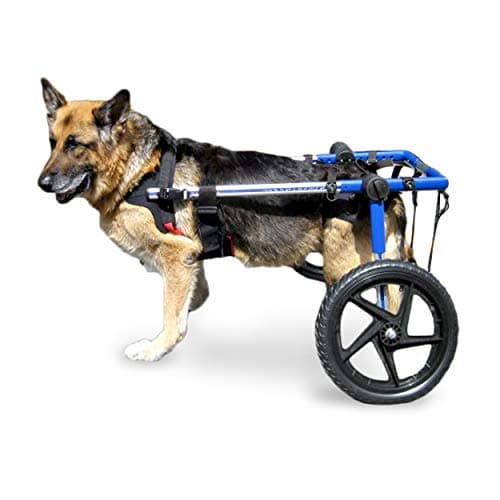
Mobility gear for a small dog: wheelchairs, carts and slings that actually size down
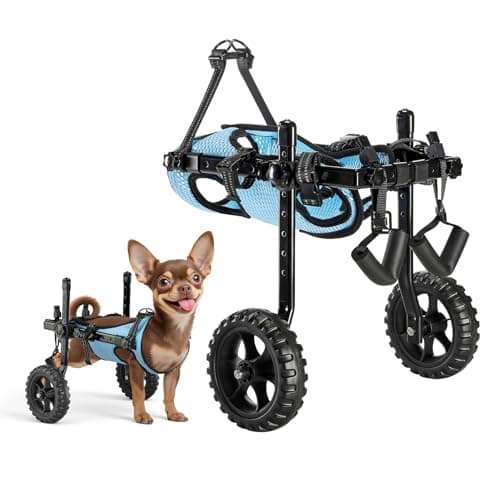
Most support gear is designed around a labrador and then shrunk. On a 15-pound dog with a long back, that is the difference between a cart it can power and a cart it fights.
We earn a commission when you buy through our Amazon links, at no extra cost to you. It never changes our rankings, and we say so when the cheaper product is the better buy. How this works.
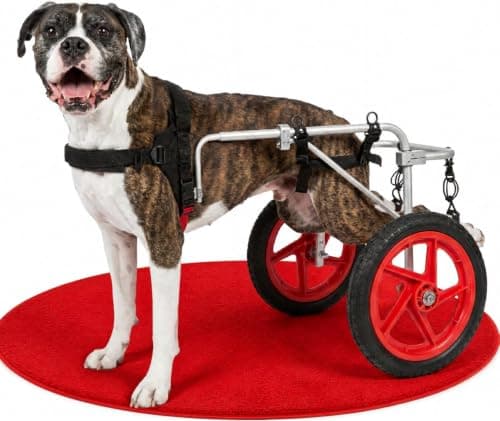
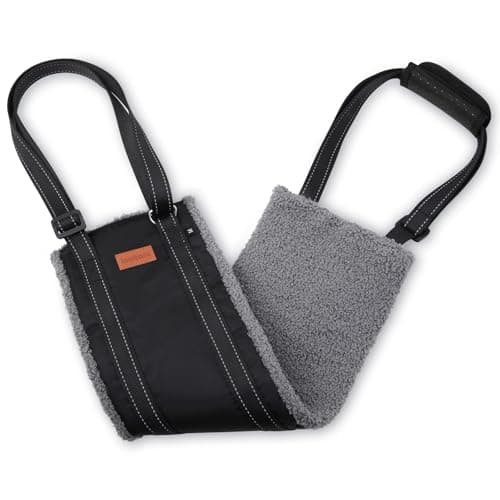
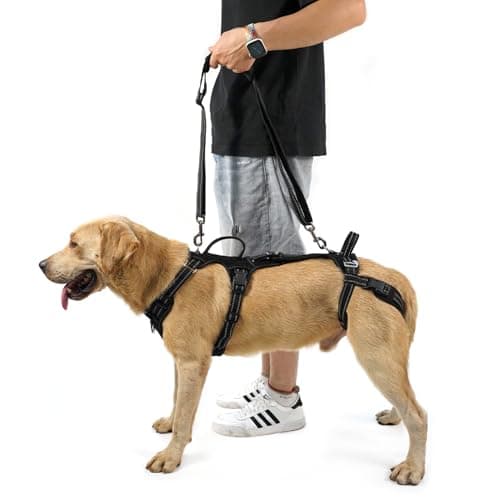
If you want the short answer: the Walkin' Wheels Dog Wheelchair is the one we would buy for a small dog, because it adjusts in height, length and width rather than arriving as one fixed shape - and on a short-legged, long-backed dog, the fit is the whole product. If a cart is not the stage you are at yet, the LOOBANI Portable Rear-Leg Sling is the cheapest honest answer for a little dog whose back end gives out occasionally, and the Coodeo Dog Lift & Walking Harness is the one to keep by the door for the three hard moments a day. All five picks below are ranked on how they behave at the small end of their own size charts.
This is a page about a specific problem, and it is worth naming before the products. Small dogs that lose their back legs usually lose them for a different reason than big dogs do. A labrador's rear end tends to go slowly, over years, from arthritis and general weakness. A dachshund, a corgi, a French bulldog or a beagle far more often loses it suddenly, from a disc. VCA describes intervertebral disk disease as a common cause of spinal problems in dogs and notes that in chondrodystrophic breeds - dachshunds, beagles, basset hounds and similar - disk material degenerates early and can herniate abruptly. The gear is the same category; the timeline is completely different, and so is the urgency.
Why small-dog fit is a different problem
Every manufacturer here publishes a size chart, and every size chart has a smallest size. What the chart does not tell you is how much of the design's adjustment range is left once you are at that end. Four things go wrong on small dogs specifically.
1. Weight is the wrong spec on its own
Carts and slings are usually sold by the dog's weight, because weight is the number an owner knows. For a small dog, the measurement that decides the fit is the height from the floor to the hock - the back of the rear ankle joint - and the length from the base of the tail to the shoulder. A 20-pound corgi and a 20-pound terrier are not the same object. Walkin' Pets publishes both a measuring walkthrough and an online wheelchair sizer for exactly this reason, and we cover the measurements on our own measuring guide.
2. A long back changes what "support" means
On a short-coupled dog, a rear sling under the belly lifts the hips and nothing else moves. On a dachshund-shaped dog, the same lift can let the spine sag between the shoulders and the sling. The width of the supporting band matters more than the thickness of its padding: a wide band spreads the load along the belly instead of pressing it into one point behind the ribs.
3. The dog has to be able to power it
A rear-support cart is pulled by the front legs. On a big dog there is plenty of engine for a heavier frame; on a 12-pound dog, frame weight is a tax paid on every step. That is why the fully adjustable and lighter aluminum carts rank above heavier budget frames here, even when the budget frame covers the weight on paper.
4. Your hands have to work it, several times a day
A small dog gets lifted. Often. Into the cart, out of it, up the step, onto the sofa. The gear that survives in a real household is the gear an owner with stiff hands can fasten without help, which is why a one-buckle sling beats a six-strap harness for a dog you can physically pick up. If you cannot lift your dog at all, read lifting a dog when you can't lift instead.
Wheelchair, sling, or both?
Where your dog is
What to buy
Back legs still work, but give out on walks or stairs
A rear-support sling. Do not buy a cart yet.
Back legs no longer bear weight; front end strong
A rear-support wheelchair, sized by hock height
After a disc episode, under a rehab plan
Whatever your vet or rehab vet specifies - ask before ordering
Weak in front as well as behind
Not a rear cart. A full-body harness first, and a quad-cart conversation with your vet
A small dog that will live with wheels, or is still changing
Best Friend Mobility
Rear-support cart, aluminum frame
Weight and height
A dog whose measurements sit squarely in one size
VEVOR
Rear-support cart, budget
Weight
A confirmed short-term or lighter-weight need on a tight budget
LOOBANI rear sling
Ultralight strap sling, folds to pocket size
Adjustable handle
Occasional rear give-way; the sling that lives in a coat pocket
Coodeo lift harness
Quick-on rear sling with a grab handle
Adjustable straps
The few hard moments a day - the step, the car, the kerb
What we have and have not done
We have not put a cart on a dachshund and timed it. We do not have a lab, and our methodology page says so plainly. What is below is the makers' own published size charts, sizing tools and listing specifications, kept at claim level, read against the published veterinary advice on disc disease and mobility devices - plus the arithmetic of a small dog pulling a frame. Prices render live from the Amazon listing with the date they were checked; none of them is a number we typed.
One thing this roundup deliberately does not do is split by the size of the dog, and on a small dog that matters more than it sounds: a cart sized by weight alone can be the wrong length for a long-backed dog, and frame weight is a real tax on a twelve-pound engine. If your dog is a dachshund, a corgi, a French bulldog or anything else under about 25 pounds, start instead with mobility gear for a small dog, which ranks the same carts on how they behave at the small end of their own size charts.
The timing answer shifts slightly for a small, long-backed dog, because the cause is usually a disc rather than slow arthritic decline - which means the vet conversation comes first and faster. We have put the size-specific version, including the measurements to take before you order, on mobility gear for a small dog.
If you have not decided whether to buy one at all - and plenty of people arrive here hoping to be talked out of it - we have written the honest version of that question separately, including what the AKC's own veterinarians say about overuse, at are dog strollers worth it?
The wheelchair we'd trust first. Fully adjustable across height, length and width, so one cart fits a range of dogs and adapts as your dog changes — with the best support behind it.
A lighter aluminum rear cart at a middle price. Simpler to assemble than most, and a common recommendation for a dog that needs wheels without the top-tier cost.
The budget cart. If your vet has confirmed a wheelchair is right and money is tight, this gets a dog rolling for a fraction of the brand-name price — with more trial-and-error on fit.
A quick-on rear sling with a handle — grab it for the few hard moments (up the porch step, into the car) rather than a full walk. Cheap, simple, kept by the door.
#ad · Live prices from the Amazon Product API, as of October 20, 2026. Where we have no verified live price we show none — we would rather leave a gap than print a number that has rotted.
In detail
The picks, in full
01
A first, adjustable wheelchair
Walkin' Wheels Dog Wheelchair
Adjustable height/length/widthRear-support designSized by weightEstablished brand support
8.7/10
The wheelchair we'd trust first. Fully adjustable across height, length and width, so one cart fits a range of dogs and adapts as your dog changes — with the best support behind it.
Fit & adjust
9.5
Build quality
9
Rear support
9
Support & parts
9
Value
7
Pros
+Adjusts in three dimensions — the closest to a custom fit off the shelf
+Backed by a real company with fitting help and parts
+Widely used, so vets and PTs recognize it
Cons
−Premium price versus generic carts
−Fitting takes patience to get right
Don't buy this if…
…cost is the deciding factor and your vet says a budget cart will do — a VEVOR is a fraction of the price.
Aluminum frameRear-support designSized by weight/heightNeoprene leg rings
8.1/10
A lighter aluminum rear cart at a middle price. Simpler to assemble than most, and a common recommendation for a dog that needs wheels without the top-tier cost.
Fit & adjust
8
Build quality
8.5
Rear support
8.5
Support & parts
7.5
Value
8
Pros
+Lightweight frame is easy for the dog to power
+Sized by measurement and generally quick to set up
+Long-standing, widely reviewed model
Cons
−Less fine adjustment than a Walkin' Wheels
−Get the size right the first time — less room to tweak
Don't buy this if…
…your dog is between sizes or still changing — a fully adjustable cart forgives that better.
Adjustable frameRear-support designSized by weightBudget price
7.2/10
The budget cart. If your vet has confirmed a wheelchair is right and money is tight, this gets a dog rolling for a fraction of the brand-name price — with more trial-and-error on fit.
Fit & adjust
7
Build quality
6.5
Rear support
7.5
Support & parts
6
Value
9
Pros
+By far the cheapest way into a wheelchair
+Adjustable across the basics
+Fine for a lighter or short-term need
Cons
−Instructions and support are thin — expect to fiddle
−Build isn't as refined as the established brands
Don't buy this if…
…your dog will live in the cart long-term — the fit and support of a Walkin' Wheels is worth the extra.
Rear support slingGrab handleAdjustable strapsBreathable fabric
8.0/10
A quick-on rear sling with a handle — grab it for the few hard moments (up the porch step, into the car) rather than a full walk. Cheap, simple, kept by the door.
Support match
8
Padding
7.5
Owner ergonomics
7.5
Adjustability
8
Value
9
Pros
+Goes on fast for a one-off lift up a step or into the car
+Handle sits right over the hips
+Inexpensive enough to keep one by every door
Cons
−Short handle means more bending than a long-lead sling for full walks
−Best for brief assists, not hours of support
Don't buy this if…
…you need to support your dog for whole walks — a long-handled GingerLead is kinder to your back.
We started from the makers' own published size charts and asked one question of each product: at the smallestsize it sells, how much adjustment is left? A cart sitting at the bottom of its height range on your dog has nowhere to go when your dog's posture changes - and posture does change, which is what a progressive problem means. The fully adjustable Walkin' Wheels wins that test, and Walkin' Pets publishes a sizer and a measuring walkthrough so you can check before you spend.
Then we weighted the owner's side of the job, because that is this site's buyer. A small dog is handled constantly, so fastening speed and the number of straps carry more weight here than they would on a page about a 90-pound dog, where the owner's problem is the lift itself rather than the buckles.
The measurements to take before you order
Ten minutes with a soft tape saves a fortnight of shipping a cart back and forth. Measure a standing dog, supported under the belly if it cannot stand alone:
Floor to hock. The back of the rear ankle joint. This sets cart height, and it is the number owners most often skip.
Length, tail base to shoulder. Sets frame length. Critical on a long-backed dog, where a frame sized by weight alone comes up short.
Width across the hips, at the widest point.
Girth just behind the front legs, for slings and harnesses.
Weight, from the vet's scale rather than a guess - every size chart asks for it, and bathroom-scale arithmetic with a wriggling dog is not it.
Write them down and check them against the specific listing you are buying, not a brand's general chart. Our full measuring guide covers how to take each one and the mistakes behind most returns.
Start with a sling, not a cart, if you are unsure
Carts are the dramatic purchase and frequently the premature one. A dog that still bears some weight behind usually does better with a sling for weeks or months first: it keeps the back legs working, which is the thing you are trying to preserve, and VCA's osteoarthritis guidance is blunt that movement is use-it-or-lose-it. A sling also costs a fraction of a cart, which matters when you may need the cart later anyway. Our sling-versus-harness guide is the decision tree for that stage, and when to get a wheelchair is the honest version of the timing question.
What a cart does not fix
A wheelchair solves distance. It does not solve the floor in your kitchen, it does not get your dog onto the sofa, and it is not something a dog lives in all day. The AKC's own guidance on mobility devices is to involve your vet and to ask about a referral to a veterinary rehabilitation practitioner, because the cart is one part of a plan. For the rest of the house the cheap fixes do most of the work: a continuous run of non-slip rugs on the route your dog actually walks, a low ramp or short steps at the furniture, and a bed sized for a small dog to get up from.
How we chose
We haven't lab-tested these
We compiled the published specifications, manufacturer manuals and aggregated owner reviews, then scored each product against a published rubric. The scores are judgments from that research — they are not measurements we took in a lab, because we don't have one and we won't pretend we do. Prices are pulled live from Amazon; where we can't verify one, we say "check price" rather than print a stale number.
Questions
Frequently asked
What is the best dog wheelchair for a small dog?+
We would buy the Walkin' Wheels, because it adjusts in height, length and width rather than arriving as a fixed shape - on a short-legged dog that adjustment range is the product. Walkin' Pets publishes a measuring walkthrough and an online sizer so you can check the fit before ordering. The Best Friend Mobility cart is the lighter aluminum alternative at a middle price, and the VEVOR is the budget route once your vet has confirmed a cart is right.
Will a wheelchair work for a dachshund with IVDD?+
Often yes, but the order matters: diagnosis and your vet's plan first, cart second. A rear-support cart suits a dog whose back legs no longer bear weight while its front end is strong, which describes many dachshunds after a disc episode. It is not a substitute for the treatment plan, and if the weakness came on suddenly your dog needs to be seen today rather than measured. Ask specifically whether a veterinary rehabilitation referral is worth it - the AKC recommends raising that question.
How do I measure a small dog for a wheelchair?+
Measure a standing dog with a soft tape: floor to the hock (the back of the rear ankle), tail base to shoulder for length, width across the hips, and girth just behind the front legs. Weight alone is not enough on a small dog, because two dogs of the same weight can be completely different shapes. Then check those numbers against the specific listing you are buying.
Is a sling better than a wheelchair for a small dog?+
Earlier on, usually yes. A sling keeps the back legs working and costs a fraction of a cart, and movement is the thing you are trying to preserve. A cart becomes the right answer when the back legs no longer take weight at all, or when the walk your dog wants is longer than you can support by hand.
Can a small dog pull a wheelchair on its own?+
A rear-support cart is powered by the front legs, so frame weight is a real cost on a little dog. That is why we rank the adjustable and lighter aluminum frames above heavier budget ones even where the budget frame covers the weight on paper. If your dog is also weak in front, a rear cart is the wrong tool - that is a full-body harness conversation, and a quad-cart conversation with your vet.
We don't run a testing lab, and we don't pretend to. Product facts are compiled from manufacturer listings and manuals; health facts are cited to reputable veterinary sources. Where we couldn't verify something, we say so on the page rather than quietly leaving it out. Read our full method.