Getting up onto the bed or sofa is a daily struggle for a stiff old dog. A short indoor ramp — or soft steps for a small dog — takes the jump out of it. Here's what works.
We earn a commission when you buy through our Amazon links, at no extra cost to you. It never changes our rankings, and we say so when the cheaper product is the better buy. How this works.
The couch and the bed are where an aging dog most wants to be — beside you — and the jump up (and the harder jump down) is exactly the impact that hurts. A short ramp or a set of steps solves it indoors, where a full-length car ramp is overkill.
The choice between a ramp and steps comes down to your dog: a wobbly, low, or very stiff dog does better on a continuous ramp with nothing to lift its legs over, while a small, still-coordinated dog often prefers compact soft steps. We've ranked both here.
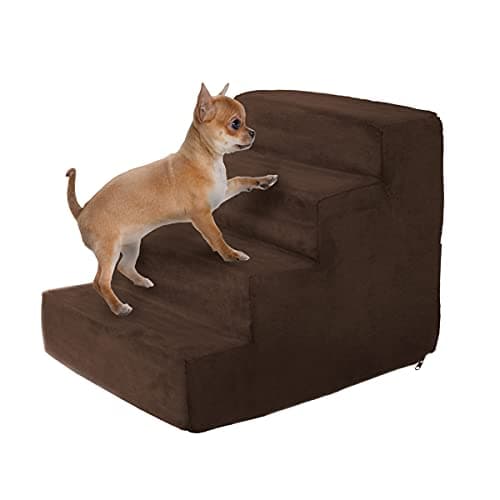
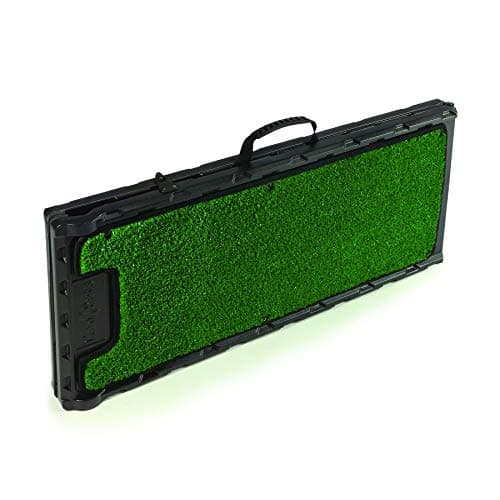
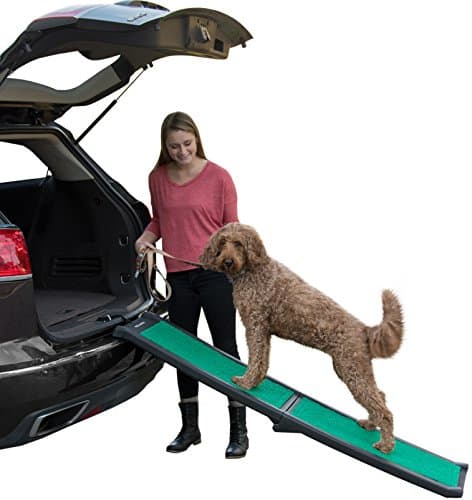
The short version: the PetSafe CozyUp is our pick for a sturdy bed/couch ramp; the PETMAKER foam steps suit a small dog that prefers stepping; the Gen7Pets and Pet Gear ramps double as indoor and car ramps if you want one that does both.
A long, gentle ramp with a stair-textured surface that reads as steps to a dog unsure about a smooth slope — a good bridge for a dog that balks at ramps.
#ad · Live prices from the Amazon Product API, as of October 20, 2026. Where we have no verified live price we show none — we would rather leave a gap than print a number that has rotted.
In detail
The picks, in full
01
Getting onto a bed or couch
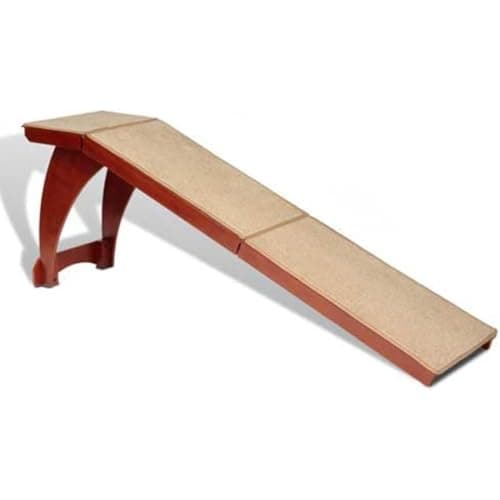
PetSafe CozyUp Bed Ramp
Short indoor rampCarpeted grip surfaceRated for large dogsFixed sturdy frame
8.0/10
A short, sturdy ramp made for the bed or couch. It's the right tool indoors where a full car ramp is overkill and steps are a scramble.
Gentle incline
8
Grip surface
8.5
Weight capacity
8.5
Portability
6
Stability
9
Pros
+Sized for bed/couch height, not a full climb
+Carpet-like surface is easy on paws and grippy
+Solid, doesn't wobble like folding ramps can
Cons
−Not foldable — it stays where you put it
−Only tall enough for furniture, not a vehicle
Don't buy this if…
…you need one ramp for both the car and the bed — a folding car ramp does double duty; this is bed-height only.
Long, low inclineStair-textured surfaceRated for large dogsFolds flat
8.2/10
A long, gentle ramp with a stair-textured surface that reads as steps to a dog unsure about a smooth slope — a good bridge for a dog that balks at ramps.
Gentle incline
9
Grip surface
8.5
Weight capacity
8.5
Portability
6.5
Stability
8.5
Pros
+Extra length keeps the slope shallow
+Textured 'steps' give a hesitant dog visual footing
+Supports large dogs
Cons
−Long footprint — needs room to deploy
−Bulkier to store than a compact bi-fold
Don't buy this if…
…you're tight on space — a telescoping or bi-fold ramp packs down smaller.
Choose a ramp when your dog is unsteady, low-slung, or has trouble lifting its legs — a continuous slope asks less of a shaky dog than judging and clearing each step. Choose steps when floor space is tight and your dog is still coordinated enough to place its feet reliably. Our full ramp-vs-stairs guide walks it through by condition.
Height and grip
Measure the bed or couch height and pick a ramp long enough to keep the slope gentle for that height — an indoor ramp that's too short is as steep as the jump it replaces. Prioritize a grippy surface; foam steps should have a washable, non-slip cover so a missed step is soft rather than a fall onto a hard floor.
What length, for your actual bed
The rule this site uses is about three times the height being climbed, and anything under twice the height is steep enough that a stiff dog will balk. Indoors that collides with the size of the room, so here is what the rule asks for at real furniture heights — and what to do when the floor will not give you the length.
What it climbs
Typical height
Ramp length the rule asks for
If the room can't take it
Couch or low sofa
16-20 in
About 4 to 5 ft
A ramp is usually still feasible here — this is the easy case
Standard bed with a mattress
24-27 in
About 6 to 7 ft
Steps, or a ramp run diagonally out from a corner
High bed, or one with a topper and a frame
30-36 in
7.5 ft and up
Steps are usually the honest answer; a 5 ft ramp here is a slide
Measure floor to the top of the mattress, with the topper and bedding on it, not to the frame or the base. That gap is commonly three or four inches, and three or four inches of extra climb needs about a foot more ramp. The full method, including the diagonal trick and why a sloped surface changes the figure, is in our ramp sizing guide.
When the numbers say steps
It is worth saying plainly, because the market sells ramps harder: at bed height, in a normal bedroom, the geometry often does not work. A six-foot ramp needs six feet of clear floor projecting from the bed, plus room for you to walk past it at 3am. If you do not have that, a too-short ramp is worse than steps — it is steep, it is long enough to slide down, and a dog that scrambles on it once will not use it again.
Steps ask the dog to lift its legs, which is the trade. That suits a small, coordinated dog and suits a low-slung or wobbly dog badly. Our ramp-vs-stairs guide works it through by condition, and the steps roundup ranks the steps themselves.
The landing is the part that hurts
Owners buy for the climb up and forget the way down, which is the direction that loads the front legs and shoulders. A dog that walks up a ramp and then jumps off the bed has not been helped at all. Two practical consequences: put the ramp on the side the dog actually gets down from, and expect to teach the descent separately — most dogs learn up before down. Our guide to teaching a senior dog to use a ramp covers the sequence, and what to do when the dog refuses covers the failure case.
Two things that decide whether it gets used
It must not move. A ramp that shifts an inch under a dog's weight teaches the dog the ramp is unsafe, and that lesson is hard to undo. Check that the top lip hooks or rests securely on the bed frame, and that the feet grip your floor — on hardwood or tile, put a rug under the base. Our floor setup guide covers that side.
The surface has to feel grippy to the dog, not to you. Carpet and high-traction rubber both work. Smooth-coated wood and thin plastic do not, whatever the listing says about texture. If your dog has long nails it will scrabble on any surface — nail length is worth checking before you blame the ramp.
If your dog is big, or you want the detail on our top pick
A large, heavy dog changes the questions: the listed weight capacity, a walking surface wide enough for a big dog's stance, and treads deep enough to take a whole paw. Our ramps and steps for large dogs ranks for that dog specifically. And if the CozyUp at the top of this page is the one you are leaning toward, the full CozyUp Bed Ramp review covers who it fits, and when the CozyUp steps are the better buy.
How we chose
We haven't lab-tested these
We compiled the published specifications, manufacturer manuals and aggregated owner reviews, then scored each product against a published rubric. The scores are judgments from that research — they are not measurements we took in a lab, because we don't have one and we won't pretend we do. Prices are pulled live from Amazon; where we can't verify one, we say "check price" rather than print a stale number.
Questions
Frequently asked
Is a ramp or steps better for getting a senior dog onto the bed?+
A ramp is usually easier for a stiff, wobbly, or low-slung dog, because there's no leg-lifting and no gap to misjudge. Steps take less space and suit a small, still- coordinated dog. When your dog is unsteady on its feet, go with the ramp.
Are foam dog steps sturdy enough for a big dog?+
Foam steps are best for small and light dogs — they compress under a heavier dog, which makes them unstable. For a medium or large dog, a rigid ramp gives safer, more reliable footing to the bed or couch.
How long should a dog ramp be for a bed?+
About three times the height it climbs. A standard bed is 24 to 27 inches to the top of the mattress, so the rule asks for roughly 6 to 7 feet of ramp; a couch at 16 to 20 inches wants 4 to 5 feet. Measure to the top of the mattress with the topper and bedding on it, not to the frame — that gap is often three or four inches, and each of those inches needs about another four inches of ramp.
My bedroom isn't long enough for a 6-foot ramp. What now?+
Then steps are usually the honest answer, or run the ramp diagonally out from a corner to buy floor length. What we would not do is buy a short ramp for a tall bed: under about twice the climbing height the slope is steep enough that a stiff dog balks or slides, and a dog that scrambles on a ramp once will often refuse it afterwards.
My dog goes up the ramp but still jumps off the bed. Is that normal?+
Very. Most dogs learn the climb before the descent, and down is the direction that loads the front legs and shoulders hardest — so it is also the direction that matters most. Teach it separately, put the ramp on the side your dog actually gets down from, and reward the descent specifically rather than assuming it transfers.
We don't run a testing lab, and we don't pretend to. Product facts are compiled from manufacturer listings and manuals; health facts are cited to reputable veterinary sources. Where we couldn't verify something, we say so on the page rather than quietly leaving it out. Read our full method.