Wax is the option with nothing to wear and nothing to refuse. It's also the weakest of the three tools, and we'd rather say that up front than sell you a tin that disappoints.
We earn a commission when you buy through our Amazon links, at no extra cost to you. It never changes our rankings, and we say so when the cheaper product is the better buy. How this works.
Paw wax is the easiest sell on this whole site and the one we're most careful about. You rub balm on your dog's pads; there's nothing to wear, nothing to fit, and no dog on earth objects to it. The problem is that it delivers the least grip of the three traction tools, and plenty of listings imply otherwise.
What wax actually does
Two things, and it's worth separating them because they're often confused.
It conditions the pad. Old dogs get hard, dry, glazed pads, and a glazed pad is a slippery pad — it has lost the fine texture that gives it purchase. A balm softens that surface back towards something with grip. This is a real, if gradual, effect, and it's the most defensible reason to use wax.
It adds a little surface tack. Some waxes leave a slightly sticky film that gives a modest grip improvement. "Modest" is the honest word. It is not comparable to a rubber sole or a rubber ring, and it wears off within hours of walking.
What it doesn't do
It won't rescue a dog that's genuinely scrambling on tile. If your dog's legs go out from under it on the way to the water bowl, wax is not the intervention — buy socks or toe grips and put down a rubber-backed runner today. Come back to wax afterwards as a maintenance thing for the pads.
There's also a category trap worth knowing about: a large share of dog paw products labeled "wax" are barrier waxes, designed to protect pads from hot pavement, ice and salt. They're good products for that job, and their effect on indoor grip ranges from neutral to slightly negative, because a barrier film is a film. That end of the shelf was built for dogs working rough ground all day — it sits with the rest of the hunting and field dog gear — which is a different job from an old dog crossing a kitchen. We've included one deliberately, labeled as exactly that, so you can tell the difference on the shelf.
The short version: Musher's Secret is the default — the long-standing all-season balm most owners use. The Steady Paws balm is the one that puts traction in its own product description rather than treating grip as an afterthought. PawTection is included as the honest example of a protection-first wax. And the Aqumax adhesive pads are here as the "if wax isn't enough" step up, because for a lot of readers it won't be.
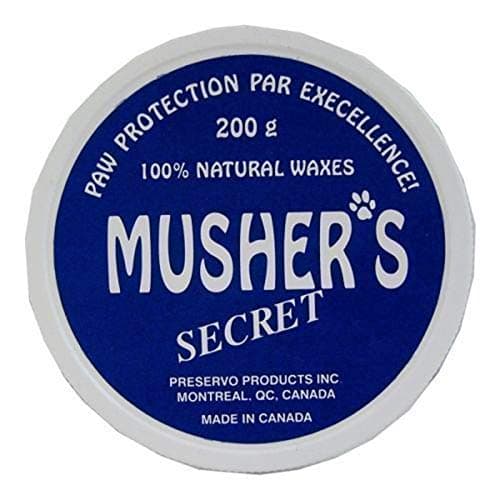
The lightest-touch option. A natural wax you rub on the pads for a little extra tack — not as grippy as socks or grips, but there's nothing to wear and dogs don't mind it.
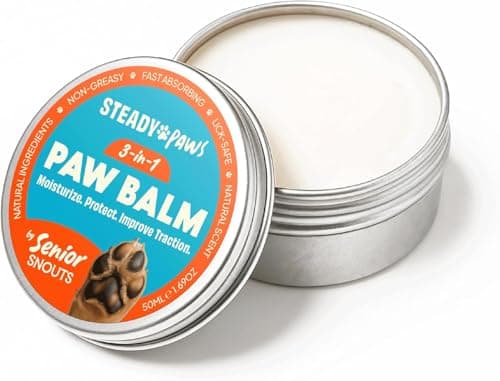
One of the few paw balms that puts traction in its own product description rather than treating grip as a side effect of moisturizing. Lick-safe, fast-absorbing, and it doesn't leave a slick on the floor.
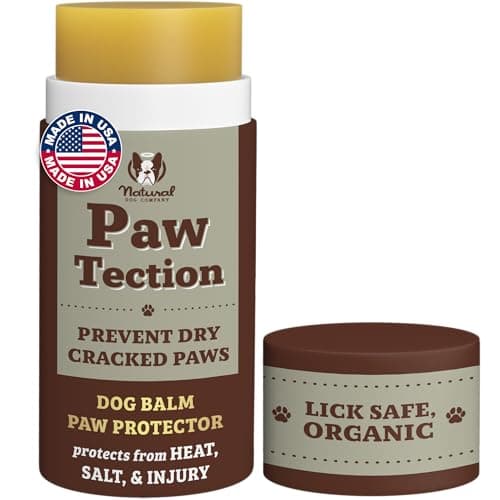
A protective barrier wax first and a traction aid second — we're saying that plainly. Worth knowing about if your senior's pads are cracked, because healthy pads grip better than damaged ones.
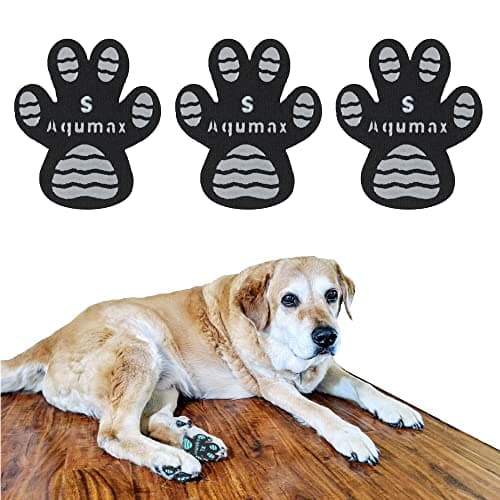
Adhesive rubber pads that stick straight onto the paw pad. All the grip of a sock with none of the sock — which is the point for a dog that kicks footwear off within a minute.
#ad · Live prices from the Amazon Product API, as of October 20, 2026. Where we have no verified live price we show none — we would rather leave a gap than print a number that has rotted.
In detail
The picks, in full
01
Dogs who won't tolerate anything worn
Musher's Secret Paw Wax
Listed as a dense barrier wax, 200g tinListed as 100% non-toxic natural waxesNothing worn on the footAlso conditions dry pads; reapply as needed
7.6/10
The lightest-touch option. A natural wax you rub on the pads for a little extra tack — not as grippy as socks or grips, but there's nothing to wear and dogs don't mind it.
Grip
6.5
Stays on
6
Comfort
9.5
Value
8.5
Pros
+Zero tolerance issue — it's just balm on the pads
+Conditions cracked, dry senior pads at the same time
+A 200g tin lasts a long time on indoor paws
Cons
−Least grip of the three tools — helps, doesn't transform
−Wears off and needs reapplying
Don't buy this if…
…your dog is slipping badly and needs real traction now — start with socks or grips and use wax as a supplement.
Traction-focused balmLick-safe formulationNon-greasy, fast-absorbing1.69 oz tin
7.6/10
One of the few paw balms that puts traction in its own product description rather than treating grip as a side effect of moisturizing. Lick-safe, fast-absorbing, and it doesn't leave a slick on the floor.
Grip
7
Stays on
6.5
Comfort
9.5
Value
7.5
Pros
+Absorbs rather than sitting on top as a slippery film
+Lick-safe, which matters with a dog that grooms its feet
+Softens the hard, glazed pads that make old dogs slide
Cons
−Small tin for the price
−Like all balm, it's a modest improvement, not a transformation
Don't buy this if…
…your dog's slipping is severe. Balm is a finishing touch on top of socks, grips or rugs — not a substitute for them.
Barrier waxPlant-based ingredientsMarketed for hot and rough surfacesTwist-up or tin formats
7.3/10
A protective barrier wax first and a traction aid second — we're saying that plainly. Worth knowing about if your senior's pads are cracked, because healthy pads grip better than damaged ones.
Grip
5.5
Stays on
7
Comfort
9
Value
7.5
Pros
+Genuinely good at protecting and conditioning a damaged pad
+Well-regarded brand with clear ingredient labeling
+Useful year-round for pavement and grit as well as indoors
Cons
−Sold as protection, not grip — expect less tack than Musher's Secret
−A waxy barrier can feel slick on the first application
Don't buy this if…
…traction is the whole reason you're shopping. Buy Musher's Secret or the Steady Paws balm instead — this one is for pad condition.
Self-adhesive traction padsApplied directly to the paw padSold in multi-packsSized by paw
8.0/10
Adhesive rubber pads that stick straight onto the paw pad. All the grip of a sock with none of the sock — which is the point for a dog that kicks footwear off within a minute.
Grip
8.5
Stays on
7
Comfort
9
Value
7.5
Pros
+Nothing to fall off or twist around the foot
+Grip lands exactly where the paw touches the floor
+Multi-packs make ongoing replacement cheap
Cons
−Consumable — they wear off and need replacing every few days
−Fur around the pad has to be trimmed for them to stick
Don't buy this if…
…you want a one-time purchase. These are an ongoing cost, unlike toe grips or a tin of wax.
Grip, whether it stays on, comfort, and value — the same four metrics as everything on this hub, which is why the wax scores for grip sit visibly below the socks and grips. That's the point of using one rubric across a category. These are judgments from published product information and aggregated owner reviews; see the methodology.
How to apply it so it actually works
Trim the fur between the pads flush — hair over the pad blocks the balm and slides.
Wipe the pads clean and dry.
Rub a thin layer into each pad and between the toes. Thin. A thick layer is greasy, marks floors and can genuinely make things slippier for the first few minutes.
Let it absorb for a minute or two before your dog walks on a hard floor — a distraction works better than instruction here.
Reapply every few days, or after any wet walk.
Lick-safe matters more than it sounds
Dogs groom their feet, and an old dog with sore feet grooms them more. Choose a formulation labeled lick-safe, and if your dog is a determined foot-licker, apply it at night when it's settling rather than in the middle of an alert afternoon.
Use it alongside, not instead
The sensible role for wax in a senior dog's routine is as pad maintenance underneath a real traction fix: rugs and runners on the routes your dog walks, socks or grips for the slippery stretches, and balm to keep the pads themselves in good condition. That combination is set out in how to stop a senior dog slipping.
Choosing between the top two
The two best-known names here, Musher's Secret and Natural Dog Company's PawTection, look interchangeable on the shelf, but their makers pitch them at different jobs, and neither is sold as indoor grip. Our Musher's Secret vs PawTection comparison puts them side by side, with the Steady Paws balm as the third option.
How we chose
We haven't lab-tested these
We compiled the published specifications, manufacturer manuals and aggregated owner reviews, then scored each product against a published rubric. The scores are judgments from that research — they are not measurements we took in a lab, because we don't have one and we won't pretend we do. Prices are pulled live from Amazon; where we can't verify one, we say "check price" rather than print a stale number.
Questions
Frequently asked
Does paw wax help dogs on hardwood floors?+
A little. Balm softens hard, glazed senior pads back towards a surface with some texture, and some formulations leave a slight tack. It's a modest improvement rather than a fix — a dog that is genuinely scrambling needs socks, toe grips or rugs, with wax as pad maintenance alongside.
Is paw wax or are dog socks better for slippery floors?+
Socks give far more grip; wax is far easier to get onto a reluctant dog. If your dog tolerates socks, socks win on performance. If it won't wear anything, toe grips are usually the better wear-nothing option, with wax as the lightest-touch fallback.
How often should you apply dog paw wax?+
Every few days for general pad condition, and after any wet walk since water strips it. Apply thinly — a heavy layer is greasy, marks floors, and can be slippery for the first few minutes. Choose a lick-safe formulation, because your dog will taste it.
We don't run a testing lab, and we don't pretend to. Product facts are compiled from manufacturer listings and manuals; health facts are cited to reputable veterinary sources. Where we couldn't verify something, we say so on the page rather than quietly leaving it out. Read our full method.