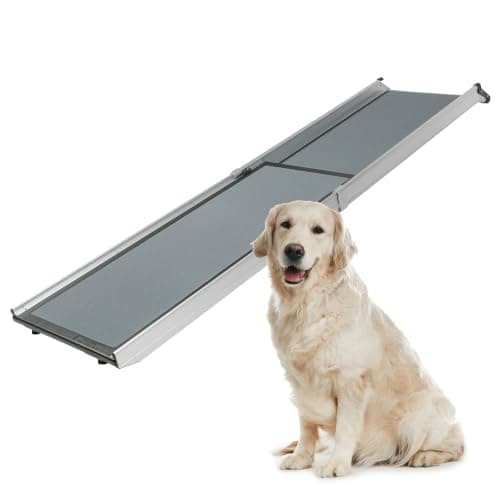
Roundup
The best dog ramps for the car
Long enough to stay gentle at SUV height, grippy enough to trust — the best car ramps for a senior dog, priced live.
Top pick
PetSafe Happy Ride Telescoping Dog Ramp
$169.95
Getting up, without the jump
The jump down off the bed or out of the car is what hurts an arthritic dog most. A ramp or a set of steps takes that impact away — this hub helps you pick the right one for your dog and your setup.
The problem a ramp solves isn't getting up — it's the landing. A dog leaping down from a 24-inch bed or the back of an SUV puts its whole weight through joints that already ache. A ramp trades that impact for a gentle walk; steps do the same in less floor space. Which one is right depends on your dog (a low-slung or wobbly dog does better on a gentle ramp than on steps) and your room (a ramp needs length; steps need height). We size these by the numbers that matter — incline angle, usable length, weight capacity and surface grip — and give you a decision guide so you don't buy the wrong shape.
We earn a commission when you buy through our Amazon links, at no extra cost to you. It never changes our rankings, and we say so when the cheaper product is the better buy. How this works.
Our top pick right now
The one we'd buy for the car. It extends long enough to keep the incline gentle even at SUV height, and the high-traction surface gives a nervous senior dog grip to trust.
Price as of October 20, 2026. Prices change — Amazon's is the one that counts.
#ad · we may earn a commission from this link to PetSafe Happy Ride Telescoping Dog Ramp
Explore this hub
Roundup
Long enough to stay gentle at SUV height, grippy enough to trust — the best car ramps for a senior dog, priced live.
Top pick
PetSafe Happy Ride Telescoping Dog Ramp
$169.95
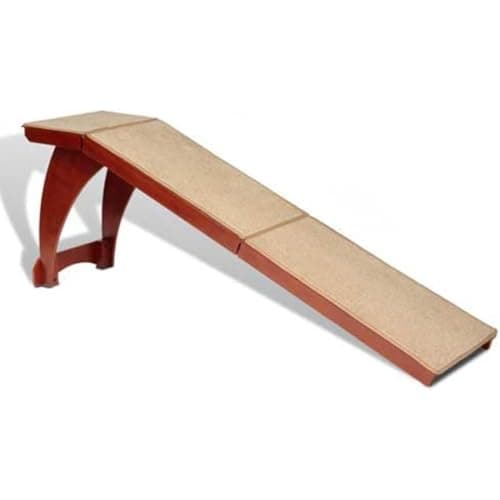
Roundup
Short indoor ramps and soft steps sized for a senior dog to reach the bed or couch without jumping — priced live.
Top pick
PetSafe CozyUp Bed Ramp
$97.46
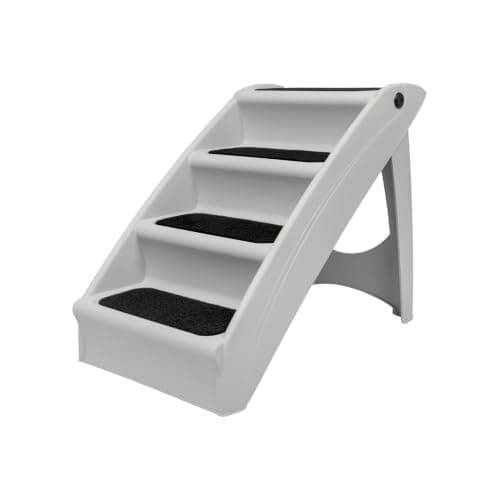
Roundup
Ranked by riser height, tread depth and how much they flex under a real dog — the steps a senior will actually use. Live prices.
Top pick
PetSafe CozyUp Folding Dog Stairs
$69.99
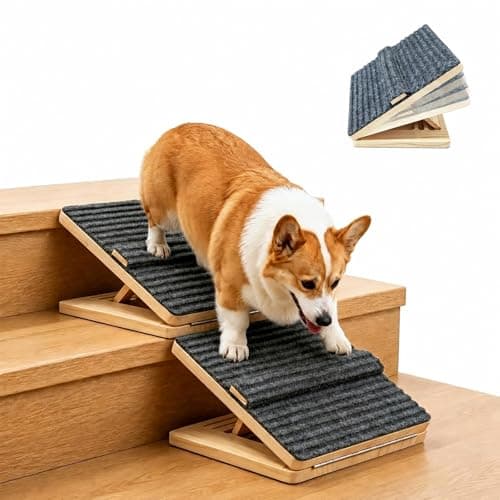
Roundup
Folding wedge ramps that turn a two- or three-step flight into a slope — for the back door, the porch and the split-level landing. Live prices.
Top pick
Weathrix Foldable Wooden Dog Ramp for Stairs
Check price on Amazon
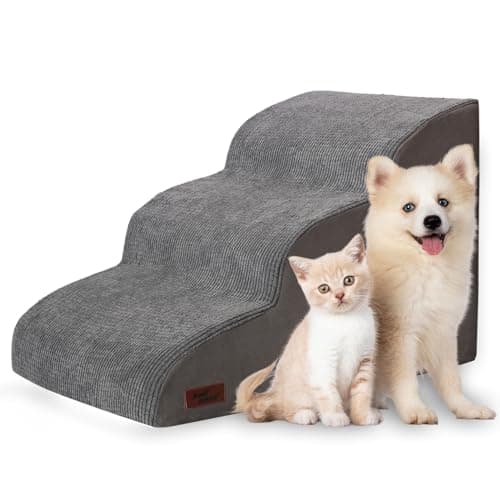
Roundup
Low risers and shallow angles for dachshunds, corgis and small terriers — sized so a short dog doesn't have to arch its back on every step. Live prices.
Top pick
Aodisman 3-Step Pet Stairs & Ramp
$29.99
Roundup
The telescoping car ramp most people end up buying, reviewed properly — what it does well, the weight you have to lift, and two alternatives worth considering.
Top pick
PetSafe Happy Ride Telescoping Dog Ramp
$169.95
Roundup
The back step, the deck and the porch — short outdoor ramps sized for two or three steps, with the grip and weather notes indoor ramps skip.
Top pick
Weathrix Foldable Wooden Dog Ramp for Stairs
Check price on Amazon
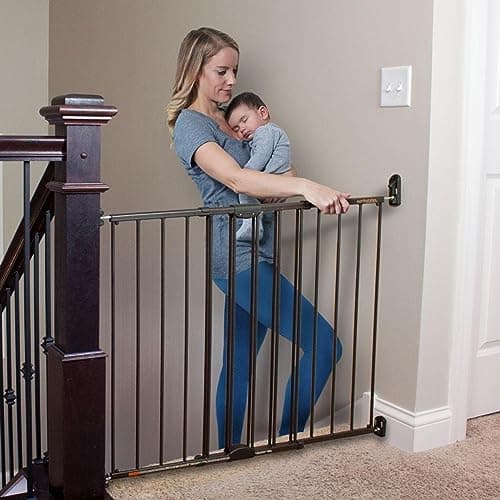
Roundup
Screw-in gates for the top of the stairs, pressure gates for the bottom, and the trip bar nobody warns you about. Six picks, live prices.
Top pick
Toddleroo Easy Swing & Lock Gate for Top of Stairs
$56.99
Roundup
For the 60 to 120 lb senior: ramps and steps with real weight headroom, room for a swaying back end, and a car ramp the owner can still lift. Live prices.
Top pick
PetSafe Happy Ride Telescoping Dog Ramp
$169.95
Roundup
The PetSafe CozyUp bed ramp reviewed from its published specs: the fixed 25-inch height, the incline and floor it takes, the carpet, assembly, and two alternatives.
Top pick
PetSafe CozyUp Bed Ramp
$97.46
Roundup
Ramps long enough for a pickup tailgate or a tall SUV - ranked on usable length, incline at real truck heights, grip and weight rating, with live prices.
Top pick
PetSafe Happy Ride Telescoping Dog Ramp
$169.95
Roundup
Ramps for a long-backed dog, height by height: sofa, bed, car and the back-door step - with the angle rule for a nine-inch-tall dog. Priced live.
Top pick
PetSafe CozyUp Bed Ramp
$97.46

Comparison
A plain ramp-vs-stairs decision by your dog's steadiness, size and your space — so you buy the right shape once.
Guide
How ramp length sets the incline, the rule of thumb for a stiff dog, and how to measure your car, bed or couch before you buy.
Guide
The flat-first method that gets an old dog using a ramp in a few short sessions — and what to do when it refuses.
Comparison
Bi-fold, tri-fold and telescoping ramps compared on length, weight, stability and storage — and which shape a nervous senior dog trusts most.
Guide
The three ways a dog comes off a ramp, why side rails matter for a senior, and the two setup errors behind most accidents.
Guide
Five reasons a senior dog refuses a ramp, including the ones where the dog is right, and what to change for each.
Guide
The three price tiers of dog ramp and steps, what decides the price, why a ramp costs more than a set of steps, and when the cheapest option is the one we would buy.
The right choice depends on your dog and your space. Work through these in order.
A ramp is a continuous gentle slope — better for a wobbly, low-slung, or very arthritic dog, because there's no lifting of the legs and no gap to misjudge. Steps take less floor space and suit a dog that's still coordinated but shouldn't be jumping. When a dog is unsteady on its feet, choose the ramp. Our ramp-vs-stairs guide walks through it by condition.
The gentler the slope, the easier it is on sore joints — a ramp that's too steep just moves the strain from the jump to the climb. The taller your bed or vehicle, the longer the ramp needs to be to keep that slope gentle. This is why a telescoping ramp that extends long is worth it for an SUV, while a short folding ramp is fine for a sedan or a couch.
A senior dog will refuse a ramp it slips on, and rightly so. Look for a high-traction, non- slip walking surface — a rubberized or carpet-like texture — not smooth plastic. Side rails help a dog that lists to one side feel secure.
Check the ramp's weight rating against your dog. Then think about who's handling the ramp: if you'll be lifting it in and out of a car, a lighter folding ramp you'll actually keep using beats a heavy one that stays in the garage. The best ramp is the one that gets used every day.
Keep reading
Questions
The honest version
We don't run a testing lab. We compile the specs that actually decide whether a product helps a senior dog, score them against a published rubric, verify prices live from Amazon, and tell you plainly who each pick is not for. When a question is medical, we say so and point you to your vet. How we're funded.