The best support harnesses for a dog with weak back legs
When a dog's back end starts to give out, you become the mobility aid. A good rear sling lifts the hips while the front legs still work — and saves your back in the process.
We earn a commission when you buy through our Amazon links, at no extra cost to you. It never changes our rankings, and we say so when the cheaper product is the better buy. How this works.
When a dog's back legs weaken — struggling to stand, knuckling over, slipping behind on walks — but the front end is still strong, a rear-support sling is the tool. It cradles under the belly and hips so you can take the weight off the back legs while the dog powers along with its front.
Two things separate a good one: padding that spreads the lift comfortably, and a handle placed for your posture. A long-handled sling lets you stand upright rather than stooping — which matters enormously when you're doing this several times a day, sometimes for a big dog. We ranked on support match, padding, how kind the handle is to your back, adjustability, and value.
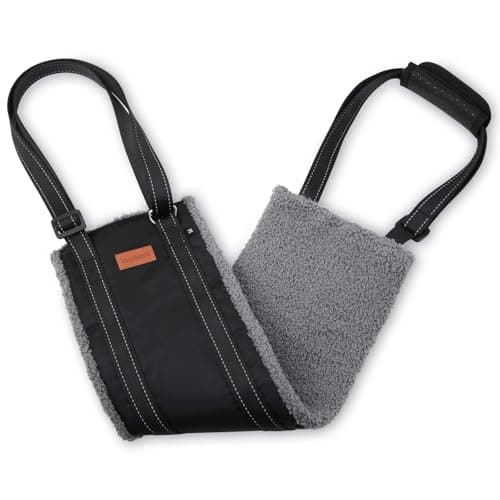
The short version: the GingerLead's long lead makes it our pick for walks and potty trips; the Coodeo is the cheap grab-handle sling to keep by the door for quick lifts; the LOOBANI folds into a pocket as a backup; the PetSafe CareLift is the premium full-body option for a dog that's weak in front too.
If your dog is at the heavy end - 70 lbs and up - the ranking above changes, because the thing that fails first is not the harness but your back. We have re-ordered these picks for a big dog, with the handle length and panel width argument in full, at lift harnesses for a big dog.
Our first pick here is reviewed on its own page, with the sizing method the listing does not explain: the GingerLead sling, reviewed - the towel test, the two measurements that replace a weight chart, and the three dogs it is wrong for.
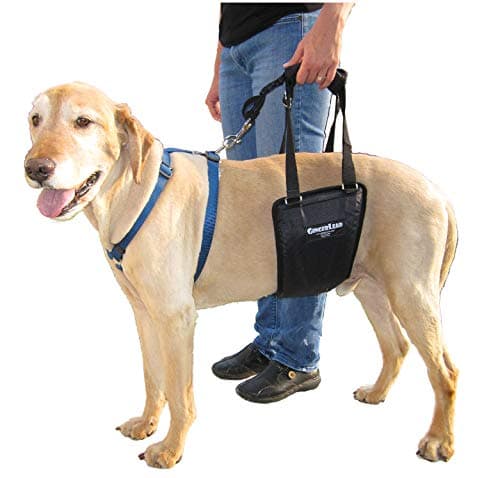
A padded belly sling on a long lead so you can support a dog's back end and walk upright behind it — the kind thing for both the dog's hips and your back.
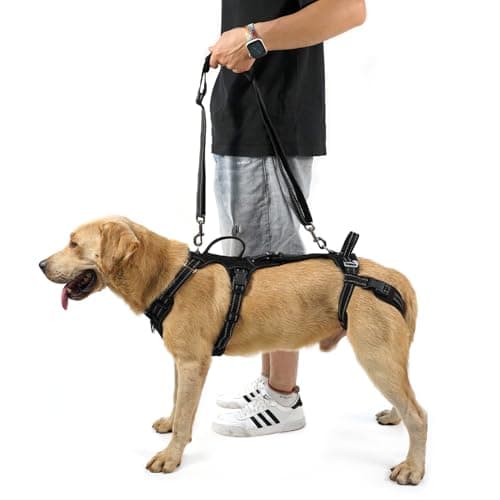
A quick-on rear sling with a handle — grab it for the few hard moments (up the porch step, into the car) rather than a full walk. Cheap, simple, kept by the door.
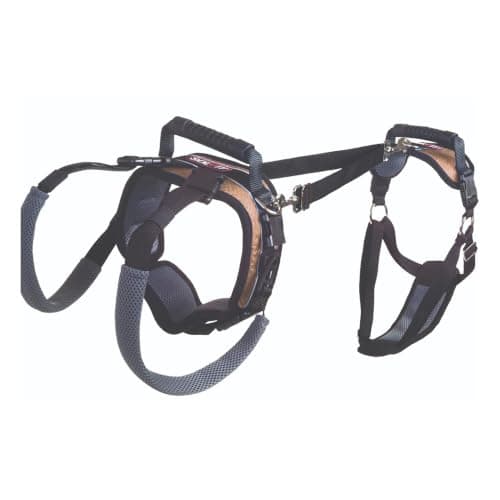
The premium option: a structured full-body harness with front and rear handles, so you can support either end or the whole dog. Built for the long haul, priced like it.
#ad · Live prices from the Amazon Product API, as of October 20, 2026. Where we have no verified live price we show none — we would rather leave a gap than print a number that has rotted.
In detail
The picks, in full
01
Weak back legs, walks and potty trips
GingerLead Rear Support Sling Harness
Padded belly slingLong integrated leadMale/female cut optionsSized to fit
8.6/10
A padded belly sling on a long lead so you can support a dog's back end and walk upright behind it — the kind thing for both the dog's hips and your back.
Support match
9
Padding
8.5
Owner ergonomics
9
Adjustability
8
Value
8.5
Pros
+Long handle lets you stand straight instead of stooping
+Wide padded sling spreads the lift comfortably under the belly
+Cut-out versions keep it clear for the dog to relieve itself
Cons
−Supports the rear only — no help for a dog weak in front
−Sizing matters; measure before ordering
Don't buy this if…
…your dog is unsteady in the front legs too — you'll want a full-body harness with front and rear handles.
Rear support slingGrab handleAdjustable strapsBreathable fabric
8.0/10
A quick-on rear sling with a handle — grab it for the few hard moments (up the porch step, into the car) rather than a full walk. Cheap, simple, kept by the door.
Support match
8
Padding
7.5
Owner ergonomics
7.5
Adjustability
8
Value
9
Pros
+Goes on fast for a one-off lift up a step or into the car
+Handle sits right over the hips
+Inexpensive enough to keep one by every door
Cons
−Short handle means more bending than a long-lead sling for full walks
−Best for brief assists, not hours of support
Don't buy this if…
…you need to support your dog for whole walks — a long-handled GingerLead is kinder to your back.
Full-body harnessFront + rear lift handlesPadded and structuredAdjustable fit
8.5/10
The premium option: a structured full-body harness with front and rear handles, so you can support either end or the whole dog. Built for the long haul, priced like it.
Support match
9.5
Padding
9
Owner ergonomics
8.5
Adjustability
8.5
Value
7
Pros
+Supports the whole dog — front, rear, or both
+Structured build distributes the lift and stays put
+Handles are placed for an upright, back-friendly lift
Cons
−The most expensive harness here
−More straps to fit and put on than a simple sling
Don't buy this if…
…your dog is only weak in the back legs — a rear sling is simpler, cheaper, and enough.
Match the tool to the weakness. A rear sling is right when only the back end is failing and the front legs work. A wheelchair is the step beyond, for a dog that can no longer bear weight on its back legs at all — a decision to make with your vet. A full-body harness (like the CareLift) is for a dog that's unsteady in front as well as back, with handles at both ends.
Get the fit and the posture right
Measure before you order — a sling that's too loose slips and too tight rubs. When you lift, support the hips and let the harness carry the weight, keep the dog's spine level, and use your legs, not your back. A long handle is what makes that upright posture natural; a short grab-handle sling is fine for a one-off lift but tiring for a full walk.
If the weak leg is a recent knee operation
A dog coming home after cruciate surgery needs the same kind of support for a different reason, and on a schedule the surgeon sets rather than one you work out. Our guide to slings and harnesses after TPLO or ACL surgery covers which of these picks suit the recovery weeks, and how to set up the house around them.
How we chose
We haven't lab-tested these
We compiled the published specifications, manufacturer manuals and aggregated owner reviews, then scored each product against a published rubric. The scores are judgments from that research — they are not measurements we took in a lab, because we don't have one and we won't pretend we do. Prices are pulled live from Amazon; where we can't verify one, we say "check price" rather than print a stale number.
Questions
Frequently asked
What is the best harness for a dog with weak back legs?+
A padded rear-support sling that cradles the belly and hips and lifts the back end while the front legs still walk. For frequent, longer support choose a long-handled version so you can stand upright; for quick one-off lifts a simple grab-handle sling is enough.
How do I lift a large dog with weak back legs?+
Use a sling or harness rather than grabbing legs or belly. Support the hips, keep the spine level, bend your knees, and let the harness take the weight. For a heavy dog that's also unsteady in front, a full-body harness with front and rear handles spreads the lift and protects both of you.
Is a sling or a wheelchair better?+
A sling is right while your dog can still bear some weight on its back legs and needs a hand for stairs, walks, or standing. A wheelchair is for when the back legs can no longer support the dog at all — and that's a decision to make with your vet, who can confirm a cart suits your dog.
We don't run a testing lab, and we don't pretend to. Product facts are compiled from manufacturer listings and manuals; health facts are cited to reputable veterinary sources. Where we couldn't verify something, we say so on the page rather than quietly leaving it out. Read our full method.