If you have searched for a dog ramp for the car in the last few years, this is the one you kept seeing. It has become the default recommendation, and mostly it deserves to be — but "the one everyone buys" is not the same as "the one you should buy", so here is the case for and against.
Before anything else, the standing disclosure: we have not lab-tested this ramp. We do not own a lab and we are not going to invent a testing story — the reasoning is on our methodology page. What follows is built from the published specifications, the manufacturer's own documentation, and how those compare with the other ramps we rank.
What it is
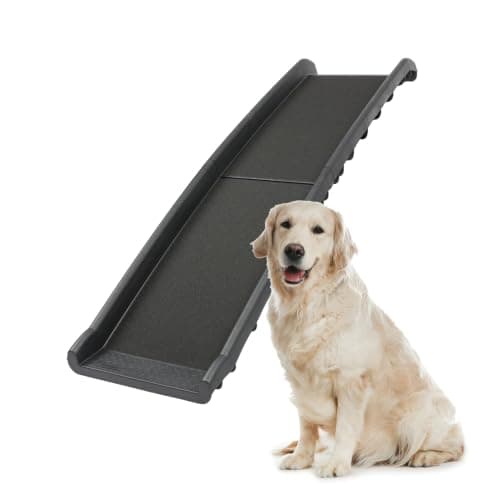
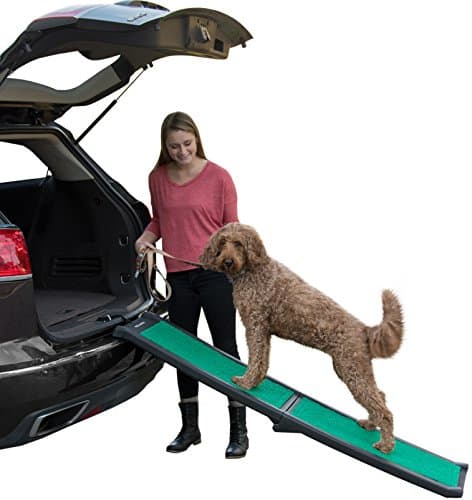
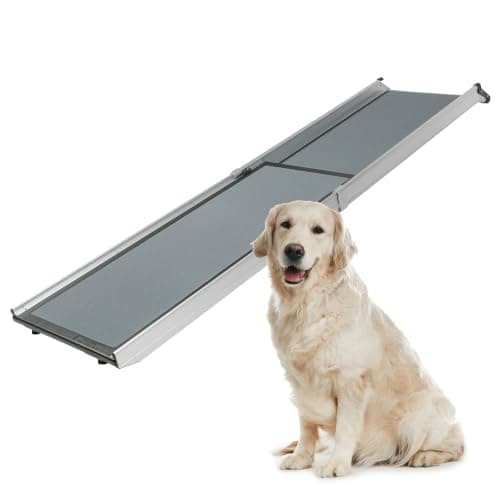
A telescoping aluminum-framed ramp: it slides out to full length for use and collapses back on itself for storage. The extended length is generous — this is the version marketed as extra long — and the surface is a high-traction molded tread rather than carpet.
What it gets right
The length is the point. Ramp angle is the single biggest predictor of whether a dog will use a ramp at all, and angle is set by length against height. Being able to extend fully against a tall SUV tailgate — rather than accepting whatever angle a fixed ramp gives you — is the whole reason to buy a telescoping design.
The surface is the right kind. A molded high-traction tread stays usable when wet, which matters because a car ramp is a rainy-day product. Carpeted ramps soak, get heavy and grow slick with mud over a winter.
It adjusts, so it outlives the car. A fixed-length ramp sized for your current vehicle is a ramp you replace when you change vehicles. This one adjusts to whatever you drive next.
Side rails. Raised edges keep a wobbly dog from walking off the side halfway up. For a senior dog with a swaying back end this is not a luxury feature.
What to know before you buy
It is heavy, and you are the one lifting it. This is the thing owners mention after the fact. A telescoping ramp is the heaviest of the three shapes, and you lift it twice per trip while often also managing a dog that cannot get into the car unaided. If you have back trouble of your own, weigh this properly — a lighter folding ramp may be the kinder purchase for you, even if it is slightly worse for the dog.
The rails need to stay clean. Sliding sections and grit do not mix. Wipe them after muddy trips and store the ramp dry, or you will eventually be wrestling a half-extended ramp in a car park.
Extend it fully, every time. A partly-extended telescoping ramp is both steeper and less rigid than a fully-extended one. The temptation on a quick trip is to pull it out halfway. Do not.
It is not an indoor product. Too long, too heavy, and the wrong shape for a bed or couch. Those live on our indoor ramps page.
Who should buy it
Buy it if you have a tall vehicle — an SUV, a truck, a van — and a dog that can still walk but should not be jumping. Buy it if you have more than one vehicle. Buy it if your dog is large enough that a short ramp would sit at an angle it refuses.
Skip it if your car is a hatchback or an estate with a low load lip, where a light folding ramp is easier for everyone. Skip it if lifting a heavy ramp is a problem for you. And skip it if your dog cannot walk up a slope at all — at that point the honest answer is a lifting harness, not a longer ramp.
The short version: the telescoping model if your vehicle is tall or you have two of them; the Happy Ride folding version if you want the same brand and surface at less weight; the Pet Gear Travel Lite if lightness is the thing you care about most.
The alternatives, and when they win
PetSafe Happy Ride folding ramp
Same manufacturer, same family of surface, less weight and less money. It gives up the adjustable length, which matters only if your vehicle is tall. For a mid-height car this is frequently the better buy and we would not talk anyone out of it.
Pet Gear Travel Lite bi-fold
The lightest of the three and the easiest to handle. If the person doing the lifting is older or has back trouble, this is the ramp that will actually get used — and a ramp that gets used beats a better ramp that stays in the garage.
Getting a nervous dog to use it
Almost every ramp complaint we see is a training problem wearing a product costume. Lay the ramp flat on the ground first and feed your dog on it. Then raise one end onto a low step. Then the car. Days, not minutes, and never push or drag. The full sequence is in our ramp training guide.
Two setup details that fix most refusals: park so the ramp lands on grass or gravel rather than smooth wet tarmac, and stand on the far side of the car rather than behind your dog so it is walking toward you.
Checking the angle you are actually getting
Measure your tailgate height and check it against the ramp's extended length. A useful rule of thumb we use throughout the site: the longer the run for a given rise, the more likely your dog uses it, and it is always worth buying more length than you think you need. The arithmetic is on our sizing guide.
Care and lifespan
Hose the tread after muddy walks, dry the rails, store it out of standing water and check the locking mechanism engages fully before each use. An aluminum ramp treated that way lasts years; the failure modes are all corrosion and grit, not wear.
For the bed rather than the car
The Happy Ride is built for a tailgate. Indoors the same job is done by a short, fixed ramp that sits against the bed or couch, and PetSafe makes one of those too. We give it the same in-depth treatment in our PetSafe CozyUp Bed Ramp review. If your dog is large and you are shopping for both jobs, our ramps and steps for large dogs puts the car and bedroom options for a big dog side by side.