Most boot roundups are written for hiking. An old dog is usually in boots for one of three different reasons - a paw that drags, a floor it slips on, or pavement its pads can no longer take - and those reasons want different products.
We earn a commission when you buy through our Amazon links, at no extra cost to you. It never changes our rankings, and we say so when the cheaper product is the better buy. How this works.
A boot is not one product. The things sold under that word range from a balloon-thin rubber skin that stretches over a paw to a strapped shell with a Vibram outsole, and they are bought for completely different reasons — which is why so many owners end up with a set that does not solve the problem they bought it for. For a senior dog there are three reasons boots come up, and the right answer differs for each of them.
Before anything else, the honest one: if your dog is only slipping indoors, you probably do not want boots at all. A strapped boot is armor with a sole on it. Indoor slipping is a friction problem, and the cheapest, best-tolerated fixes for it are grip socks, nail-mounted toe grips and changing the floor itself, which needs no cooperation from the dog whatsoever. The one exception is on this page: the strapless rubber boot, which grips hard floors better than anything with a strap on it and is the only option here an arthritic hand can fit without help.
Three reasons an old dog ends up in boots
What is happening
What you actually need
Which pick
A back paw scuffs or drags on every walk
A deep, abrasion-resistant sole and an upper that covers the top of the foot — the surface a dragging paw lands on
Picks 1 and 2
Pads can no longer take hot, frozen or salted pavement
A closed boot that stays on for a whole walk, in a size you have actually measured
Picks 1, 2 and 3
The dog slips on hardwood or tile indoors
Grip, not armor — socks or toe grips first, and the strapless rubber boot if you want something boot-shaped
The AKC's own guidance on dog boots is worth reading and is written around weather and terrain: it lists preventing frostbite and heat blisters, reducing the risk of severed nails on uneven terrain and slopes, and shielding paws from deicers and road salts. What it does not cover is the old-dog case — the dragging paw and the slippery hallway — which is the gap this page is for.
What we ranked these on
Five criteria, and the first one decides the other four. Work out which job you are buying for before you compare anything.
Armor or grip? A thick rubber outsole is there to be worn away instead of your dog's skin. A thin rubber skin is there to add friction while letting the dog feel the floor. A boot built for one is mediocre at the other, and the rankings below put protection first because that is the job a sock cannot do at all.
Can you get it on a paw the dog will not lift? This is the criterion most lists skip and the one that decides whether the boots get used. A dog with a weak back end cannot help you. A wide split opening, a boot that holds its shape, and a strap you can close with one hand matter more than the material — and if your own hands are stiff, the strapless rubber boot is the only one here you can fit unaided.
Pairs or sets of four. Boots are mostly sold in fours, but a dog that drags only its back feet needs two. Two of our picks are sold as pairs, which is why the higher price per boot can still be the cheaper purchase — you are not paying for two spares you will never put on.
Does it stay on? A boot that comes off in the yard is a boot you stop using. Two straps hold a boot at the ankle and above it, which is what a dragging paw needs; a single strap is faster but relies on being tightened properly; a stretched rubber boot stays on by grip alone and surprises people by how well it does.
Sizing, measured rather than guessed. Every maker here sizes by paw width, not by the dog's weight or breed, and the sizes are narrow. Getting this wrong is the single commonest reason a boot purchase fails.
The sizing step that decides this
Do it before you order, not after. The AKC's method is to press the paw onto a sheet of paper, trace around the indentation, then draw a line across the widest part of the tracing and measure it — that number is what the size charts are asking for.
Two things to add for an old dog. First, take the measurement with the dog's weight on the paw, because a paw spreads when it is loaded and a boot sized to an unloaded paw is a boot that pinches on the walk. Ruffwear says exactly this for its own boots. Second, read the listing's own warning: the strapless rubber boots state that sizes run small, so take the suggestion to go up a size seriously rather than splitting the difference.
What boots cannot fix
A wound already on the top of the foot. A rubber skin over an open scrape is not a dressing. That needs your vet first, then a boot with a real sole and a covered upper to stop it happening again.
A hind end that has stopped lifting. Protecting the paw is not the same as getting the leg to swing through. That is rehab and support territory — boots for dragging paws covers the training sock that addresses it, and a rear-support harness is often the next purchase.
Indoor slipping on its own. Said once more because it is the commonest mistaken purchase in this category. Start with the stop-slipping walkthrough, which includes the fixes that cost nothing.
Long nails. Overgrown nails change how a paw meets the floor and no boot compensates for that. Nail length and slipping is the free half of the fix.
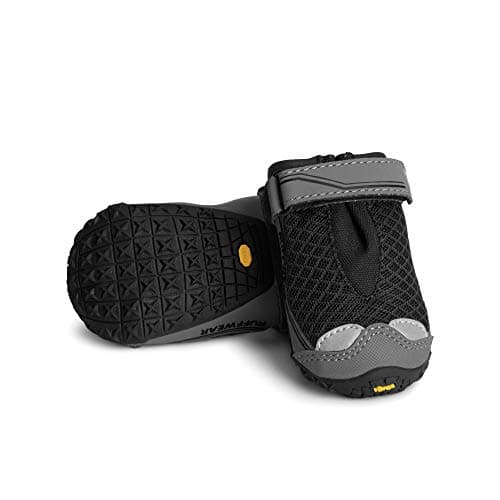
The boot we would put on a paw that drags. A Vibram rubber outsole with real depth to wear through, a ripstop upper that covers the top of the foot, and — the detail that matters here — Ruffwear sells them in pairs, so a dog dragging its back feet only pays for the two boots it needs.
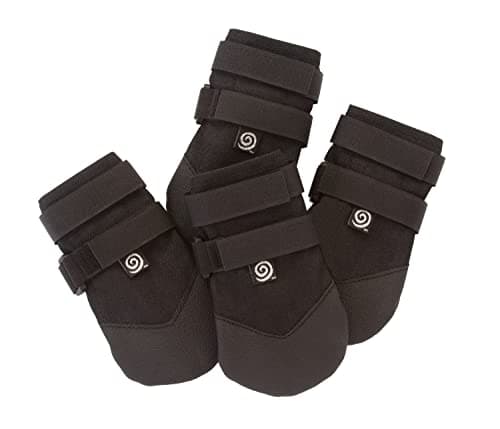
The other boot built for a dragged foot, from a maker whose listing names disabled pets and service dogs among its users. A thick sole the maker says is made from recycled tires, and a foam-padded strap that holds the boot on a paw that is not lifting itself.
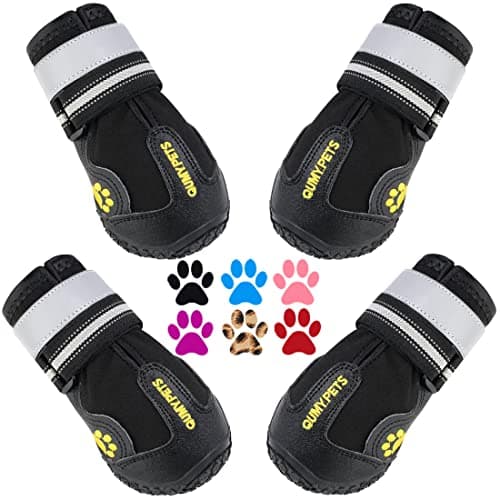
The budget boot most owners end up trying first, and a fair one: a rugged sole, a wide split opening that a stiff paw slides into, and two reflective straps. The catch is that it comes as four, so a rear-dragging dog pays for two spares.
Trying boots before committing to the premium pair
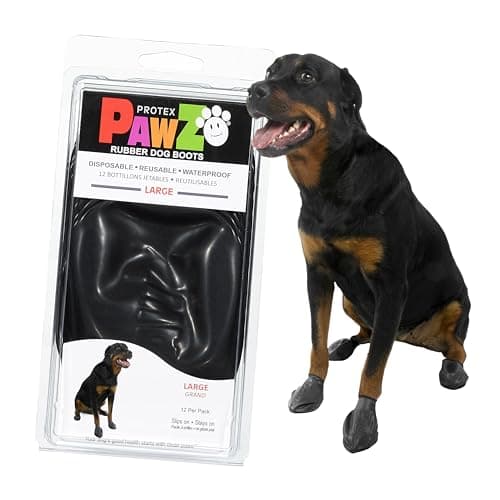
A balloon-thin natural rubber boot with nothing to fasten: stretch it over the paw and it stays on by itself. It is the best answer on the page for a dog that slips indoors and the worst for a dog that drags — a dragging paw wears through one in a day or two, which is why they come twelve to a box.
Indoor grip with nothing to buckle, on a dog that still lifts its feet
#ad · Live prices from the Amazon Product API, as of November 22, 2026. Where we have no verified live price we show none — we would rather leave a gap than print a number that has rotted.
In detail
The picks, in full
01
A back paw that scuffs or knuckles on every walk
Ruffwear Grip Trex Dog Boots (pair)
Vibram rubber outsole (listed)Sold in pairs, not sets of 4Hook-and-loop ankle strapSized by paw width, 8 sizes
8.2/10
The boot we would put on a paw that drags. A Vibram rubber outsole with real depth to wear through, a ripstop upper that covers the top of the foot, and — the detail that matters here — Ruffwear sells them in pairs, so a dog dragging its back feet only pays for the two boots it needs.
Protects the paw
9.5
Stays on
9
Easy to put on
7
Grip on floors
8.5
Value
7
Pros
+The thickest, most abrasion-resistant sole on this page — a dragging paw wears through the sole, and this one has the most to give
+Sold as two boots, so a rear-dragging dog costs one pair rather than a four-pack with two spares
+Eight paw-width sizes, with Ruffwear's own instruction to measure across the widest part of the paw while the dog bears weight
+Covers the whole top of the foot, which is exactly the surface a knuckling dog lands on
Cons
−The highest price per boot on the page
−A hook-and-loop strap has to be pulled tight and checked — Ruffwear's own advice is to re-check the closure 15 minutes in — which is fiddly for stiff fingers
−The mesh upper is breathable rather than armored; on a heavy dragger the sole outlasts the toe of the upper
−Each size is a separate listing, so make sure the one you land on is your dog's width before ordering
Don't buy this if…
…you only need grip indoors on a dog that lifts its feet normally — a non-slip sock does that for a fraction of the price.
Thick recycled-tire sole (listed)Foam-lined strap for fitSold in pairs (2 boots)Indoor or outdoor use (listed)
8.0/10
The other boot built for a dragged foot, from a maker whose listing names disabled pets and service dogs among its users. A thick sole the maker says is made from recycled tires, and a foam-padded strap that holds the boot on a paw that is not lifting itself.
Protects the paw
9
Stays on
8.5
Easy to put on
7
Grip on floors
8
Value
7.5
Pros
+The listing is explicit that these are used on disabled pets, which is rarer than it should be in this category
+A thick rubber sole that the maker says can be massaged to loosen — a sign it has real material in it
+High-density foam inside the strap, so the boot grips the leg rather than relying on the strap being cranked tight
+Sold in pairs, like the Ruffwear, so you buy the two you need
Cons
−The maker admits the sole can be stiff at first, and a stiff sole on a weak leg is the wrong first impression
−The listing we resolved is a single size; the other sizes are separate listings, so check the size chart before you land on it
−A hook-and-loop strap, with the same stiff-finger problem as any other
−Plainer than the Ruffwear in sizing guidance — measure the paw width and compare it with the chart yourself
Don't buy this if…
…your dog is small or light-footed and mostly needs traction rather than armor — the sole is heavier than a little dog needs.
Trying boots before committing to the premium pair
QUMY Dog Boots & Paw Protectors (set of 4)
Rugged anti-slip sole (listed)Wide split-seam openingTwo adjustable strapsSet of 4, 8 sizes by paw width
8.0/10
The budget boot most owners end up trying first, and a fair one: a rugged sole, a wide split opening that a stiff paw slides into, and two reflective straps. The catch is that it comes as four, so a rear-dragging dog pays for two spares.
Protects the paw
7.5
Stays on
8
Easy to put on
8
Grip on floors
8
Value
8.5
Pros
+The wide split opening is the easiest of the strapped boots to get a paw into — useful when the dog cannot help you by lifting its foot
+Two straps, so the boot is held at the ankle and above it, which helps on a paw that drags rather than steps
+The listing publishes a paw width and length per size, and tells you to measure rather than guess from weight
+Cheap enough that if your dog refuses boots altogether you have not lost much
Cons
−Comes as four; for a rear-dragging dog two of them sit in a drawer — the pairs on this page can work out cheaper for the boots you use
−The fabric upper wears at the toe on a dog that drags every step; the sole outlasts it
−Two straps is two more things to fasten than a slip-on rubber boot
−Bulkier on the foot than the sock-style options, so allow a few short indoor sessions before a walk
Don't buy this if…
…your dog drags heavily on pavement every day — buy the Ruffwear or the Ultra Paws once rather than replacing these.
Indoor grip with nothing to buckle, on a dog that still lifts its feet
PawZ Rubber Dog Boots (12 pack)
Natural rubber, no straps12 per pack, by paw widthDisposable / reusable (listed)Listing says sizes run small
7.7/10
A balloon-thin natural rubber boot with nothing to fasten: stretch it over the paw and it stays on by itself. It is the best answer on the page for a dog that slips indoors and the worst for a dog that drags — a dragging paw wears through one in a day or two, which is why they come twelve to a box.
Protects the paw
4
Stays on
8
Easy to put on
9
Grip on floors
9.5
Value
8
Pros
+No strap, buckle or hook-and-loop — the only boot here a hand with arthritis can fit without help
+Thin enough that the dog feels the floor through it, which many sock-refusers accept when they will not accept a boot
+Genuine grip on smooth floors, and waterproof for a wet lawn
+Cheap per boot, and the box means a torn one is not a crisis
Cons
−Not a dragging boot: a knuckling paw grinds through the rubber quickly, and a wound on the top of the foot needs more than a membrane over it
−Stretching a small rubber boot over a paw takes some hand strength even though there is nothing to fasten
−The listing warns that sizes run small, so measure first and consider a size up as it suggests
−Traps moisture against the paw if left on for hours; take them off between uses
Don't buy this if…
…the top of the paw is already scraped or wounded — that foot needs a sole and a covered upper, not a rubber skin.
Most boot failures are introduction failures rather than product failures, and the fix costs nothing but a week of patience. The AKC's own method is the right one, and it is deliberately slow: let the dog sniff the boots with praise and good treats, start with one boot rather than a full set, have the dog wear them indoors for short periods first, and build up the time while you watch for signs of discomfort.
Three additions for a senior dog:
Never debut boots on a walk you have to finish. A stiff dog that is unsure of its feet and suddenly cannot feel the ground will plant itself, and you will have to carry it home. Indoors, on carpet, for five minutes.
Re-check the closure a few minutes in. Ruffwear's own instruction is to check the fastening about fifteen minutes after setting out, because a strap settles as the dog moves. For a dog with an unsteady gait that re-check is the difference between a boot that works and a boot that rotates.
Watch the walk, not the dog's face. A high-stepping, exaggerated gait for the first few minutes is normal and settles. A dog that keeps shaking one foot, or that refuses to put weight on it, has a fit problem rather than an attitude problem.
How long a boot lasts on a paw that drags
Not long, and it depends entirely on the surface. A paw that is dragged along concrete grinds the sole from the outside in, which is why the deep-soled picks rank first and why a thin rubber boot is the wrong tool for a dragger — it can be through in a day or two. Check the sole of the boot on the dragging side every week, and look at the top of the foot while the boot is off: a shiny patch or missing hair there means the boot is no longer taking the abrasion.
Boots in summer and in winter
The AKC frames the test simply: if you would not walk barefoot on a surface, neither should your dog. Hot asphalt and frozen sidewalks are both pad injuries, and deicing salt is a chemical one — all three are reasons an old dog that never needed boots suddenly does, and all three are seasonal rather than permanent. A strapless rubber boot is genuinely useful here because it goes on in seconds for a short winter outing. Just take them off between uses: a sealed rubber boot traps moisture against the paw if it is left on for hours.
The half of the fix that is not a boot
Footing is a system, and the boot is the part you buy. The rest is free or nearly so: keep the nails short, give the dog a grippy path between the places it actually needs to go, and deal with the floors it stands up on — VCA's guidance on making a home comfortable for a mobility-compromised dog puts non-slip surfaces at the center of it. Our home setup checklist walks the house room by room.
How we chose
We haven't lab-tested these
We compiled the published specifications, manufacturer manuals and aggregated owner reviews, then scored each product against a published rubric. The scores are judgments from that research — they are not measurements we took in a lab, because we don't have one and we won't pretend we do. Prices are pulled live from Amazon; where we can't verify one, we say "check price" rather than print a stale number.
Questions
Frequently asked
Do dog boots help a senior dog with slippery floors?+
One kind does. A strapless rubber boot grips hardwood and tile very well and is easy to fit. Strapped outdoor boots with lugged soles are built for terrain and are a clumsy answer indoors. If indoor slipping is the whole problem, compare socks against toe grips first — they are cheaper, better tolerated by most dogs, and in the case of toe grips, nothing the dog has to put up with wearing.
How do I measure my dog's paw for boots?+
Press the paw onto a sheet of paper, trace around the indentation, then measure across the widest part of the tracing — that is the number the size charts want. Do it with the dog's weight on the paw, because a loaded paw spreads. If your dog is between sizes and the boot is a stretched rubber type, size up; those listings warn that they run small.
Should I buy boots in pairs or a set of four?+
Pairs, if the problem is on one end of the dog. A dog that drags its back feet wears out the two back boots and never uses the front ones, so two pairs-sold boots can be cheaper in practice than one four-pack. Buy four when the reason is pavement, salt or heat, which affects all four paws equally.
My dog hates anything on its feet. Is there an alternative?+
Yes, and it is a good one: nail-mounted toe grips sit on the nails rather than over the paw, so there is nothing for the dog to object to wearing. They do nothing for pavement heat or a dragging paw, but for indoor grip on a dog that refuses socks and boots they are the answer. Do toe grips actually work? explains the mechanism and who they will not help.
Can my dog wear boots all day?+
No. Boots are for the walk or the outing, not for living in. A sealed boot traps heat and moisture against the paw, and a strap left tight for hours can rub — check the skin under every strap when the boots come off. For all-day indoor grip, socks or toe grips are the tools designed for the job.
My dog's paw is folding under rather than slipping. Is a boot enough?+
A boot protects the foot, which matters, but it is not the treatment. A paw that knuckles under is a neurological sign and needs a veterinary assessment — the cause changes what helps, and some of the causes are treatable. Protect the foot in the meantime, and read boots for dragging paws for the rehab side.
We don't run a testing lab, and we don't pretend to. Product facts are compiled from manufacturer listings and manuals; health facts are cited to reputable veterinary sources. Where we couldn't verify something, we say so on the page rather than quietly leaving it out. Read our full method.