A hundred dollars is enough for almost every senior dog, and it is not enough for one of them. Here is which bed to buy for your dog's actual problem, and the honest point where this ceiling starts costing your dog something.
We earn a commission when you buy through our Amazon links, at no extra cost to you. It never changes our rankings, and we say so when the cheaper product is the better buy. How this works.
A hundred dollars is a genuinely interesting ceiling in this category, because it is roughly where the reason you are paying more changes. Below it you are buying foam, shape and a washable cover. Above it, for most of the shelf, you start buying cover fabric, brand, warranty and photography - with one real exception, which we will name in a moment and not bury.
So this page is not a list of the cheapest beds we could find. It is one bed per senior-dog problem, with $100 as the hard ceiling: the heavy dog that flattens everything, the dog that leaks, the dog that overheats on foam, the small dog that wants to curl, and the default for a dog with none of those complications. Work out which dog you have, then buy the matching one.
If what you actually want is the cheapest bed that still works, that is a different question and we answer it separately at best budget orthopedic dog beds. And if you are here because a premium brand-direct bed was the first thing you found, start instead at Big Barker alternatives, which sets this ceiling against what the expensive bed actually buys. This page uses the extra headroom deliberately, because the upper half of this budget buys meaningfully more foam depth than the bottom of it, and depth is the thing that matters most to a heavy, aching dog.
The short answer, before the detail: you almost certainly do not need to spend the whole hundred. Every pick below came in under the ceiling when we last checked prices, and the deepest one - listed at over nine inches - sits nowhere near it. The $100 line is useful not because you should spend it, but because of what sits just above it, which the next section is about.
Where this ceiling actually bites
We would rather lead with this than let you find it out after delivery, and it is more specific than "buy a cheap bed and hope".
You can get real depth under $100. Our first pick is listed at over nine inches, which is more than almost any dog needs to avoid reaching the floor. What changes above this line is the construction, not the depth: the deep beds inside this budget are eggshell or gel-infused foam in large flat footprints, while the beds built around a single solid memory-foam slab - the ones we reach for when a heavy dog is genuinely bottoming out, and the ones sold in a wider range of sizes - start just above the ceiling rather than inside it.
So the dog this page cannot serve properly is a specific one: a heavy dog that needs both solid-slab support and a footprint smaller than extra-large, because the room will not take an XL bed. For that dog the honest advice is to stretch the budget rather than buy twice. Before you decide either way, do one thing: press your palm hard into your dog's current bed where its hips lie. If you can feel the floor through it, depth is your problem and nothing else on the listing matters. Beds for large and giant senior dogs and how thick an orthopedic bed needs to be set out the depth-to-weight argument properly.
For every other senior dog - and that is most of them - a hundred dollars is more than enough, and the picks below are not compromises.
What we ranked these on
With the price capped, the ranking is entirely about fit. Four things decide it, in this order:
Foam depth against your dog's weight. Support comes from how much foam sits between your dog's hip and the floor, and from whether that foam springs back. A thin mat under a heavy dog is a hard floor with a cover on it by morning. The heavier the dog, the further up this list depth should push your choice - which is why the thicker bed is ranked first rather than the cheapest one.
An entry a stiff dog can manage. Watch your dog get onto its current bed before you choose a shape. A dog that hesitates or catches a back foot on a raised bolster needs a low, open front edge far more than it needs a plush wall - and this is the single most common mismatch in the category. A bolster is a lovely thing for a dog that likes to lean a sore chin or hip against something, if it can step over it.
Whether accidents can reach the foam. A washable cover is table stakes. What separates beds at this price is a genuinely waterproof inner liner under the cover, because once urine is in a foam core it does not come out - a thick slab cannot be spun and will not dry through. For a dog with any leaking at all, the liner is worth more than another inch of foam.
Heat. The honest cost of any deep foam bed is that it holds body heat. That is pleasant for a stiff dog in January and miserable for a heavy-coated dog in July. If your dog pants on its bed and sleeps on the tile instead, that is the problem to solve first, not foam depth.
Everything else - the color, the cover texture, the stitching, the word "orthopedic" on the label - is not a ranking criterion. Worth knowing: "orthopedic" is not a regulated term on a dog bed. It describes an intention, not a material, and two beds carrying the word can be completely different objects inside. What a label can tell you is the fill: a stated foam thickness, and ideally a CertiPUR-US line, which is a foam certification for content and emissions rather than a claim about therapeutic benefit - its presence tells you the maker knows which foam they bought, nothing more.
Get the size right before you get the price right
The commonest way $100 gets wasted here is not buying the wrong bed - it is buying the right bed too small. A dog that cannot stretch out on a bed will lie with its head or hips on the floor, which defeats the entire purchase.
Measure your dog nose-to-tail-base while it is lying stretched on its side, then add a few inches, and buy the size that fits that number rather than the one named after your breed. Size charts on these listings are the maker's own and they are not consistent with each other. What size bed your dog actually needs walks through it, including the long-backed breeds where the named sizes mislead most.
One more thing worth doing before you spend: if your dog has started avoiding its bed, the bed may not be the problem. Dogs refuse new beds for predictable reasons - placement, smell, a raised edge, or simply being cold - and none of those is fixed by spending more.
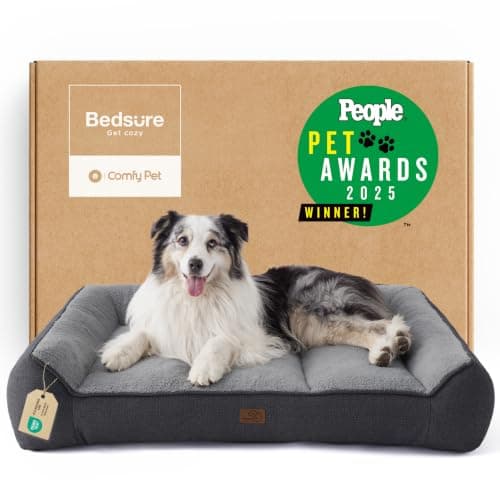
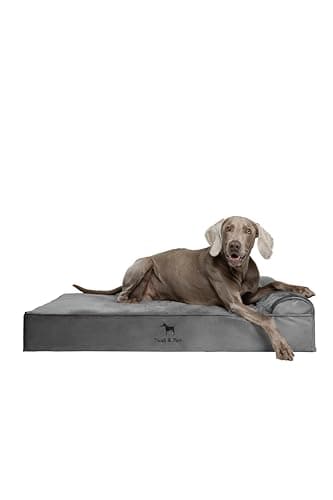
The one cooling bed that doesn't trade away support to get there — eggshell memory foam infused with cooling gel, in a 45-inch size a big old dog can stretch out on.
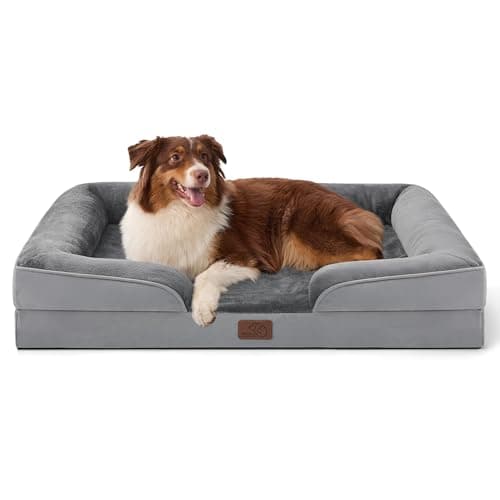
Bedsure's thicker line, and the step up we'd take for a big dog with sore hips. Extra foam depth is the whole point of the product, and depth is what a heavy arthritic dog actually needs.
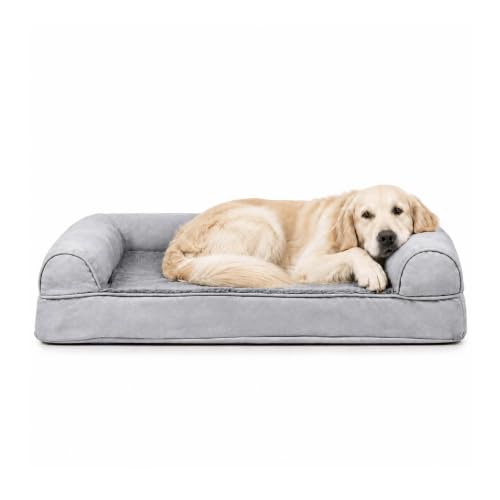
The one to start with. A flat egg-crate foam base, a low front edge a stiff dog can step onto, and a cover that actually machine-washes — for a price that doesn't sting.
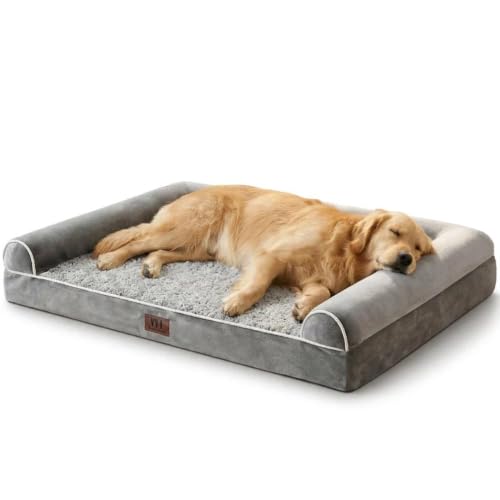
A big, waterproof bolstered bed for extra-large dogs — the bolster is soft enough to lean on without being a wall to climb, and the whole thing wipes and washes.
#ad · Live prices from the Amazon Product API, as of November 22, 2026. Where we have no verified live price we show none — we would rather leave a gap than print a number that has rotted.
In detail
The picks, in full
01
A large senior dog in a warm house
NOAH & PAW XL Cooling Gel Orthopedic Bed
Eggshell memory foam infused with cooling gel45 x 35 x 9.1 in (XL)Water-resistant constructionRemovable washable cover
8.3/10
The one cooling bed that doesn't trade away support to get there — eggshell memory foam infused with cooling gel, in a 45-inch size a big old dog can stretch out on.
Support
9
Cooling
7.5
Easy entry
8
Washability
8.5
Value
8.5
Pros
+Cooling gel is in the foam itself, not a thin pad laid on top
+Listed at 9.1 inches deep — a heavy dog is not reaching the floor
+Big enough for a dog that sleeps flat out on its side
Cons
−Gel-infused foam moderates heat build-up; it does not chill like a water or ice mat
−The XL footprint eats a lot of floor
Don't buy this if…
…your dog is small or your room is tight — the XL size is the point of this bed, and a smaller dog gets the same support for less from a standard ortho bed.
Bedsure's thicker line, and the step up we'd take for a big dog with sore hips. Extra foam depth is the whole point of the product, and depth is what a heavy arthritic dog actually needs.
Support
9
Easy entry
7.5
Washability
9
Size range
8
Value
8.5
Pros
+Noticeably deeper foam than the standard Bedsure
+Sized for large and extra-large dogs
+Same washable-cover convenience as the cheaper models
Cons
−Costs more than the standard Bedsure, for the same brand and cover
−Bulky — a bed you place once and leave
Don't buy this if…
…your dog is small or light. You're paying for foam depth a small dog will never compress.
Price as of November 22, 2026. Prices change — Amazon's is the one that counts.
#ad · we may earn a commission from this link to Bedsure SupportMax Extra Thick Orthopedic Dog Bed
03
Most senior dogs, on a budget
Bedsure Orthopedic Dog Bed
Egg-crate support foamLow front entryRemovable washable coverBolster back + sides
8.7/10
The one to start with. A flat egg-crate foam base, a low front edge a stiff dog can step onto, and a cover that actually machine-washes — for a price that doesn't sting.
Support
7.5
Easy entry
9
Washability
9
Size range
8.5
Value
9.5
Pros
+Low, open front edge — no jump or high bolster to climb over
+Zippered cover comes off and machine-washes
+Widely available in sizes up to XL
Cons
−Egg-crate foam is supportive but not the deepest cushion for a very heavy dog
−Bolster is soft rather than structured
Don't buy this if…
…your dog is very large and heavy and tends to bottom-out foam — step up to a thicker solid-foam base like the PetFusion or Laifug.
A big, waterproof bolstered bed for extra-large dogs — the bolster is soft enough to lean on without being a wall to climb, and the whole thing wipes and washes.
Support
7
Easy entry
8
Washability
9
Size range
9
Value
8.5
Pros
+Comes in genuinely extra-large sizes for big breeds
+Waterproof lining plus a washable cover
+Soft bolster that a dog can rest a chin or hip against
Cons
−Egg-crate base is comfortable but not the firmest support
−Very large sizes take up real floor space
Don't buy this if…
…your dog needs firm, deep support to get up from — the Laifug or PetFusion give a heavier dog more to push against.
It is worth being concrete, because this is the band most people shop in without knowing what the extra money is for. Moving from the cheapest tier up to this ceiling buys you, roughly in order of how much it matters to an old dog:
More foam, and better foam. The real upgrade. Deeper slabs, and support foam that springs back instead of packing down inside a season.
A waterproof liner rather than just a washable cover. Often the difference between a bed that survives a senior dog and one that gets thrown out.
Bigger sizes that still have depth. Cheap beds get wider before they get thicker, which is the wrong direction for a heavy dog.
Covers that survive the wash. Zips that do not fail, seams that do not go, fabric that does not pill after four cycles.
Shape options - flat mat, low bolster, couch-style sides - so you can match the bed to how your dog actually lies rather than taking what is available.
What it does not reliably buy is a therapeutic claim. Nobody is checking those, and we would not score a bed on one.
Two beds beats one better bed, more often than people expect
With a $100 ceiling you have a real choice: one bed near the top of this budget, or two from the lower half of it. For a lot of senior dogs the second option is the better buy, and it is the argument we would make hardest on this page.
An old dog follows the household. If the only supportive surface is in the bedroom, the dog spends its afternoons on the kitchen tile, which is both cold and hard and is exactly the surface that makes standing up difficult. Two adequate beds in the two rooms your dog actually uses beat one excellent bed in a room it sleeps in for eight hours. Why one bed is rarely enough for an old dog makes the full case, including which room to put the better one in.
Three things to spend the rest of the budget on
A washable layer on top. If your dog has any accidents, a waterproof cover or washable pad over the bed costs very little and protects the foam you just paid for. The whole layer system is in keeping an incontinent old dog dry.
Grip where the dog stands up. A supportive bed on a slick floor still ends in a scrabble. A rug or runner at the bed's edge changes the hardest moment of your dog's day - see how to stop a senior dog slipping.
Removing the jump. If your dog still climbs onto your bed or the sofa, that landing loads sore front legs several times a day. Ramps and steps under $50 covers the cheap end of that fix properly.
How to tell whether it worked
Give it two weeks and watch three things, because a bed either changes them or it did not help: how long your dog takes to settle once it lies down, whether it stays on the bed all night instead of moving to the floor, and how long the morning stiffness lasts. If none of those shifted, the bed is probably the wrong shape or the wrong size rather than the wrong price - and if your dog is still struggling to rise, that is a veterinary conversation, not a second purchase. When a bed stops supporting covers the palm test you should be repeating every few months on whatever you buy.
How we chose
We haven't lab-tested these
We compiled the published specifications, manufacturer manuals and aggregated owner reviews, then scored each product against a published rubric. The scores are judgments from that research — they are not measurements we took in a lab, because we don't have one and we won't pretend we do. Prices are pulled live from Amazon; where we can't verify one, we say "check price" rather than print a stale number.
Questions
Frequently asked
Is a $100 orthopedic dog bed good enough for a senior dog?+
For most senior dogs, comfortably - and you will usually spend well under it. Support comes from foam depth and resilience, and under $100 you can get a bed listed at over nine inches deep with a washable cover and a water-resistant build. What sits above the line is solid single-slab memory foam in a wider range of sizes, which matters for a heavy dog that needs real depth in a footprint smaller than extra-large.
What is the difference between this and the budget bed page?+
Different question. The budget page asks how cheap you can go before a bed stops helping, and its picks sit at the cheapest end of the shelf. This page raises the ceiling and then matches one bed to each senior-dog problem - heavy, leaking, overheating, small - because the extra headroom buys real foam depth and a protective liner rather than nicer fabric. It also answers the question the budget page leaves open: whether you need to spend the hundred at all. Mostly, you do not.
Does a more expensive dog bed actually support better?+
Up to a point, and then it stops. What you are paying for is foam depth and resilience, plus a liner and a cover that survive washing - and all of those are available under $100. Above that, most of the increase goes to cover fabric, brand and warranty. The honest exception is a very large heavy dog, where the deep slab you need is itself expensive to make and ship.
How thick should the bed be?+
Thicker as the dog gets heavier, and thick enough that you cannot feel the floor when you press your palm hard into the spot where your dog's hips lie. That palm test is worth more than any number on a listing, partly because a stated thickness sometimes includes cover loft and pillow rather than support foam alone.
Washable cover or waterproof liner - which matters more?+
A washable cover is the minimum and nearly every bed here has one. A waterproof liner underneath it is the thing that saves the bed, because urine in a foam core never fully comes out - a deep slab cannot be spun and will not dry through. If your dog leaks at all, prioritize the liner over another inch of foam.
Should I buy one good bed or two cheaper ones?+
Two, more often than people expect. An old dog follows the household, and a dog whose only supportive surface is in the bedroom spends its afternoons on cold hard tile - which is the surface that makes standing up hardest. Two adequate beds in the two rooms your dog actually uses beat one excellent bed in a room it only sleeps in.
We don't run a testing lab, and we don't pretend to. Product facts are compiled from manufacturer listings and manuals; health facts are cited to reputable veterinary sources. Where we couldn't verify something, we say so on the page rather than quietly leaving it out. Read our full method.