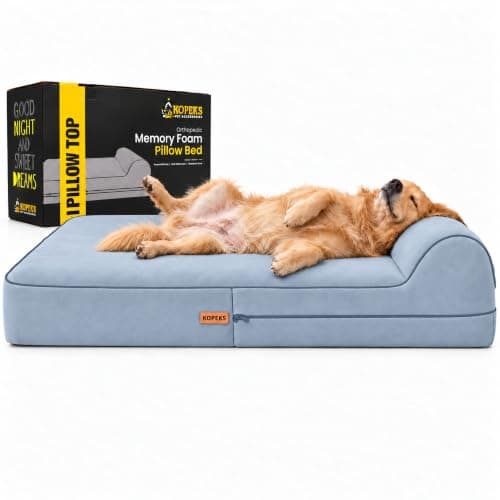
Big Barker alternatives, and what you give up to save the money
Big Barker's pitch is seven inches of foam, a ten-year warranty and a Penn Vet study behind it. If that is more bed than your budget or your floor can take, here is what to buy instead - and the one thing none of these replicate.
We earn a commission when you buy through our Amazon links, at no extra cost to you. It never changes our rankings, and we say so when the cheaper product is the better buy. How this works.
Big Barker is the bed most people mean when they say they are thinking about spending real money on a dog bed, so it is worth being precise about what that money buys before we talk about anything else. On the maker's own site the Original orthopedic bed is listed in three sizes — 48 x 30 x 7 inches, 52 x 36 x 7 and 60 x 48 x 7 — sized by how long the dog is from nose to tail base rather than by a weight band, built on what the company calls an exclusive three-layer blend of orthopedic foam, handcrafted in the United States, and backed by a ten-year warranty. List prices start in the mid-$200s for the smallest size and run into the $400s for the biggest size in the plushest style.
It is also one of very few dog beds with a clinical study attached to it. Big Barker publishes a study conducted by the University of Pennsylvania School of Veterinary Medicine on forty arthritic dogs, each at least three years old and weighing over 70 pounds, reporting a 21.6% reduction in pain severity, a 17.6% improvement in joint function and a 15.1% improvement in quality of life, alongside a measured drop in night-time activity from collar-mounted monitors. Two honest notes about that, neither of them a criticism: the headline outcomes are owner-reported scores in a study funded by the company that sells the bed, and the company publishes it as a report summary rather than pointing to a named peer-reviewed journal. Read it as support for the claim that a deep, genuinely supportive bed changes how an arthritic dog sleeps — a claim this whole site is built on — rather than as proof that one company's foam does something another company's foam cannot.
So we will say the fair thing first: sometimes the original is the right buy. If you have a 90-pound dog that has already flattened two beds, you want one bed to last the rest of its life, and you want a company with a ten-year warranty to answer the phone when it does not, buy the Big Barker and stop reading. This page is for everyone else — the people for whom the price, the footprint or the size range makes it the wrong object, and who want to know what actually replaces it.
The three reasons people look for an alternative
They are not the same problem and they do not have the same answer, which is why "what is as good as a Big Barker" produces such unhelpful lists. Work out which row you are on first.
Why you are looking
What you actually need
Where that lands
The price
Depth, and foam that springs back, at a fraction of the cost — accepting a shorter cover life and a thinner warranty
Picks 1, 2 and 4
Your dog is smaller than their smallest size
A bed sized to your dog, which costs less because it is smaller rather than because it is worse
Measure first with the sizing guide, then buy the smallest size that fits
You want the shape — a headrest to lean on
A bolster or pillow-top bed — with the honest caveat that the cheaper bolster beds trade some foam depth for the shape
Pick 3 cheaply, or pick 5 — which is the original
The second row is the one nobody mentions. The smallest Original is 48 x 30 inches, which is a lot of floor for a 40-pound dog and more bed than it will use. If your dog is medium, you are not looking for a cheaper Big Barker — you are looking for the same construction in a size that fits your dog and your room, and that costs less for a reason that has nothing to do with quality. Our bed sizing guide has the measuring method.
A naming note first: Big Barker is now Barker Beds
This confuses a lot of people, so before we rank anything: Big Barker and Barker Beds are the same company. Its own about page says it "expanded — from Big Barker to Barker Beds — to serve every dog", and states that every Barker Bed is still made in America. That matters here for a practical reason: the original is also sold on Amazon under the Barker Beds name, which is our fifth pick below — the 7-inch pillow top with a headrest, in the Large size the maker lists for dogs of 50 to 70 pounds. So if what you want is the original but you would rather buy it with Amazon's returns and a live price, you do not need an alternative at all; you need that listing. Our Barker Beds review covers it in detail.
Everything else on this page is for the case where the original is the wrong object for your dog or your budget — which is most cases.
What we ranked these on
An alternative has to replicate the thing you were paying for, not the thing in the photographs. Five criteria, in the order they matter to an old dog:
Foam depth under the hip, against your dog's weight. Support is just the amount of resilient foam between the hip joint and the floor. It is the one spec that separates a therapeutic bed from a cushion, and the reason the deepest bed here ranks first rather than the cheapest.
What the fill actually is. A solid single slab of memory foam keeps supporting a heavy dog; dense egg-crate foam is a reasonable second; shredded foam migrates and leaves a hollow exactly where the hips go; polyester fiber packs flat within weeks whatever depth it started at. "Orthopedic" is not a regulated word on a dog bed, so the fill description is the only honest signal on the listing.
Footprint and size range. The commonest way a good bed fails is being bought in the wrong size. A bed that forces a big dog to tuck its legs in is not a supportive bed, and a deep slab only comes in certain sizes — which is where cheaper shelves genuinely run out.
Whether accidents can reach the foam. A machine-washable cover is the minimum. A genuinely waterproof liner under the cover is what saves the bed, because urine in a foam core never fully comes out — a deep slab cannot be spun and will not dry through. If your dog leaks at all, that liner is worth more than another inch of foam.
Entry height. Seven inches of foam is a seven-inch step, and for a dog with weak back legs that is a real cost rather than a feature. Watch your dog get onto its current bed before you buy anything taller than it.
The short version, if you want to skip the detail: pick 1 is the closest substitute on construction, pick 5 is the original itself on Amazon if you decide the depth and the warranty are worth the money, and pick 3 is the budget end — a waterproof bolstered bed at a fraction of everything else here, which is the right buy for a medium dog or a dog that mainly wants something to lean a sore chin on.
Where these alternatives genuinely lose
We would rather you read this here than discover it in eight months, and it is more specific than "you get what you pay for".
The warranty. None of the four cheaper beds below publishes a ten-year promise that the foam will not flatten, and none of them is handcrafted in the United States. That is the clearest thing you are giving up, and the practical consequence is that you own the inspection: press your palm hard into the spot where your dog's hips land every few months, and replace the bed — or just the cover — when you can feel the floor through it. Our guide on when a bed stops supporting is the method.
Cover fabric and stitching. This is where a good part of the price difference actually sits. Cheaper covers pill, and the zipper usually goes before the foam does. Some makers sell replacement covers separately, which is the cheap way to keep a bed whose foam is still good — worth checking before you buy.
Nobody else here has a study with their name on it. The alternatives below are supported by their published specifications and by aggregated owner reports, which is what we have for almost every product in this category.
Who you complain to. A direct-to-consumer brand with one product line has an incentive to fix a bad bed. A marketplace listing may be a brand, a reseller, or neither by next spring.
What you get in exchange is money left over, and that matters more than it sounds. The three interventions that help an arthritic dog most are not beds: taking the jump down off the furniture out of its day with a ramp or a set of steps, taking the slip out of the floors it stands up on with traction gear, and a veterinary pain plan plus a sensible weight. A good mid-priced bed and a ramp beat a premium bed and a dog still launching itself off the couch.
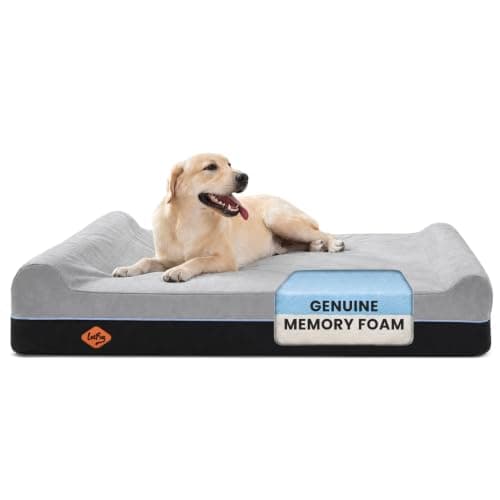
A thick memory-foam slab with a pillow and a waterproof liner, sold in genuinely extra-large sizes. The nearest thing on Amazon to a brand-direct clinical foam bed, at a fraction of the price.
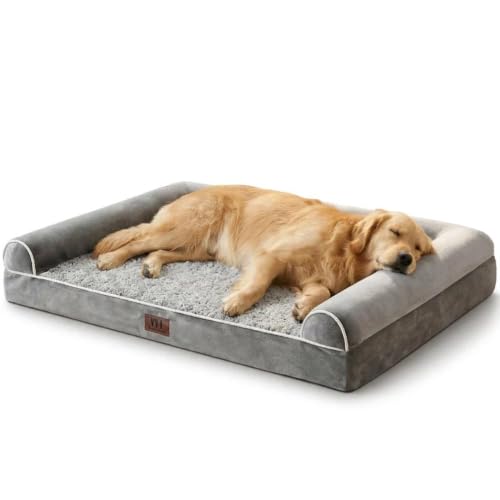
A thick single-piece memory-foam slab built for big dogs — the depth of foam is the point, and it's what a large arthritic dog needs so it isn't lying on the floor through the mattress.
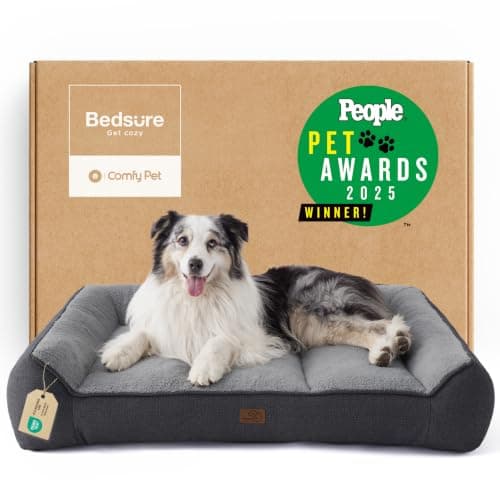
A big, waterproof bolstered bed for extra-large dogs — the bolster is soft enough to lean on without being a wall to climb, and the whole thing wipes and washes.
Bedsure's thicker line, and the step up we'd take for a big dog with sore hips. Extra foam depth is the whole point of the product, and depth is what a heavy arthritic dog actually needs.
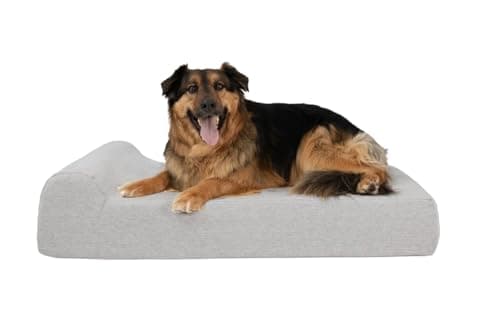
Seven inches of memory foam with a bolstered headrest, sized by the dog's weight rather than by generic S/M/L. It costs what several budget beds cost — and for a heavy dog that flattens everything else, that can still be the cheaper answer.
#ad · Live prices from the Amazon Product API, as of November 22, 2026. Where we have no verified live price we show none — we would rather leave a gap than print a number that has rotted.
A thick memory-foam slab with a pillow and a waterproof liner, sold in genuinely extra-large sizes. The nearest thing on Amazon to a brand-direct clinical foam bed, at a fraction of the price.
Support
9.5
Easy entry
8
Washability
8
Size range
8.5
Value
7
Pros
+Real foam depth for a very heavy dog
+Waterproof liner protects the core from accidents
+The pillow gives a sore neck somewhere to rest without a full bolster wall
Cons
−Premium price for the category
−Heavy and awkward to move or wash
Don't buy this if…
…you're buying for a medium dog on a budget — the Bedsure or Laifug gets you most of the way for much less.
A thick single-piece memory-foam slab built for big dogs — the depth of foam is the point, and it's what a large arthritic dog needs so it isn't lying on the floor through the mattress.
Support
9
Easy entry
8.5
Washability
8
Size range
7.5
Value
8
Pros
+Deep, dense foam that a heavy dog won't compress to the floor
+Waterproof liner protects the foam from accidents
+Non-slip base so the bed stays put on hard floors
Cons
−Heavy and large — not a bed you'll move room to room
−Flat design has no bolster for dogs that like to lean
Don't buy this if…
…your dog is small or likes to curl against a raised edge — a bolstered bed suits them better.
A big, waterproof bolstered bed for extra-large dogs — the bolster is soft enough to lean on without being a wall to climb, and the whole thing wipes and washes.
Support
7
Easy entry
8
Washability
9
Size range
9
Value
8.5
Pros
+Comes in genuinely extra-large sizes for big breeds
+Waterproof lining plus a washable cover
+Soft bolster that a dog can rest a chin or hip against
Cons
−Egg-crate base is comfortable but not the firmest support
−Very large sizes take up real floor space
Don't buy this if…
…your dog needs firm, deep support to get up from — the Laifug or PetFusion give a heavier dog more to push against.
Bedsure's thicker line, and the step up we'd take for a big dog with sore hips. Extra foam depth is the whole point of the product, and depth is what a heavy arthritic dog actually needs.
Support
9
Easy entry
7.5
Washability
9
Size range
8
Value
8.5
Pros
+Noticeably deeper foam than the standard Bedsure
+Sized for large and extra-large dogs
+Same washable-cover convenience as the cheaper models
Cons
−Costs more than the standard Bedsure, for the same brand and cover
−Bulky — a bed you place once and leave
Don't buy this if…
…your dog is small or light. You're paying for foam depth a small dog will never compress.
Price as of November 22, 2026. Prices change — Amazon's is the one that counts.
#ad · we may earn a commission from this link to Bedsure SupportMax Extra Thick Orthopedic Dog Bed
05
A heavy dog that bottoms out cheaper foam
Barker Beds 7-Inch Pillow Top Orthopedic Dog Bed
7 in memory foam mattressPillow top with headrestSized for dogs 50-70 lbs (Large)Removable washable cover
7.6/10
Seven inches of memory foam with a bolstered headrest, sized by the dog's weight rather than by generic S/M/L. It costs what several budget beds cost — and for a heavy dog that flattens everything else, that can still be the cheaper answer.
Support
9.5
Easy entry
6
Washability
8
Size range
8
Value
6.5
Pros
+Foam depth is the whole point — at a listed 7 inches a heavy dog is not reaching the floor
+Sold by the dog's weight range, a far more useful sizing axis than S/M/L
+The headrest gives an arthritic neck and shoulders somewhere to rest
Cons
−Costs several times what a good budget orthopedic bed costs
−A 7-inch deck is a real step up for a dog with weak back legs
Don't buy this if…
…your dog is under about 50 lbs, or already struggles to step onto its current bed — the height works against you, and the money is better spent on a ramp.
Price as of November 22, 2026. Prices change — Amazon's is the one that counts.
#ad · we may earn a commission from this link to Barker Beds 7-Inch Pillow Top Orthopedic Dog Bed
How to read a listing when you are replacing a brand with a spec
The reason a brand-name bed is easy to buy is that someone else has done the sorting. If you are stepping outside that, these are the five things to check, and they take about two minutes per listing.
1. Is the stated thickness the foam, or the bed?
A listing that says "10 inches" may mean a 4-inch foam base inside a bolster wall that measures ten. Look for a stated mattress or base thickness. If the listing gives only an overall height, treat it as the smaller number until proven otherwise.
2. What is the fill, in the maker's own words?
"Memory foam" with no qualifier can mean a solid slab or a bag of shredded offcuts, and the difference under a heavy dog is total. Solid, single-piece or "one-piece" is what you want to read. A CertiPUR-US line is a good sign about the foam's content and emissions — it is a foam certification, not a claim about orthopedic benefit — and a maker who cites it generally knows what they bought.
3. Measure the dog, then buy the size
Get your dog lying on its side, stretched out, and measure nose to the base of the tail. Add a few inches. Buy to that number, not to the breed name in the size chart. This is the commonest way money gets wasted in this category — the right bed, bought too small, so the dog hangs a shoulder or a hip over the edge and sleeps on the floor from the elbow down.
4. Liner, cover, or both?
A removable machine-washable cover is non-negotiable for a senior dog. A waterproof inner liner is the upgrade that matters if there is any chance of an accident — and for a dog with real incontinence, read keeping an incontinent old dog dry before you buy a bed at all, because the answer there is layers rather than a better mattress.
5. Read what the warranty actually covers
There is a difference between a warranty against manufacturing defects — which almost everything has, and which is near-useless for the failure mode you care about — and a warranty against the foam flattening, which is the promise a premium bed is selling. If the page does not distinguish the two, assume the first.
The palm test, which beats every claim on this page
Press the heel of your hand hard into the bed where your dog's hips lie. If you can feel the floor through it, so can your dog, and nothing else on the listing matters. Do it on the bed you own now, before you buy anything — it is how you find out whether depth is actually your problem, or whether your dog is avoiding its bed because the bed is too small, too tall to climb, or in the wrong room.
Two beds, not one
If the money saved stretches to two adequate beds, take it. An old dog follows the household: a dog whose only supportive surface is in the bedroom spends its afternoons on cold hard tile, which is the surface that makes standing up hardest. The argument is laid out in full at why one bed is rarely enough.
How we chose
We haven't lab-tested these
We compiled the published specifications, manufacturer manuals and aggregated owner reviews, then scored each product against a published rubric. The scores are judgments from that research — they are not measurements we took in a lab, because we don't have one and we won't pretend we do. Prices are pulled live from Amazon; where we can't verify one, we say "check price" rather than print a stale number.
Questions
Frequently asked
Is a Big Barker worth it?+
For a specific dog, yes: a heavy dog that has flattened cheaper beds, in a household that wants one bed to last a decade and a ten-year warranty to lean on. The maker lists its Original line in three large sizes and publishes a University of Pennsylvania study on forty arthritic dogs over 70 pounds, which is more than any marketplace bed offers. For a medium dog, a dog that struggles to step up, or a budget where the difference would buy a ramp and traction gear as well as a bed, it is more bed than the problem needs.
What is the closest alternative to a Big Barker?+
On construction, a deep solid memory-foam bed with a waterproof liner in genuinely extra-large sizes — which is our first pick, at well under half the price. It does not replicate the ten-year warranty or the US manufacturing, and no bed we have found at a fraction of the price does. If those two things are what you are buying, the honest answer is to buy the original, which is our fifth pick.
Are Barker Beds and Big Barker the same company?+
Yes. The company's own about page says it "expanded — from Big Barker to Barker Beds — to serve every dog", and that the beds are still made in America. The practical upshot is that you can buy the original on Amazon under the Barker Beds name — our fifth pick — rather than hunting for a lookalike.
Does my dog actually need seven inches of foam?+
Probably not. Depth matters in proportion to weight, and past roughly seven inches the extra foam does little for the dog lying on the bed and quite a lot against the dog getting onto it. For most senior dogs, four to five inches of resilient foam that passes the palm test is plenty — and for a dog with weak back legs, the lower bed is the better bed. See how thick an orthopedic bed should be.
My dog is medium-sized. Does the big-bed logic still apply?+
The foam logic does; the size does not. A lighter dog needs less depth, and a 48-inch bed for a 40-pound dog is mostly unused floor. Buy the same construction in the size your measurements call for — it will cost less, and that is not a compromise.
If I save the money, what should I spend it on?+
A ramp or steps at the one height your dog still jumps down from, and traction where it stands up on a smooth floor. Both take load off the same joints the bed is there to protect, both are cheap, and neither depends on the dog choosing to lie in a particular spot.
We don't run a testing lab, and we don't pretend to. Product facts are compiled from manufacturer listings and manuals; health facts are cited to reputable veterinary sources. Where we couldn't verify something, we say so on the page rather than quietly leaving it out. Read our full method.