Dog socks vs boots: which one actually stops the slipping?
They look like the same product in two thicknesses. They are not. One is a traction tool for inside the house and the other is armor for outside it, and buying the wrong one is the most common mistake in this category.
We earn a commission when you buy through our Amazon links, at no extra cost to you. It never changes our rankings, and we say so when the cheaper product is the better buy. How this works.
The verdict in one line: for a senior dog slipping on hardwood or tile inside the house, buy socks - DOK TigerToes if your dog twists them, plain EXPAWLORER socks if it does not - and buy boots only if the paw needs protecting as well as gripping, in which case QUMY boots are the sensible place to start. If your hands struggle with straps, the PawZ rubber boots are the only thing here with nothing to fasten, and they grip better indoors than any strapped boot on the page. That is the whole decision; the rest of this page is why.
The reason this comparison is confusing is that the two products are sold side by side, photographed the same way, and described with the same words. But they were designed for different problems. A grip sock is a thin fabric tube with a rubberized sole: cheap, light, and built to add friction to a paw that is otherwise fine. A boot is a structured shell with a real outsole, a strap, and a covered upper: built to stop the paw being damaged - by pavement, ice, salt, heat, or by being dragged. Both will help a dog grip. Only one of them is primarily a traction product.
Head to head
Grip socks
Boots
Built for
Indoor traction on smooth floors
Protecting the paw outdoors, or a paw that drags
Grip on hardwood
Good - a grippy sole against the floor
Varies. A thin rubber boot grips well; a lugged outdoor sole less so
Dog's awareness of the floor
High - thin enough to feel through
Low - a thick sole is a layer between dog and ground
Tolerance
Many dogs accept them in a day or two
More dogs object; needs short indoor sessions first
Stays on
The weak point - fabric twists around the paw
Better. A strap at the ankle beats elastic
Hands needed
Pull on, adjust a strap
Fasten one or two straps per boot, then re-check
Cost per paw
Low, and spares are cheap
Higher, and sold in pairs or fours
Lifespan on a dragging paw
Days
Months, which is the whole reason boots exist
Buy socks if
The problem is indoors: hardwood, laminate, tile, or the stretch of floor between the bed and the door.
Your dog lifts and places its feet normally and just cannot get purchase on the surface.
You want the dog to keep feeling the floor. A thin sole preserves that, and a dog that can feel the ground places its feet more carefully.
Cost matters. Socks are cheap enough to own three pairs, which is what you need, because one pair is always in the wash or under the sofa.
Buy boots if
The paw itself needs protecting - hot pavement, road salt, ice, rough ground, or a paw that is being scraped.
Your dog knuckles or drags a foot. A sock lasts days against that; a boot with a real outsole lasts months, and the dedicated page for this is boots for a dragging paw.
Your dog will not keep a sock on at all and toe grips are not an option either.
You need one thing that works indoors and out, and you accept a compromise on both.
The honest third option
A lot of dogs answer this question by refusing both. If yours shakes off socks within seconds and objects to boots, the product you actually want is neither: it is a nail-mounted toe grip, which leaves the pad completely uncovered. Plenty of dogs forget they are wearing them. That is the whole argument of toe grips vs socks, and do toe grips actually work? covers whether the idea holds up at all.
There is a fourth option that needs no cooperation from the dog whatsoever, and on most floors it is the one that does the most work: change the floor. A rubber-backed runner on the route your dog actually walks is passive, permanent, and does not come off. The published veterinary advice points the same way - VCA's guide to a comfortable home for a mobility-compromised dog says hard flooring is not good for dogs and recommends non-slip area rugs and runners where the dog spends most of its time, with no raised edges to trip on. Our shopping list for that is non-slip rugs and runners, and the room-by-room plan is the home setup guide.
Sizing, which decides this more often than the product does
Most of the one-star reviews in this category are sizing, not design. Measure the paw across its widest weight-bearing point, with the dog standing, and buy to the chart on that specific listing - sizes are not standardized between brands, and a large dog at the top of one chart is a medium on another. The AKC's own guidance on dog boots makes the same point about measuring and about introducing them gradually rather than going straight out on a walk. For socks, a sock that is slightly too big will rotate; a sock that is too small comes off. Neither can be fixed by a strap.
The picks, and who each one is for
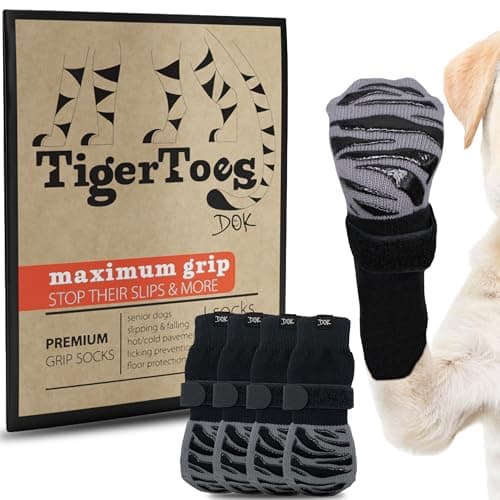
DOK TigerToes - our first pick, because its grip surface works whichever way the sock has rotated. That single feature solves the main failure in the sock category.
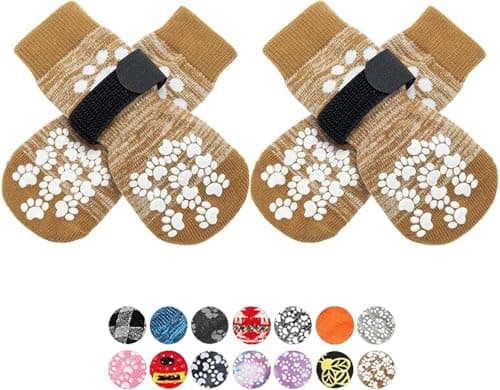
EXPAWLORER Anti-Slip Dog Socks - the cheap, strapped standard. The right buy if your dog tolerates socks, and cheap enough to own spares.
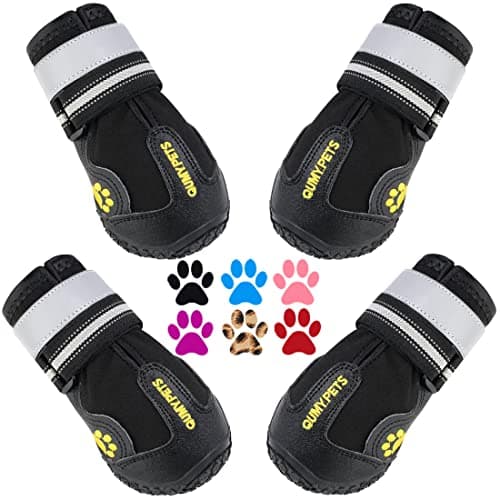
QUMY Dog Boots - the boot to try first. A wide split opening a stiff paw slides into, two straps, and a set of four.
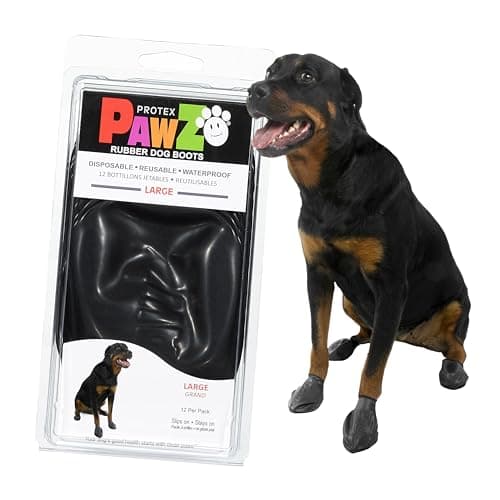
PawZ Rubber Dog Boots - nothing to fasten, best grip on smooth floors of any boot here, and the only option on this page an arthritic hand can fit without help. Not for a dog that drags.
Every pick is already recommended somewhere on this site; what this page adds is the decision. We have not measured a coefficient of friction and we have not run a wear test - there is no lab here, and our methodology page says so plainly. What follows is the makers' published claims kept at claim level, read against the published veterinary advice on footing for an aging dog. Prices render live from the Amazon listing on the date shown.
The whole-paw fix. Socks cover the pad with a grippy sole, which is the fastest way to give a scrambling dog traction on the whole foot — if your dog tolerates wearing them.
The budget boot most owners end up trying first, and a fair one: a rugged sole, a wide split opening that a stiff paw slides into, and two reflective straps. The catch is that it comes as four, so a rear-dragging dog pays for two spares.
Trying boots before committing to the premium pair
A balloon-thin natural rubber boot with nothing to fasten: stretch it over the paw and it stays on by itself. It is the best answer on the page for a dog that slips indoors and the worst for a dog that drags — a dragging paw wears through one in a day or two, which is why they come twelve to a box.
Indoor grip with nothing to buckle, on a dog that still lifts its feet
#ad · Live prices from the Amazon Product API, as of October 19, 2026. Where we have no verified live price we show none — we would rather leave a gap than print a number that has rotted.
In detail
The picks, in full
01
A dog that twists its socks
DOK TigerToes Premium Non-Slip Dog Socks
Extra-thick grip surfaceGrips even when twistedListed as helping prevent paw lickingMultiple sizes
8.3/10
Thick-gripped socks built for the failure everyone hits: the sock twists round the paw and the grip ends up on top. These grip either way up.
Grip
9
Stays on
8.5
Durability
8.5
Comfort
8
Value
7.5
Pros
+Grip works whichever way the sock has rotated — the single most useful feature in this category
+Thick enough to last more than a fortnight of daily wear
+Also covers a paw a dog is licking raw
Cons
−Thicker fabric is warmer than thin socks in a hot house
−Priced above the throwaway multipacks
Don't buy this if…
…your dog kicks socks off within seconds — no sock design survives that dog, and toe grips are the answer.
The whole-paw fix. Socks cover the pad with a grippy sole, which is the fastest way to give a scrambling dog traction on the whole foot — if your dog tolerates wearing them.
Grip
8.5
Stays on
7
Comfort
8
Value
9
Pros
+Covers the entire pad — grip everywhere the foot lands
+Straps help them stay on better than plain socks
+Cheap enough to keep spare pairs
Cons
−Some dogs dislike socks and shake them off
−Need the right size and periodic re-fitting
Don't buy this if…
…your dog won't keep anything on its feet — toe grips or paw wax leave the pad bare.
Trying boots before committing to the premium pair
QUMY Dog Boots & Paw Protectors (set of 4)
Rugged anti-slip sole (listed)Wide split-seam openingTwo adjustable strapsSet of 4, 8 sizes by paw width
8.0/10
The budget boot most owners end up trying first, and a fair one: a rugged sole, a wide split opening that a stiff paw slides into, and two reflective straps. The catch is that it comes as four, so a rear-dragging dog pays for two spares.
Protects the paw
7.5
Stays on
8
Easy to put on
8
Grip on floors
8
Value
8.5
Pros
+The wide split opening is the easiest of the strapped boots to get a paw into — useful when the dog cannot help you by lifting its foot
+Two straps, so the boot is held at the ankle and above it, which helps on a paw that drags rather than steps
+The listing publishes a paw width and length per size, and tells you to measure rather than guess from weight
+Cheap enough that if your dog refuses boots altogether you have not lost much
Cons
−Comes as four; for a rear-dragging dog two of them sit in a drawer — the pairs on this page can work out cheaper for the boots you use
−The fabric upper wears at the toe on a dog that drags every step; the sole outlasts it
−Two straps is two more things to fasten than a slip-on rubber boot
−Bulkier on the foot than the sock-style options, so allow a few short indoor sessions before a walk
Don't buy this if…
…your dog drags heavily on pavement every day — buy the Ruffwear or the Ultra Paws once rather than replacing these.
Indoor grip with nothing to buckle, on a dog that still lifts its feet
PawZ Rubber Dog Boots (12 pack)
Natural rubber, no straps12 per pack, by paw widthDisposable / reusable (listed)Listing says sizes run small
7.7/10
A balloon-thin natural rubber boot with nothing to fasten: stretch it over the paw and it stays on by itself. It is the best answer on the page for a dog that slips indoors and the worst for a dog that drags — a dragging paw wears through one in a day or two, which is why they come twelve to a box.
Protects the paw
4
Stays on
8
Easy to put on
9
Grip on floors
9.5
Value
8
Pros
+No strap, buckle or hook-and-loop — the only boot here a hand with arthritis can fit without help
+Thin enough that the dog feels the floor through it, which many sock-refusers accept when they will not accept a boot
+Genuine grip on smooth floors, and waterproof for a wet lawn
+Cheap per boot, and the box means a torn one is not a crisis
Cons
−Not a dragging boot: a knuckling paw grinds through the rubber quickly, and a wound on the top of the foot needs more than a membrane over it
−Stretching a small rubber boot over a paw takes some hand strength even though there is nothing to fasten
−The listing warns that sizes run small, so measure first and consider a size up as it suggests
−Traps moisture against the paw if left on for hours; take them off between uses
Don't buy this if…
…the top of the paw is already scraped or wounded — that foot needs a sole and a covered upper, not a rubber skin.
Four products, two from each category, chosen so that the comparison is fair rather than flattering to one side. On the sock side we took the best-gripping sock we rate and the cheap strapped standard. On the boot side we took the budget strapped boot most owners try first and the strapless rubber one, because they fail in opposite directions and between them they cover almost every household. We did not add a product to the registry for this page, and nothing is here that we would not recommend on its own category page.
The failure mode that decides it
Watch what goes wrong and you will know which product you need. A sock that ends up with the grip on top of the foot has twisted, which is a shear problem and gets worse with the dog's weight - that is a case for a sock that grips both sides, or for giving up on socks. A boot that comes off has not been strapped tight enough or is the wrong width. A sock that wears through in two days is being dragged, and a dragged paw needs a sole, not a sock. Three different symptoms, three different answers, and none of them is "buy the more expensive one".
What neither of them fixes
Nails. A nail long enough to touch the floor when your dog stands is levering the pad away from the surface it is supposed to grip, and no sock or boot undoes that - inside a boot it is worse, because the nail is now pressing into the toe of the boot. Trim first. It is free, it is the fastest improvement available in this whole category, and our nail length guide is deliberately the one page in this hub with nothing to sell. The hair between the pads is the same story: a fluffy undercarriage turns a paw into a skid, and a pair of scissors fixes it.
Introducing either one without a fight
The mistake is putting four of something on a dog and opening the front door. Do it in stages: one sock or one boot, indoors, for two minutes, with something good to eat. Then two. Then all of them for five minutes. Then a short walk. Most refusals we hear about are refusals of the first experience rather than of the product. The AKC says the same thing about boots, and adds the detail owners skip - re-check the fastening a few minutes in, because a strap pulled tight on a standing dog loosens as soon as it moves.
Layer it, do not choose
The households that genuinely solve indoor slipping almost always end up with two layers: something on the floor and something on the dog. The floor layer does the heavy lifting because it is passive. The dog layer covers everything the rug cannot - the kitchen, a friend's house, the vet's waiting room, the tiled bathroom at two in the morning. If you can only do one thing this week, cover the route, and keep a pair of socks by the door for the rest.
How we chose
We haven't lab-tested these
We compiled the published specifications, manufacturer manuals and aggregated owner reviews, then scored each product against a published rubric. The scores are judgments from that research — they are not measurements we took in a lab, because we don't have one and we won't pretend we do. Prices are pulled live from Amazon; where we can't verify one, we say "check price" rather than print a stale number.
Questions
Frequently asked
Are dog socks or boots better for slippery floors?+
For indoor slipping, socks - they are thinner, cheaper, better tolerated, and their whole purpose is friction against a smooth surface. Boots are built to protect the paw, and a thick outdoor sole is not necessarily grippier on hardwood than a thin rubberized sock sole. The exception is the strapless rubber boot, which is thin enough to grip indoors and needs no fastening.
Will dog boots stop my senior dog slipping on hardwood?+
They can, but it depends on the sole. A thin natural-rubber boot grips smooth floors very well; a lugged outdoor sole designed for trails has less contact area on a flat polished surface than you would expect. If indoor traction is the only problem you are solving, socks are the cheaper and better-tolerated tool.
Why do my dog's grip socks keep twisting round its paw?+
Because most socks hold on by friction against the leg, and the force trying to rotate them scales with your dog's weight. Three fixes, in order: size by measured paw width rather than by breed, choose a sock with a long cuff and a real strap, or choose a sock whose grip surface works whichever way up it ends - which is why DOK TigerToes is our first pick. Our guide to keeping socks on covers the rest.
Can my dog wear boots indoors all day?+
We would not. A covered paw traps moisture, and a strap left tight for hours is uncomfortable on a thin old leg. Boots are for a purpose and a period - a walk, a trip to the car, a wet lawn. For all-day indoor grip, use socks you can take off easily, nail grips that leave the pad bare, or change the floor.
What if my dog won't wear socks or boots?+
Then stop trying to put things on the dog. Nail-mounted toe grips cover nothing and plenty of dogs forget they are there, and runners on the route work whether or not your dog cooperates. Start at toe grips and non-slip rugs and runners.
We don't run a testing lab, and we don't pretend to. Product facts are compiled from manufacturer listings and manuals; health facts are cited to reputable veterinary sources. Where we couldn't verify something, we say so on the page rather than quietly leaving it out. Read our full method.