The threshold at the back door gets used more than any other step in a dog's day, in every weather. It is the highest-value ramp in the house and almost nobody buys one for it.
We earn a commission when you buy through our Amazon links, at no extra cost to you. It never changes our rankings, and we say so when the cheaper product is the better buy. How this works.
Most ramp buying goes into the car and the sofa. Meanwhile there is a step at the back door that a senior dog negotiates six or eight times a day, usually wet, often in the dark, with the owner standing behind holding the door — which is the worst possible position from which to catch a dog that goes down.
A short outdoor ramp is a different purchase from a car ramp, and buying the wrong shape is why people conclude ramps do not work outside.
What changes outdoors
The run is short and the rise is small. Two or three steps, not the height of a trunk. A long telescoping car ramp laid across a single step is unstable and unnecessarily steep to store.
Grip has to work when wet. The surface texture that is adequate indoors is not adequate on a rainy morning. This is the single specification that matters most outdoors and it is the one listings describe most vaguely.
It lives outside. Which means UV, rain and frost, and it means the ramp needs to not become a slippery object itself.
The bottom must not creep. A ramp that slides on wet paving as the dog steps onto it is worse than the step it replaced.
We have ranked these on the same rubric as the rest of the hub — gentleness of incline for the height, surface grip, weight capacity, stability and portability — with grip weighted harder because of where these are used. As everywhere on this site, these are judgments from published specifications and aggregated owner reports rather than measurements we took.
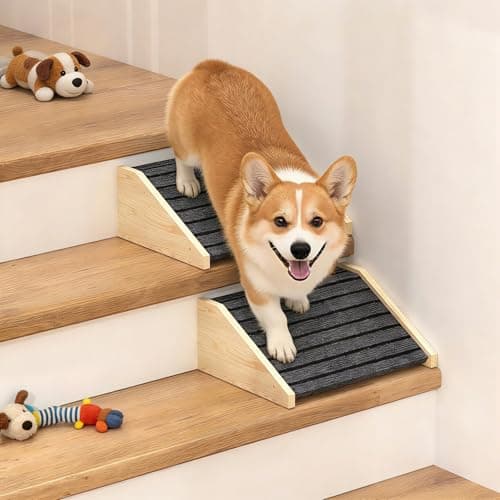
Two folding wooden wedges that turn a short flight — the porch steps, the two down into the yard — into a slope. The neatest answer to the step your dog has started refusing.
The gentlest slope of the three, and built for outdoor steps. If your dog has stopped even trying the back-door step, a shallow angle is the thing that wins it back.
#ad · Live prices from the Amazon Product API, as of October 20, 2026. Where we have no verified live price we show none — we would rather leave a gap than print a number that has rotted.
In detail
The picks, in full
01
Porch and back-door steps
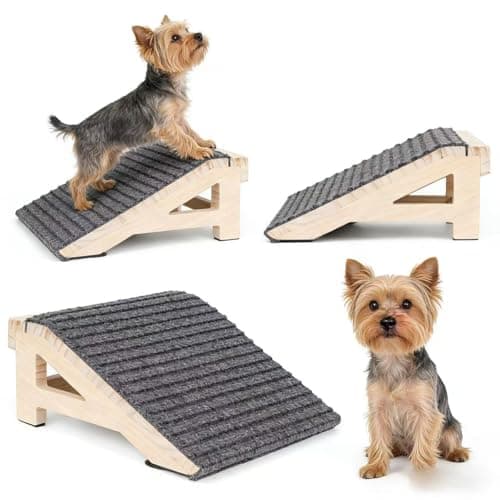
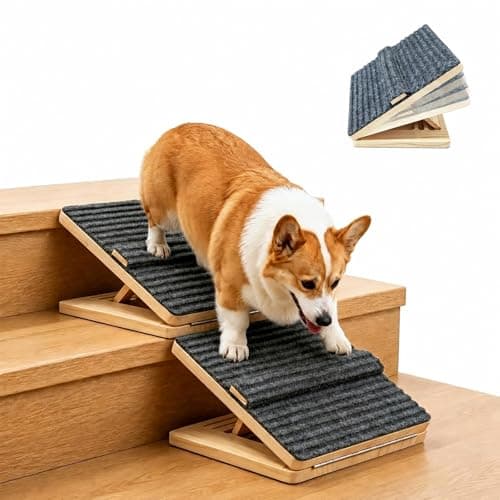
Weathrix Foldable Wooden Dog Ramp for Stairs
2-pack of foldable wooden rampsNon-slip walking surfaceMade for short indoor or porch flightsFolds flat for storage
8.3/10
Two folding wooden wedges that turn a short flight — the porch steps, the two down into the yard — into a slope. The neatest answer to the step your dog has started refusing.
Stability
8.5
Grip
8
Gentle angle
8
Storage
8.5
Value
8.5
Pros
+Two units cover the two- and three-step flights that cause most of the trouble
+Folds away when guests come, unlike a fixed ramp
+Wood feels solid underfoot — nothing flexes as the dog commits
Cons
−Spans a short flight only; a full staircase needs a different answer
−Wooden surfaces want drying off if they live outdoors year-round
Don't buy this if…
…you need to cover a full indoor staircase — no consumer ramp does that safely, and a gate plus carrying is the honest answer.
Low-angle designWood construction, listed for outdoor stepsNon-slip surfaceSized for short flights
8.0/10
The gentlest slope of the three, and built for outdoor steps. If your dog has stopped even trying the back-door step, a shallow angle is the thing that wins it back.
Stability
8.5
Grip
8
Gentle angle
9
Storage
6.5
Value
8
Pros
+The shallow angle is the single thing that persuades a frightened dog to try
+Built for the weather, so it can stay out on the back step
+Wood is rigid — no bounce to spook a nervous dog
Cons
−A gentle angle means a long footprint; measure the landing before you buy
−Heavier to move than a folding plastic ramp
Don't buy this if…
…your doorway or path is narrow — a shallow ramp has to run out a long way, and there may not be room.
Measure the total vertical rise from the bottom surface to the top surface — not the height of one step multiplied by however many there are, because the treads are rarely uniform at a back door. Then measure how much horizontal space you can give it. The longer the ramp for a given rise, the gentler the slope, and gentleness is the whole point for an arthritic dog. Our ramp sizing guide covers the arithmetic properly.
The common mistake outdoors is placing a ramp where it has to be short because of a path or a flowerbed. If the only place it fits makes it steep, move the obstacle rather than accepting the angle — a steep ramp gets refused, and then you own a steep ramp.
Stopping it moving
Whatever the ramp comes with, check the bottom edge on the actual surface it will sit on, wet. Paving, decking and gravel all behave differently. If it creeps, options in order: rubber matting under the foot, a batten screwed to the decking as a stop, or repositioning so the foot lands on a textured surface rather than a smooth one.
Keeping it usable through the year
An outdoor ramp collects the same algae as the deck it sits on, and the ramp surface matters more than the deck does. Brush it when you clean the decking. Clear it of leaves and snow before the dog needs it rather than after, and if it is stored upright between uses, check the underside is not the slippery face by the time you lay it down.
Our guide to outdoor footing for senior dogs covers the rest of the route — the step nose, the wet grass and the lighting that makes the difference at six on a January morning.
Ramp or steps, outdoors?
Ramp, in almost every case. Outdoor steps are usually in weather and often on uneven ground, which is where a set of dog steps is least stable, and a dog descending steps in the wet has the same problem the original stairs gave them. The general decision is covered on our ramp versus stairs page, but outdoors it tilts heavily one way.
How we chose
We haven't lab-tested these
We compiled the published specifications, manufacturer manuals and aggregated owner reviews, then scored each product against a published rubric. The scores are judgments from that research — they are not measurements we took in a lab, because we don't have one and we won't pretend we do. Prices are pulled live from Amazon; where we can't verify one, we say "check price" rather than print a stale number.
Questions
Frequently asked
What size ramp do I need for a back step?+
Measure the total vertical rise from the lower surface to the upper one — not one step multiplied up, since back-door treads are rarely uniform — then check how much horizontal run you can give it. The longer the ramp for a given rise, the gentler the slope, and gentleness is the point. If the only spot it fits makes it steep, move the obstacle rather than accept the angle.
Will an outdoor ramp be slippery in the rain?+
It can be, and it is the specification listings describe most vaguely. Surface grip that is fine indoors is often not enough on a wet morning, so weight it heavily when choosing. Ramps left outside also grow the same algal film as decking — brush them when you clean the deck, and clear leaves and snow before your dog needs to use it.
Should I use a ramp or dog steps outside?+
A ramp, in almost every case. Outdoor steps sit in weather and often on uneven ground, which is where a set of dog steps is least stable, and a dog coming down steps in the wet faces the same problem the original stairs presented. Indoors the decision is more open — our ramp versus stairs guide covers it.
We don't run a testing lab, and we don't pretend to. Product facts are compiled from manufacturer listings and manuals; health facts are cited to reputable veterinary sources. Where we couldn't verify something, we say so on the page rather than quietly leaving it out. Read our full method.