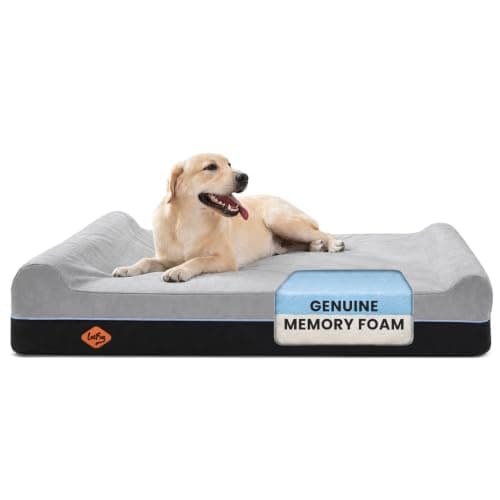
When a dog cannot shift its own weight, the bed becomes part of the care plan. It has to hold hips and elbows off the floor, keep the skin dry, and let you change it in a minute. Here is what the veterinary guidance asks of it, and the picks that fit.
We earn a commission when you buy through our Amazon links, at no extra cost to you. It never changes our rankings, and we say so when the cheaper product is the better buy. How this works.
A dog that can walk to its bed uses it a few times a day. A dog that cannot get up lives on it. Hour after hour, the same hips, elbows and shoulders press into the same surface, and if the bladder is no longer reliable, they press into it wet. For that dog the bed is not furniture. It is part of the care plan, and it has a specific job to do.
VCA's homecare guide for paralyzed pets states the job plainly: your pet will need "soft, thick bedding to reduce the risk of pressure sores from laying in one position for too long." The same page suggests memory foam or egg-crate mattresses covered by blankets that can be changed regularly, puppy pads or underpads under those blankets to reduce soiling of the mattress, and a couple of washable orthopedic beds. That is very nearly a shopping list, and this page turns it into one.
It is written for the dog that is down: paralyzed in the back legs after a disc episode or a spinal stroke, in the late stages of degenerative myelopathy, or simply too weak to rise without you. If your dog can still get itself up and the worry is a fragile back, our page on flat beds for IVDD is the better fit. If the diagnosis is DM, our stage-by-stage DM gear page covers everything that comes before this point.
What a pressure sore is, and where to look
VCA describes pressure sores, or decubital ulcers, as skin lesions that develop over pressure points, "generally where your pet's bones have less padding and more contact with a surface like the floor," with elbows and hips the common sites. The Merck Veterinary Manual's owner edition says they commonly affect animals that are paralyzed or cannot move, and that prevention is best: change the animal's position frequently, keep the animal and its surroundings clean, give it good nutrition and provide a soft bed.
The places to check go beyond elbows and hips. Dallas Veterinary Surgical Center lists sores over the top of the feet, on the legs and hips and near the tail at the back end, and on the elbows at the front. Pennine Referrals, a veterinary referral hospital, lists elbows, shoulders, hips, hocks, toes, the breastbone and the kneecaps. Those are the points the bed has to protect, and the points your eyes and hands should go to every day.
Thick enough that nothing reaches the floor
The most useful sentence in the nursing guidance for anyone buying a bed comes from Today's Veterinary Nurse: recumbent patients need "soft bedding that does not 'bottom out' to the floor." Pennine Referrals adds the corollary that matters for big dogs: "The heavier the patient, the thicker the bed should be."
Neither source gives a thickness in inches, and we will not invent one. What the guidance does give you is a test, and the best version is in Partner Veterinary Emergency & Specialty Center's neurology handout: "If your knees hurt when kneeling on the bedding, add more padding." You will be kneeling beside this bed several times a day to turn, clean and check your dog, so you will find out quickly. For a bed that has started to give way under the hip, our guide to when a bed stops supporting has the palm test.
That is why our top two picks are thick memory-foam slabs rather than the egg-crate or shredded-fill beds that suit a dog that naps and then walks away. A dog that lies on one spot for hours is the dog most likely to find the floor through a thin bed, and the dog least able to move off it when it does.
Turning is the other half of the job
No bed prevents pressure sores on its own. Every veterinary source we read pairs padding with repositioning, and they do not agree on one interval. Partner Veterinary says to rotate a pet that cannot move independently every 4 to 6 hours, Dallas Veterinary Surgical Center says every 3 to 4 hours, and Pennine Referrals' nursing guide says every 2 to 4 hours. Your vet will tell you which schedule suits your dog, so ask directly and write the answer down.
Two details from those sources shape the bed you need. Partner Veterinary says regular rotation and positioning your dog upright on its chest help prevent lung collapse, and to be mindful of elbow pressure in that position. And VCA suggests that, ideally every few hours during the day, you take your pet from its bed to another part of the house or outside for its exercises. Put together, the bed needs room for your dog to lie flat on either side and upright on its chest without hanging off an edge, and it needs to be easy to lift a dog off and back onto, many times a day.
Wet skin is the second problem
A dog that cannot get up usually cannot get away from its own urine either. VCA warns that fecal matter and urine can cause uncomfortable skin sores, and says to check a paralyzed pet every few hours and wash it with a gentle, soap-free shampoo. Dr. Vladislav Zlatinov, writing for Royal Canin's veterinary academy, draws the link to pressure sores directly: "Moist skin increases the risk of sores developing, so the skin should be kept clean and dry." Pennine Referrals is just as blunt about the bedding: "Every time the bedding is soiled, it needs to be changed immediately."
That instruction decides how a bed for a down dog should be put together. If changing it means wrestling a fitted cover off a heavy foam slab, it will not happen every time. If it means pulling a top layer off and laying a clean one down, it will. So the setup is a stack:
The bed. Thick foam with a waterproof liner between the foam and the cover, so a leak that gets past the upper layers still never reaches the core.
A waterproof layer on the bed. A waterproof quilted cover, or a washable pad with a waterproof backing. This is the role VCA gives to puppy pads and underpads: under the blankets, protecting the mattress.
A soft, absorbent layer against the dog. A blanket or fleece you change whenever it is wet. Today's Veterinary Nurse explains why the order matters: an incontinence pad placed directly beneath the skin lets urine spread across the pad, which increases contact time and leads to urine scald. Absorbent bedding goes directly under the patient, with the pad beneath it.
Spares. Enough top layers that a clean, dry one is always folded and waiting, which in practice means several.
Our incontinence layers page covers the wash rotation for a leaking dog in more detail, and our page on washable and waterproof beds explains the difference between a waterproof cover and a waterproof liner, which matters a great deal for a dog that lies in one place.
No edge to lift over
Most dog beds are sold on the comfort of their bolsters. For a dog that cannot walk, a bolster is a wall you lift the dog over every time you move it. VCA's guide to setting up a home for a mobility-compromised dog recommends beds "that they don't have to climb over or onto," and says the bed or its cover should be machine washable to protect against urine or fecal matter. For a dog you move by hand or in a sling, a flat surface you can slide the dog onto from any side is worth more than any amount of padding around the edge. A pillow at the head end is fine. A raised rim on three sides is in the way. Our guide to lifting a large senior dog safely covers the transfer itself.
What we scored these on
Support depth. Whether the listed foam is deep and solid enough that a dog lying on one spot for hours will not bottom out. Weighted most heavily.
Protection for the core. A waterproof liner or waterproof backing, stated on the listing, and where in the bed it sits.
Speed of change. How quickly a wet layer comes off and a clean one goes on, and whether that layer survives a normal wash and dry.
Transfer-friendly shape. A low edge or none, and enough surface for the dog to lie flat on either side and upright on its chest.
Stays put. A non-slip base, so the bed does not skate across the floor when you kneel on it or lift a dog on and off.
Scores are judgments from the live listings and the veterinary guidance cited at the foot of this page, in line with our methodology. We have not used these beds with a paralyzed dog, and where a measurement appears it is the manufacturer's. Two of the five picks are layers rather than beds, on purpose: the guidance treats the layers on top as part of the bed, and a bed for a down dog without them is a bed you will be stripping to the foam.
The short version: the Laifug for most medium and large dogs: a thick memory-foam base, a waterproof inner lining, a non-slip bottom, and a pillow rather than walls. The KOPEKS if you want an all-memory-foam slab in one extra-large size with a waterproof liner and a warranty that names foam collapse. Whichever bed you choose, put the Ameritex waterproof cover on it and soft washable blankets on top of that. The Bedsure crate pad is for a small dog on confinement, and the LOOBANI pads go under blankets and on the floor around the bed.
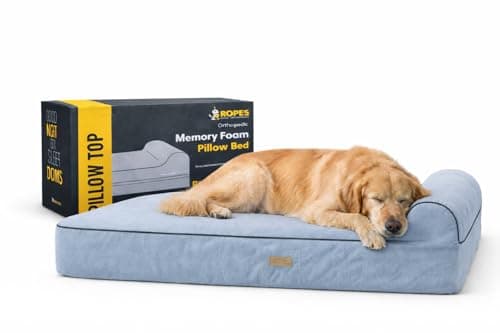
A thick single-piece memory-foam slab built for big dogs — the depth of foam is the point, and it's what a large arthritic dog needs so it isn't lying on the floor through the mattress.
A thick memory-foam slab with a pillow and a waterproof liner, sold in genuinely extra-large sizes. The nearest thing on Amazon to a brand-direct clinical foam bed, at a fraction of the price.
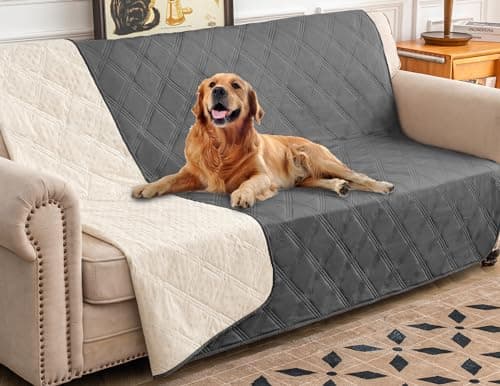
The cheapest way to stop an accident ever reaching the foam of a bed you already own. The anti-slip backing is the detail that matters — a cover that rumples under a circling dog protects nothing.
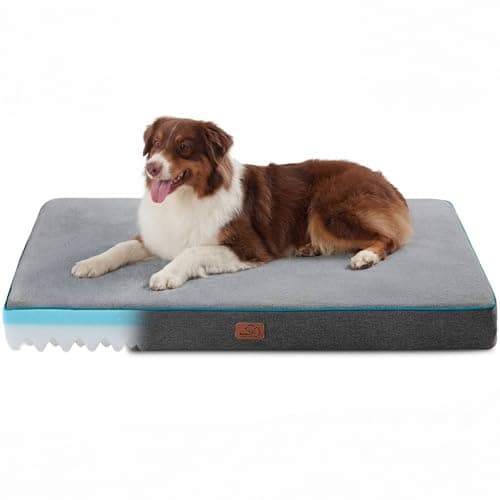
A flat memory-foam mattress with no walls at all. For a dog with a bad back, the absence of a bolster is the feature — nothing to climb, nothing to twist over.
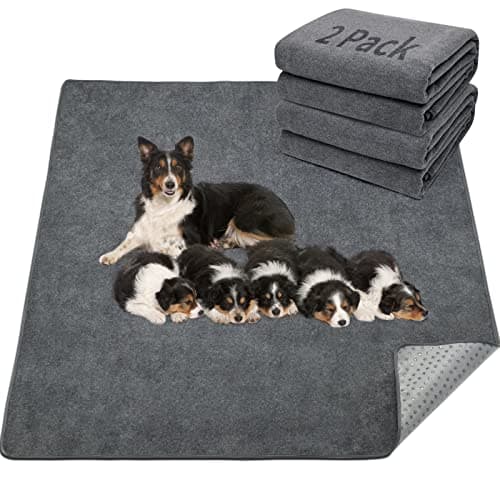
A fleece-topped, TPU-backed pad at 36 by 48 inches — big enough to sit under and around a bed, soft enough that a dog will lie on it, and sold in twos so one is always in the wash.
#ad · Live prices from the Amazon Product API, as of Sep 22, 2026. Where we have no verified live price we show none — we would rather leave a gap than print a number that has rotted.
A thick single-piece memory-foam slab built for big dogs — the depth of foam is the point, and it's what a large arthritic dog needs so it isn't lying on the floor through the mattress.
Support
9
Easy entry
8.5
Washability
8
Size range
7.5
Value
8
Pros
+Deep, dense foam that a heavy dog won't compress to the floor
+Waterproof liner protects the foam from accidents
+Non-slip base so the bed stays put on hard floors
Cons
−Heavy and large — not a bed you'll move room to room
−Flat design has no bolster for dogs that like to lean
Don't buy this if…
…your dog is small or likes to curl against a raised edge — a bolstered bed suits them better.
A thick memory-foam slab with a pillow and a waterproof liner, sold in genuinely extra-large sizes. The nearest thing on Amazon to a brand-direct clinical foam bed, at a fraction of the price.
Support
9.5
Easy entry
8
Washability
8
Size range
8.5
Value
7
Pros
+Real foam depth for a very heavy dog
+Waterproof liner protects the core from accidents
+The pillow gives a sore neck somewhere to rest without a full bolster wall
Cons
−Premium price for the category
−Heavy and awkward to move or wash
Don't buy this if…
…you're buying for a medium dog on a budget — the Bedsure or Laifug gets you most of the way for much less.
Listed as a 5-layer quilted constructionAnti-skid paw-print backingMachine wash cold, tumble dry lowDefault size 52 x 82 in; other sizes listed
8.7/10
The cheapest way to stop an accident ever reaching the foam of a bed you already own. The anti-slip backing is the detail that matters — a cover that rumples under a circling dog protects nothing.
Leak protection
8
Coverage
8.5
Washability
9
Stays put
9
Value
9
Pros
+Grippy backing keeps it flat on a foam bed instead of bunching into a ridge
+Quilted rather than plasticky, so a dog will actually settle on it
+Washes on a normal cold cycle — no special handling
Cons
−A cover is not a liner: soak it through and the bed underneath is still wet
−The default size is couch-sized, so check the size list against your bed
Don't buy this if…
…your dog floods rather than leaks — at that volume you want a genuinely waterproof bed underneath, not a top layer.
Flat memory-foam mattressNo bolster or raised edgeRemovable washable coverCrate-friendly sizes
8.7/10
A flat memory-foam mattress with no walls at all. For a dog with a bad back, the absence of a bolster is the feature — nothing to climb, nothing to twist over.
Support
8
Easy entry
10
Washability
9
Size range
7.5
Value
9
Pros
+Effectively zero entry height — the dog walks on at floor level
+Memory foam rather than a thin quilted pad
+Sized to drop into a crate or a corner
Cons
−No edge to lean on, which some dogs miss
−Flat mats slide unless the floor has some texture
Don't buy this if…
…your dog sleeps curled tight against something — a low bolster bed will suit it better.
36 x 48 in, 2-packTPU waterproof coating, listed as machine washableFleece top surface, non-slip backingListed for playpen, crate, floor, sofa and car-seat use
8.3/10
A fleece-topped, TPU-backed pad at 36 by 48 inches — big enough to sit under and around a bed, soft enough that a dog will lie on it, and sold in twos so one is always in the wash.
Leak protection
8.5
Coverage
8.5
Washability
8
Stays put
8.5
Value
8
Pros
+The fleece face reads as bedding, not as a plastic sheet a dog avoids
+Two in the box is the right pack size — you cannot run a wash cycle mid-night
+Big enough to tuck the edges under the bed so it stops sliding around
Cons
−Fleece holds hair, so it needs a shake-out before it goes in the machine
−36 x 48 in is generous for a crate and small for a whole sleeping corner
Don't buy this if…
…you want something you can wipe and put straight back down — a hard-faced mat suits that better than fleece.
Laifug. The listing describes a 7-inch base that combines a softer foam layer with 40D high-density memory foam, a waterproof inner lining "to protect the memory foam from stains and liquid damage," a machine-washable cover and a high-friction anti-slip bottom, plus a head-and-neck pillow. It is sold in several sizes up to a listed 60 by 48 inches, but the smaller sizes are listed at a lower total height, so check the thickness of the size you order, not just the headline.
KOPEKS. Listed as 7 inches of memory foam with a 3-inch headrest, a waterproof inner protector and a removable, washable cover with an anti-slip bottom. It comes in one size, listed at 50 by 34 inches. Its 12-month limited warranty, as listed, covers abnormal foam collapse under normal use, which is worth having for a dog that lies in one spot.
Ameritex. A quilted waterproof cover that goes over the bed, with an anti-skid backing, listed as machine wash cold and tumble dry low. It is sold in a long list of sizes, so match the size to your bed rather than taking the default.
Bedsure crate pad. Dual-layer memory foam, 3 inches thick in most sizes and 3.5 inches in XL, with a machine-wash-and-tumble-dry cover and a non-skid base. The listing does not mention a waterproof liner, so it needs a waterproof layer on top. The listing's own weight guidance runs from up to 20 pounds for the small size to 50 to 90 pounds for the XL; for a down dog we would treat it as a small-dog bed.
LOOBANI pads. Two 36 by 48 inch pads with a fleece face, a TPU waterproof coating and a non-slip bottom, listed as machine washable. Used the way the veterinary nurses describe, they go under the soft top layer, or on the floor where your dog is lifted on and off the bed, rather than directly against the skin.
Where the bed goes
Put the bed where you can reach it from at least two sides on your knees, because turning, cleaning and checking all happen from the floor. A bed pushed into a corner can only be worked from one side, and you will end up rolling your dog toward you every time instead of the way the schedule needs.
Put it in a room you pass through often. That is our judgment rather than a veterinary instruction, but a schedule that says every few hours is easier to keep when your dog is in the kitchen than in a back bedroom, and you notice a wet blanket sooner. VCA's mobility-home guide also notes that although dogs often like lying on hard, cool surfaces, those are not ideal for a dog that cannot move around easily. The bed should be where your dog spends its day.
If your dog can still drag itself around, VCA says it will need to be kept in a small area, such as a playpen, exercise pen or crate, so it cannot injure itself, and that crate rest may be recommended after acute spinal trauma such as disc disease. Then the bed has to fit the pen or the crate: measure the inside, and see our crate pads page for the flat options. VCA adds that a dog paralyzed only in the hind limbs may develop skin sores from dragging its hind end, and that a sling, harness or wheelchair can help. For the hours out of the cart, a drag bag that zips the back end into a nylon sleeve is the clothing option VCA alludes to; our dragging-paw boots page ranks one alongside the boots for a dog that is still on its feet.
The daily skin check
VCA says to check a paralyzed pet every few hours. Make one of those checks a thorough one, in good light, going over each pressure point listed above with your eyes and your hands: elbows, shoulders, hips, hocks, toes, breastbone and knees. Part the coat on a long-haired dog. You are looking for redness, hair loss, thickened skin, a scab or a patch that stays damp.
Pennine Referrals' nursing guide grades the first stage of a pressure sore as a dark reddened area that does not blanch on pressure, meaning it does not go pale when you press it with a fingertip. Treat that as a reason to call your vet, not a reason to buy something. Dallas Veterinary Surgical Center says to see your veterinarian right away if sores start to develop. The Merck Veterinary Manual notes that mild pressure wounds can be treated with cleaning and bandaging while severe ones may need surgery or skin grafts, which is the strongest argument there is for catching them early. And VCA says pets with sores should not be outside for long periods, because sores can attract flies that lay eggs in them.
How many layers to own
Pennine Referrals says soiled bedding needs changing immediately, and VCA suggests a couple of washable orthopedic beds. Our working suggestion for a dog that is wet most days, which is a judgment and not a veterinary rule: one bed with a liner, two waterproof covers or pads so one is always on the bed while the other is in the wash, and at least four soft top layers, because those are what you change most. A second bed, if you can manage it, lets you move your dog to a dry surface while the first one airs out after a bad night.
Wash each layer the way its label says and dry it fully before it goes back. When something does get through to the foam, our guide to cleaning a memory foam dog bed covers what the foam makers allow and what they do not.
Diapers, and why the bed usually comes first
VCA says diapers can be used if absolutely necessary but do increase the risk of skin damage from urine sitting against the skin, and need to be changed frequently to avoid sores. For a dog lying down all day, that makes a well-layered bed and frequent changes the first plan, with a diaper as a tool your vet may suggest for particular situations. Our incontinence page compares belly bands and diapers if you do need them.
Keeping your dog moving off the bed
A bed is where a down dog rests, not where its day should end. Cornell's Riney Canine Health Center lists soft bedding and frequent repositioning among the supportive care for a dog with a spinal stroke (fibrocartilaginous embolism), alongside slings or harnesses for mobility, manual bladder expression where the dog cannot urinate on its own, and keeping the dog clean and dry. Its rehabilitation list includes passive range-of-motion exercises and assisted standing and walking. VCA says a home exercise plan developed by a veterinary rehabilitation therapist can bring pain relief, muscle relaxation, increased blood flow to the paralyzed limbs and mental stimulation. Ask your vet for that referral.
A thin mat on a hard floor. Fine for a dog that naps and leaves. The wrong bed for a dog that cannot leave.
A deep bolstered nest. It looks comfortable, and it puts a wall between you and your dog at every transfer.
A pad directly under the skin. Today's Veterinary Nurse describes this as a route to urine scald. Soft absorbent layer on top, pad underneath.
One of everything. The night the only cover is in the wash is the night it is needed.
Buying instead of asking. Turning intervals, bladder care and skin treatment are your vet's call. Ask for them in writing at the first visit.
How we chose
We haven't lab-tested these
We compiled the published specifications, manufacturer manuals and aggregated owner reviews, then scored each product against a published rubric. The scores are judgments from that research — they are not measurements we took in a lab, because we don't have one and we won't pretend we do. Prices are pulled live from Amazon; where we can't verify one, we say "check price" rather than print a stale number.
Questions
Frequently asked
What is the best kind of bed for a paralyzed dog?+
A thick foam bed that does not bottom out, with a waterproof liner, a low edge or none, and enough room for your dog to lie flat on either side and upright on its chest. Over it goes a waterproof layer, then a soft absorbent top layer you can change quickly. VCA recommends soft, thick bedding such as memory foam or egg-crate mattresses covered by blankets that can be changed regularly. Our top pick is the Laifug, for its depth, waterproof inner lining and non-slip base.
How often should a paralyzed dog be turned?+
The veterinary sources we read give different intervals: every 4 to 6 hours in Partner Veterinary's handout and in Today's Veterinary Nurse, every 3 to 4 hours in Dallas Veterinary Surgical Center's care sheet, and every 2 to 4 hours in Pennine Referrals' nursing guide. Your vet sets the schedule for your dog. Ask for it at the first visit, and ask whether they want your dog upright on its chest for part of the day.
How do I stop my paralyzed dog getting bed sores?+
The Merck Veterinary Manual lists the preventive measures: change the dog's position frequently, keep the dog and its surroundings clean, maintain good nutrition and provide a soft, well-padded bed. Keep the skin dry, change soiled bedding straight away, and check the pressure points, including elbows, hips, hocks and toes, every day. If you find a sore, see your vet promptly rather than treating it yourself.
Can I put puppy pads under a paralyzed dog?+
Yes, under a blanket rather than directly under the skin. VCA suggests puppy pads or underpads beneath the blankets to reduce soiling of the mattress. Today's Veterinary Nurse warns that a pad placed directly beneath the skin lets urine spread across it, increasing contact time and leading to urine scald, so absorbent bedding goes against the dog with the pad underneath.
What should I do if I find a pressure sore on my dog?+
Call your vet. Dallas Veterinary Surgical Center says to see your veterinarian right away if sores start to develop, and the Merck Veterinary Manual notes that while mild pressure wounds can be managed with cleaning and bandaging, severe ones may need surgery. A reddened patch that does not go pale when you press it is the early stage to watch for. Your vet will tell you how to keep weight off the area.
Should a paralyzed dog be kept in a crate?+
Sometimes, and only as your vet directs. VCA says a paralyzed pet that can still move around needs a small area such as a playpen, exercise pen or crate so it cannot injure itself, and that crate rest may be recommended after acute spinal trauma such as disc disease. In that case the bed goes inside: measure the crate or pen and choose a flat pad that fits, with a waterproof layer on top.
We don't run a testing lab, and we don't pretend to. Product facts are compiled from manufacturer listings and manuals; health facts are cited to reputable veterinary sources. Where we couldn't verify something, we say so on the page rather than quietly leaving it out. Read our full method.